|
BONE / PENAL CRUCIFIXX 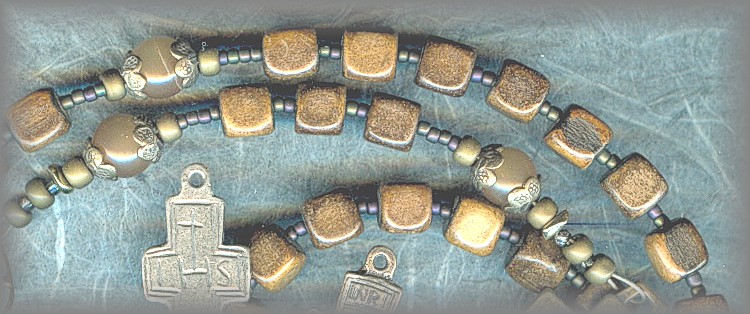
RIPR.2709 - (pricing) |
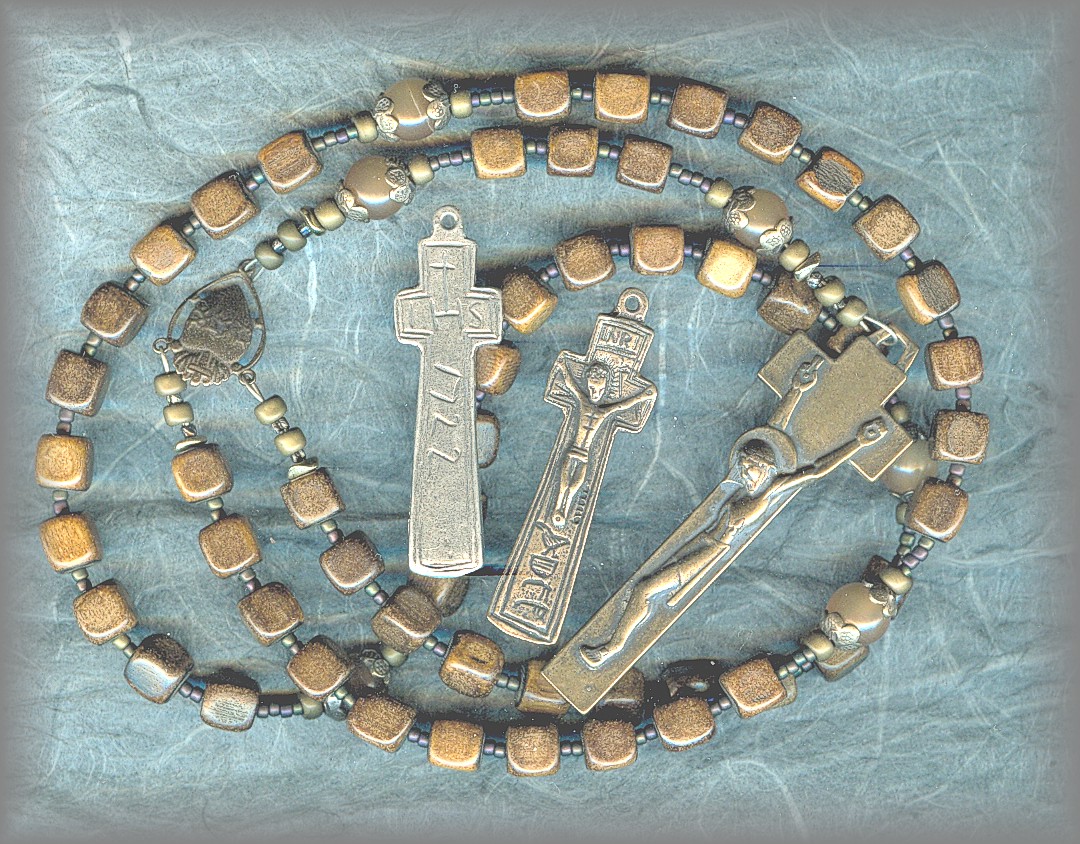
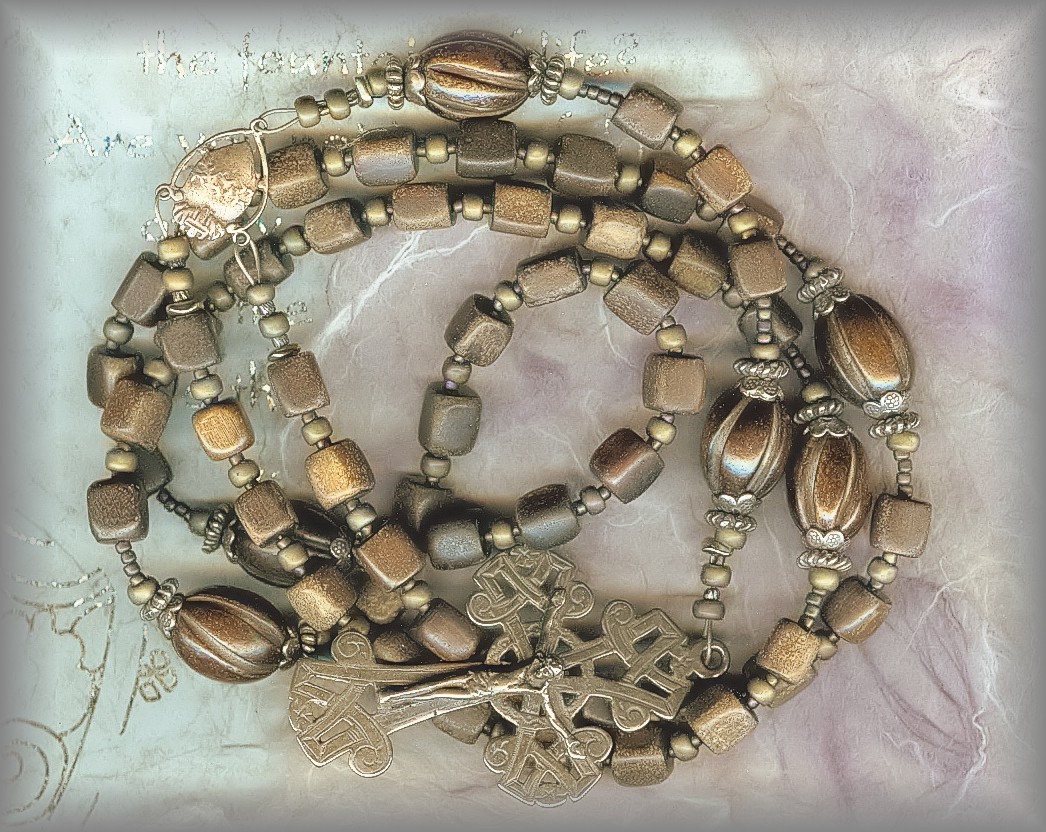
CELTIC KNOT CRUCIFIX 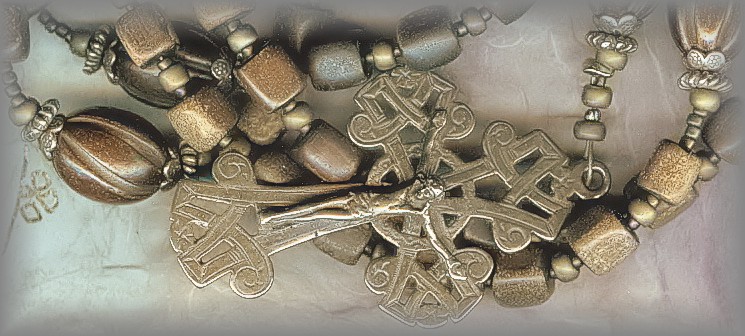
RIPR.2710 - (pricing) |
|
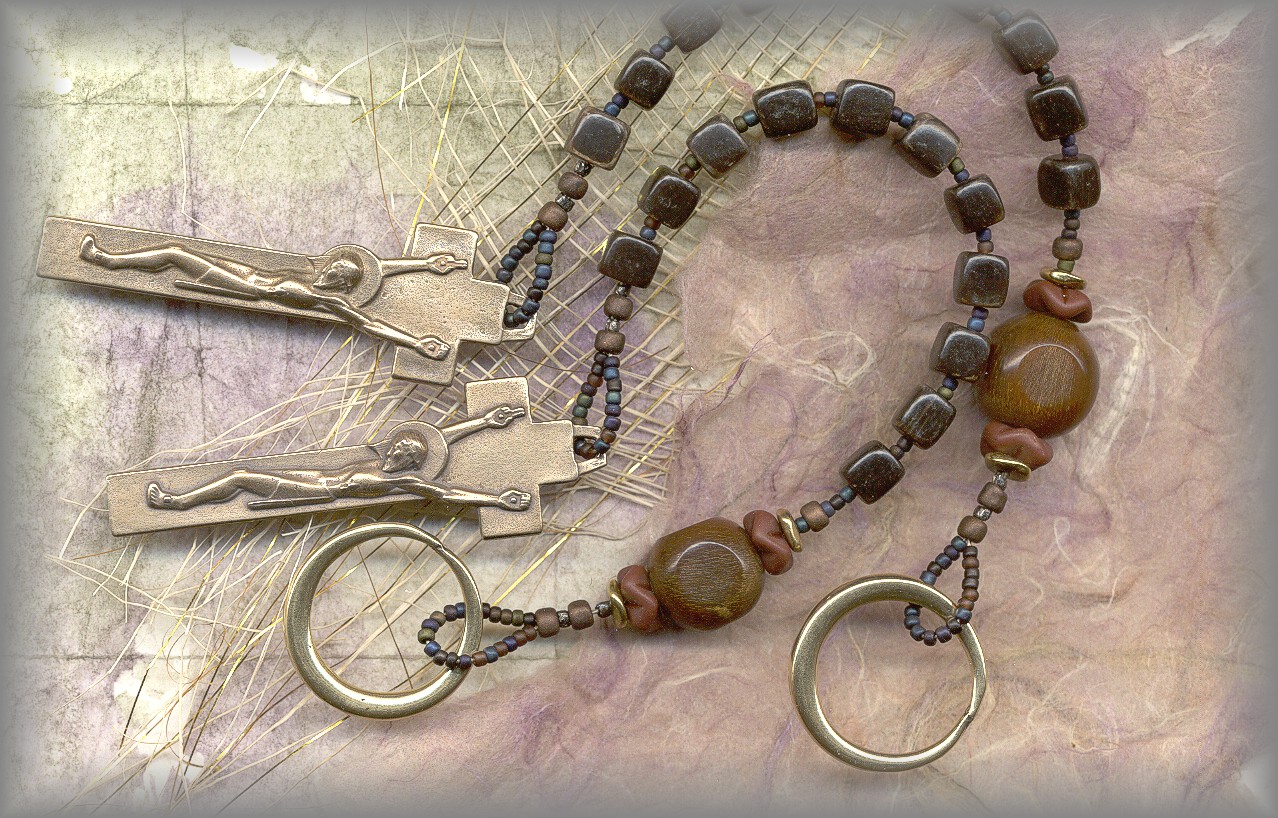
(for more information, scroll down) + "AN PAIDRIN BEAG" RIPR: IRISH PENAL ROSARY SERIES enjoy what we found on our trip to Ireland to fisit relatives. And how blessed we were to find this old penal cross dated 1722 + SHOWING RENEWED INTEREST The Penal Rosary, or Chaplet, reflect a long and sad history of the people of Ireland. But for some unknown reason, it is finding a new life all over the praying world, possibly because of world events. The chaplet is often known as 'An Paidrin Beag' or 'The Little Rosary'. We have used the traditional burnt horn beads and a choice of crucifixes. + MOST TRADITIONAL / AUTHENTIC? From what we have seen in collections in Ireland, I suspect the most traditional would be the metal 'Celtic' ring money. And of course we love the beautiful 1722 crucifix along with the 'Galway' crucifix (both shown below). Horn seemed to be a favorite bead as was readily available. + CELTIC MONEY RINGS WHAT HAPPENED TO THE BONE RINGS? The bone rings were not inspired by anything we ever saw so doubt they were ever a tradition. We just liked the combination - our idea alone and now are gone as not available any more. We are now using the ancient Celtic money rings, ring money instead and we hope you enjoy the original tradition. + YES! WE NOW HAVE TWO OF THE 5 DECADE IRISH ROSARIES OF HORN. (SEE ABOVE) WHY? BECAUSE YOU ASKED! for more information on penal chaplets see TRADITIONAL IRISH CHAPLETS added recently POCKET CHAPLET CONNEMARA MARBLE (IRELAND) more chaplets and the two rosaries JACOB'S LADDER - MUSEUM INSPIRED IRISH HORN ROSARY - CELTIC HORN ROSARY didn't miss reading this history HISTORY / PENAL CHAPLET SHOPPING CART - MORE LINKS |

~ TRADITIONAL IRISH CHAPLETS ~ |
|
A trip through the countryside of Ireland today will yield ruins of monasteries and churches cropping out of 40 shades of green - everywhere. After awhile one has to ask, 'what happened?' Religious persecution in Ireland began under Henry VIII (1540 until about 1731). The local Parliament adopted acts establishing the king's ecclesiastical supremacy, abolishing the pope's jurisdiction, and suppressing religious houses. To read more, use HISTORY link. |
|
~ POCKET CHAPLETS ~
FINGER or THUMB RING |
|
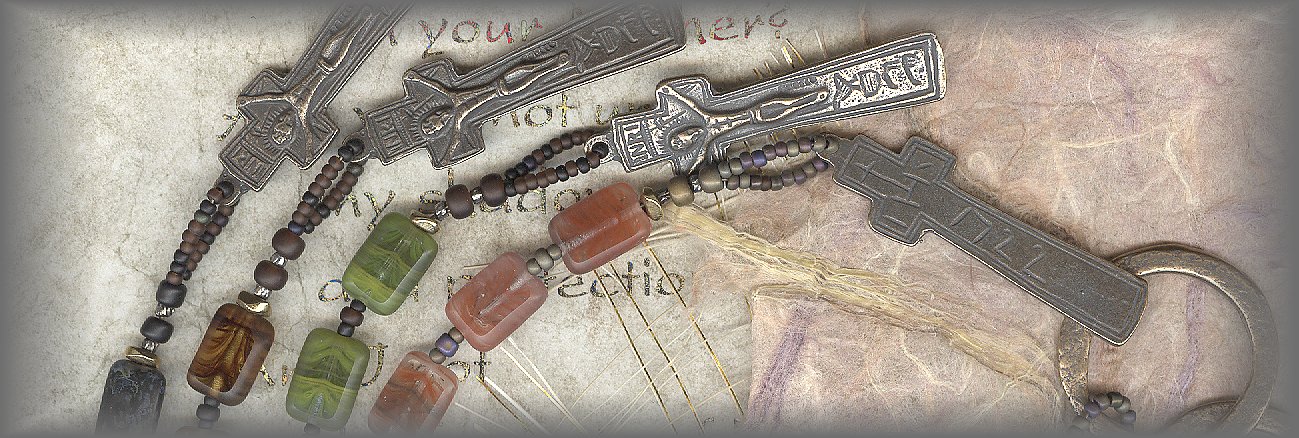
We have been looking for a metal 'Finger' or 'Thumb' Ring that would not look commercial and it was right under our nose. These are hand cast from ancient Celtic 'Money Rings' or Celtic 'Ring Money! A natural for our Penal Chaplets. + CLOSEUP OF PENAL CROSS DATED 1722
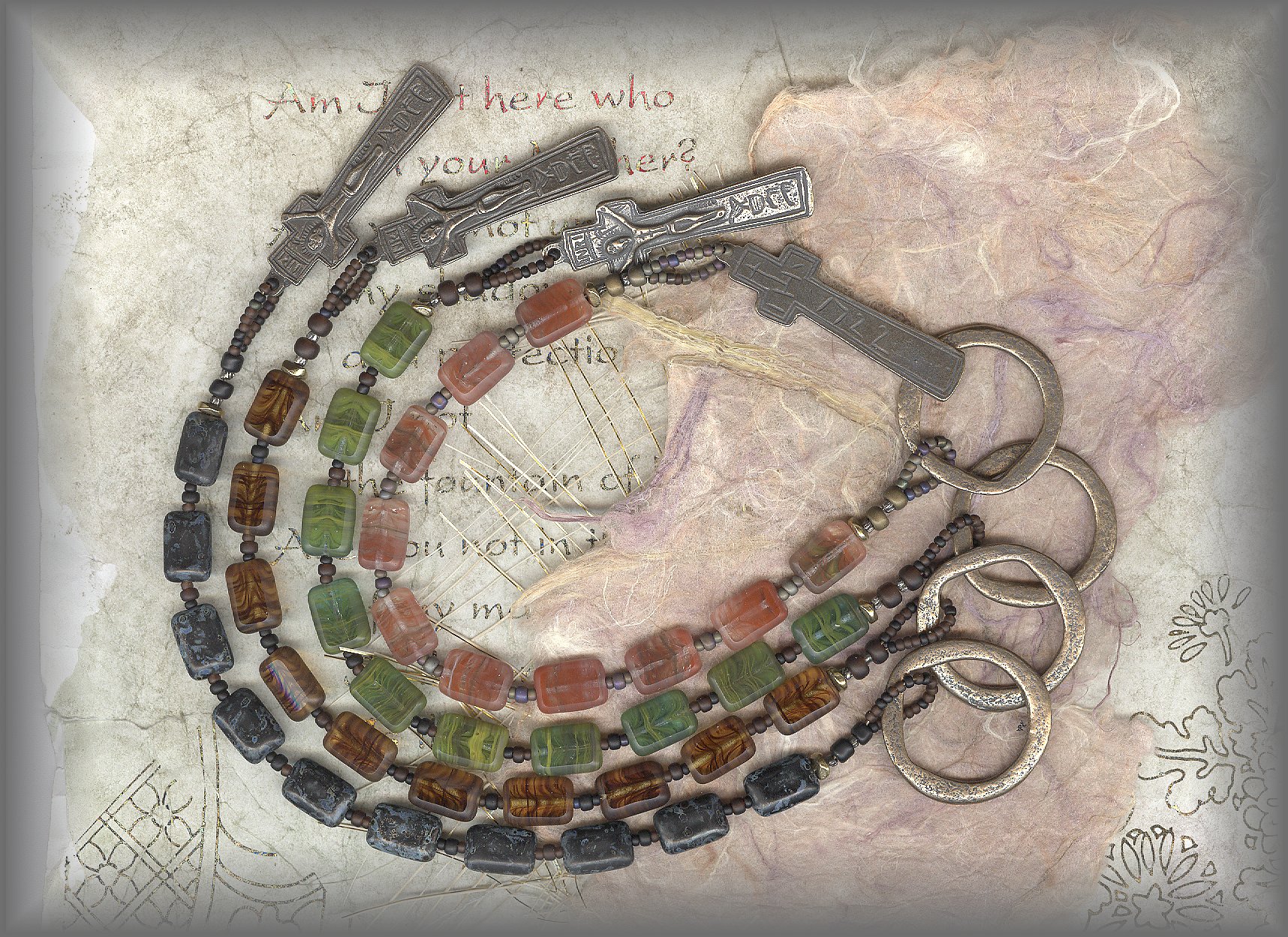
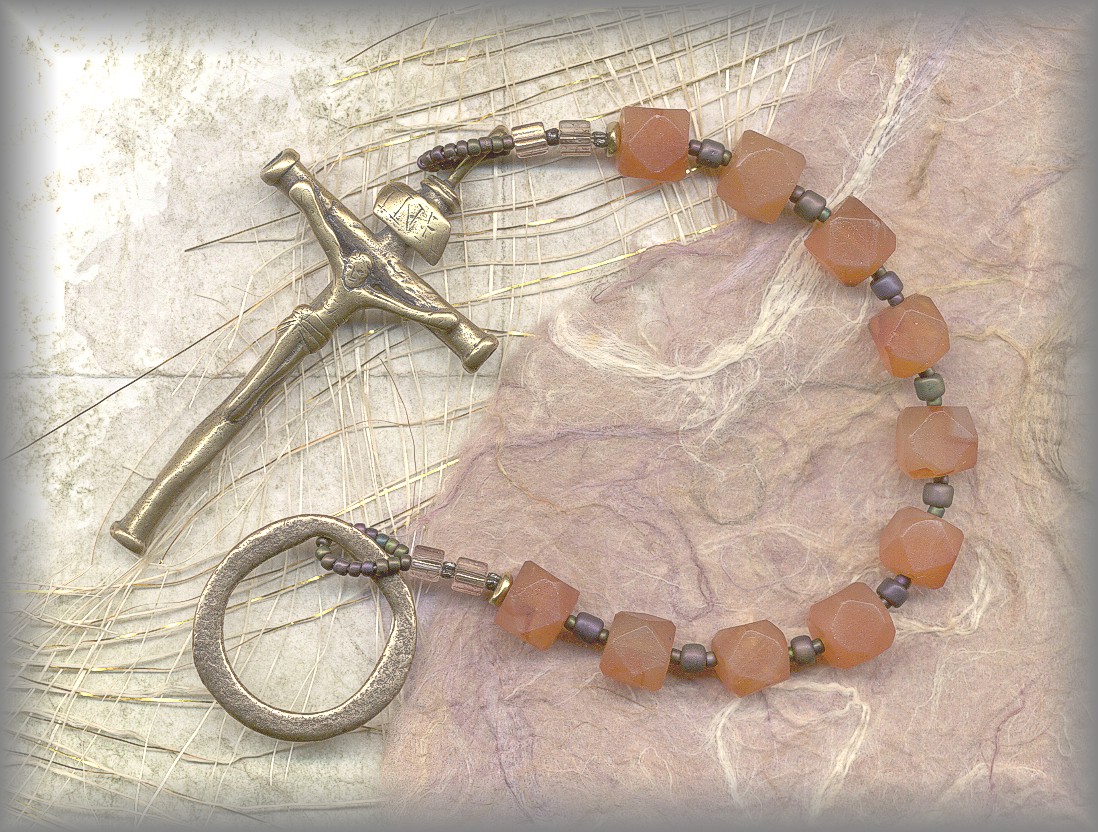
(click icons for larger images) + CLOSEUP OF PENAL CHAPLETS USING 'TABLE CUT BEADS" (FOUR COLORS BELOW: ROSE, GREEN, EARTH, BLACK/GRAY )
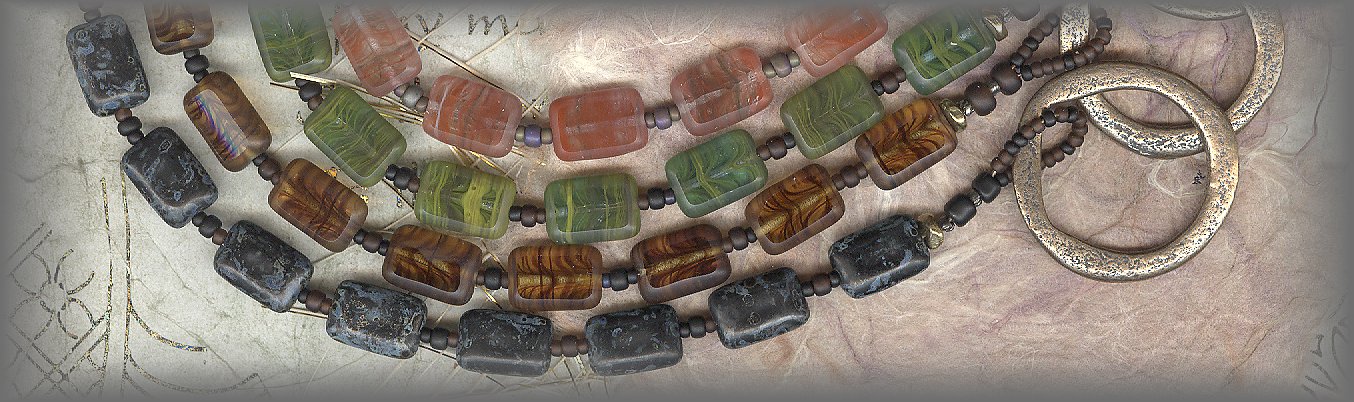
(click icons for larger images) (for more information or to order click link above) + CLOSE UP OF "TABLECUT BEADS" AND "CELTIC RING MONEY" (money rings were used for commerce in ancient trade. (Some authorities date the use of ring money from 800 to 500 BC (Late Bronze Age), but it may have been used as late as 100 BC)
(click icons for larger images) + MORE POCKET CHAPLETS
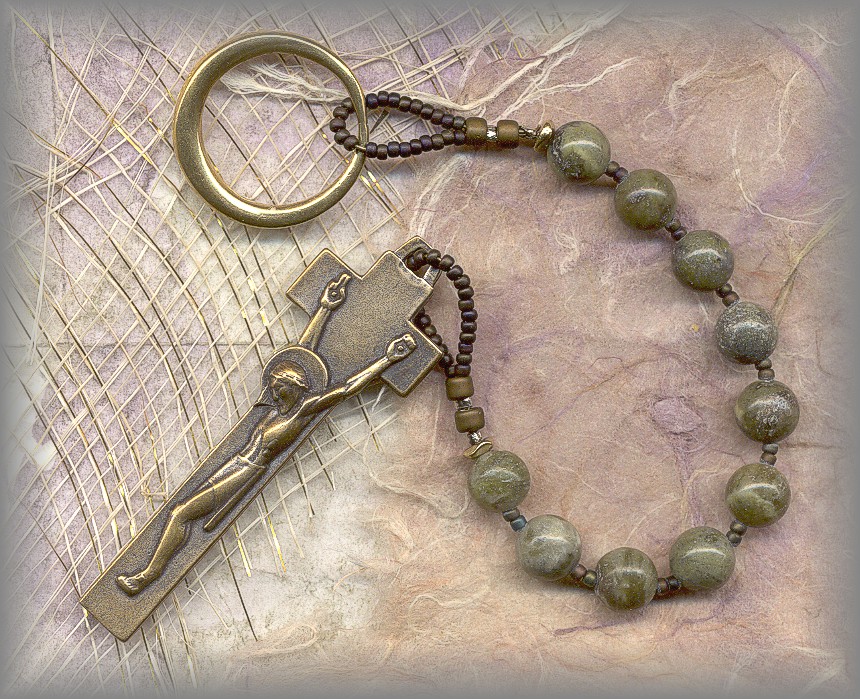
(click icons for larger images) + LEFT: POCKET CHAPLET (10 in.) We are delighted to add these burnt horn chaplets to our ever growing list of best sellers. + RIGHT: IRISH CONNEMARA MARBLE (9in.) Tradition was that these ten bead or 'Tenners' were used by men throughout Europe especially in times of persecution of the Catholic church as were easily hidden. Today they are popular with people on the go. + AVAILABLE IN STERLING OR SOLID BRONZE: All metals hand cast from antiques in sterling silver and solid bronze then antiqued to restore original patina. See full collection by going to SUPPLIES top of page. |
|
~ JACOB'S LADDER ~ |
|
PENAL CHAPLET IN IRELAND
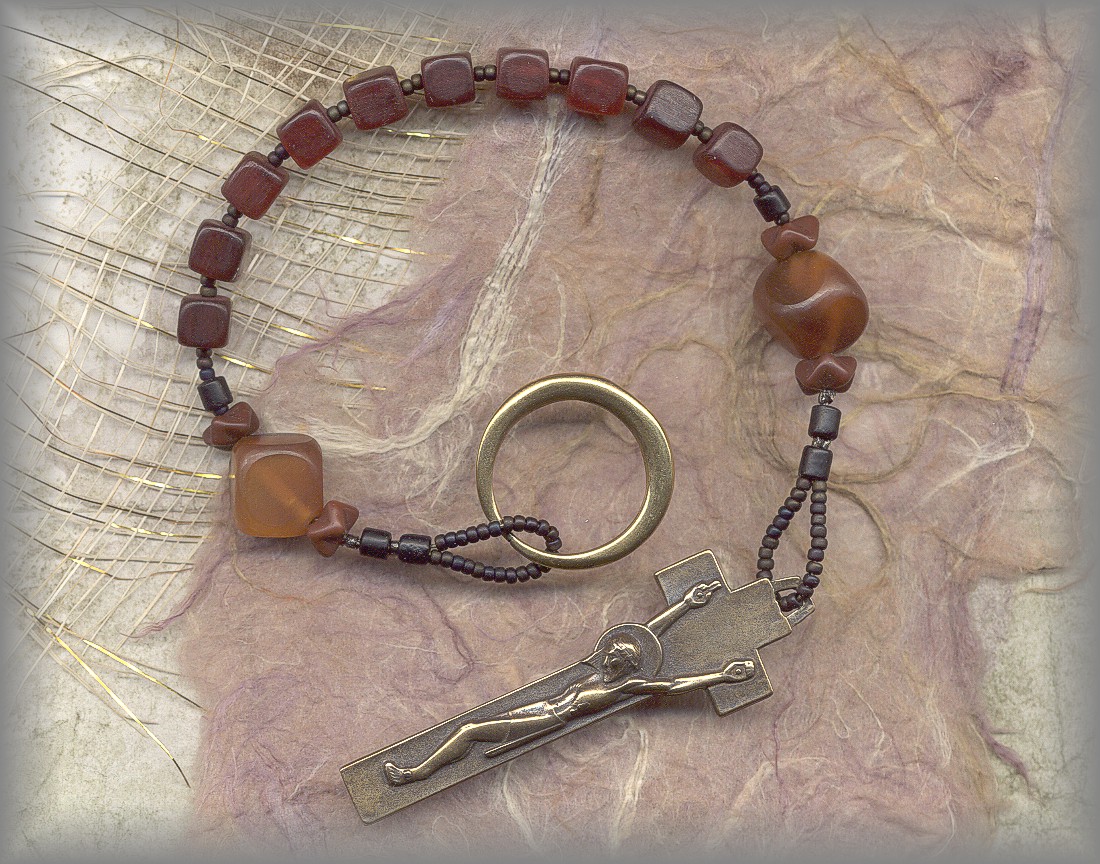
(click icons for larger images) + LEFT: JACOB'S LADDER (9 in.) - We were unfamiliar with this configuration but have been asked many times to make them and we like them too. Pater bead on either end is a nice reminder for those who pray a whole rosary on it. + RIGHT: MUSEUM INSPIRED (11 in.) - Inspired by a rosary in the Hunt Museum (Limerick) using the Galway Crucifix. (See below) The finger ring on ours is cast from ancient Celtic Ring Money. + inspired by the old TWO TRADITIONS MERGING
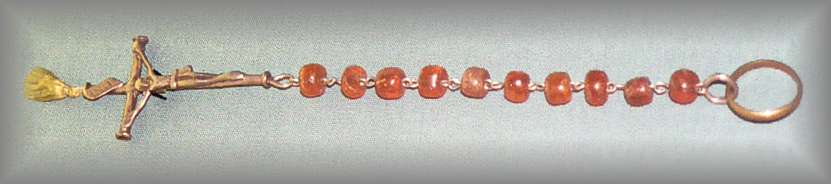
(click icons for larger images) + AMBER PENAL CHAPLET A wonderful example of two traditions merging. What we think of as a Penal Rosary or Chaplet has the traditional 'Thumb Ring' at one end and the 'Galway Crucifix' at the other. Ave beads are of amber. +. READ MORE HISTORY ON THE PENAL CHAPLET HUNT MUSEUM (LIMERICK IRELAND) |
|
~ 1722 CRUCIFIX / HORN ROSARY ~ |
|
MID 20th CENTURY ROSARIES
(click icons for larger images) + IRISH HORN ROSARIES We made these because you asked. Beads are traditional horn. Paters are capped as in traditional ones along with the heart center. Options on the crucifix are notable with early penal crucifix (ca 1722) or plain (mid 1950s). 19 in. RIPR.2709 |
|
~ CELTIC HORN ROSARY ~ |
(click icons for larger images) + Celtic Knot Design on this crucifix dates back centuries, some are 2000 years old. We have used burnt horn beads for the hand carved Paters and Aves. And added the traditional heart center seen on many Irish rosaries. (20 in.) + - (for more info or to order click link below) RIPR.2710 |
|
~ HISTORY / PENAL CHAPLET ~ |
|
A trip through the countryside of Ireland today will yield ruins of monasteries and churches everywhere. After awhile one has to ask, 'what happened?' Religious persecution in Ireland began under Henry VIII (1540 until about 1731). The local Parliament adopted acts establishing the king's ecclesiastical supremacy, abolishing the pope's jurisdiction, and suppressing religious houses. + TREATY OF LIMERICK In 1691, King James II signed the Treaty of Limerick. This assured that the Irish Catholics were secure to own their own land, speak their own language and above all, practice their religion. History tells us that as soon as he left Ireland, the treaty was broken and all the guarantees above were denied by the English. Death became the common penalty for attending or celebrating the Mass. Many, many Priest and Laity lost their lives in the underground churches. + 'THUMB' RING - 5 DECADES These times became known as the 'Penal Times' and the Irish Penal Rosary became popular as the ring could be put on one finger at a time (beginning with the thumb) and then moved to the next finger until all 5 decades of the rosary were completed. This way it was hidden in the hand of the pray-er so as not to be found. + ORIGIN OF SHAPE? The long cross was believed to be designed to go into the hand more secretly - or possibly up the sleeve - but the Tall Crosses which are all over Ireland symbolize the reaching up to heaven. What is the origin of this long, narrow crucifix? It dates back to Loch Derg, Co. Donegal (St Patrick's Purgatory) where these crosses were carved from wood for souvenirs for pilgrims according to the National Museum of Ireland! The arms kept breaking off so the shorter crossbars became popular. They also reflect the shape of the Irish 'High' or 'Tall' crosses. The ten bead chaplets date back to the 1500s and were considered a man's 'tenner'. |
|
GEBETSKETTE ZEHNER? GEBETSKETTE ZEHNER is German for 'Prayer Chain Decimal' (ZEHNER: Decimal or 10). These open ended 10 bead chaplets were very popular with men. One end had a small cross called the 'CREDOKREUZ' (Credo Cross) to remind one to pray the Creed and to ask for an increase in faith hope and charity, followed by a medal or crucifix. A tassel (PASSEMENTERIE) was often included.. The other end was a ring (often like an ornamental ring you would wear on your finger). These chaplets date back to the 16c so may have a longer history than what we know as the Penal Chaplet above. These 10 bead chaplets were still in use in the mid 1800s and also known as a 'TENNER'. (now looped). They were popular in all silver but recently picked one up at a flea marked in Germany with wooden beads from the same period or later. These looped 'TENNERS' also included a smaller cross |
|
Just wanted to say this is the most impressive rosary ordering site on the web. Thank you, and all the rosaries I have purchased for myself from the Rosary Workshop have been incredible conversation pieces and a pleasure to pray on. Now that I have buttered you up some I am begging mercy and wondering if you would expedite my Irish Penal chaplet more quickly then normal. With all my heart and prayers I am thanking you very much in advance, and looking forward to doing business again. ~ Fr .Joseph F (USA) |
|
MISSION STATEMENT Our vision is to provide the finest handmade rosaries, chaplets and other fine religious art forms for personal worship we can make using the best supplies available. The Guild believes the work of our hands should give visual Glory to God, therefore for us, the best for you is very, very important. for more information see HISTORY of THE PENAL CHAPLET Crucifixes available alone below: WILDGOOSE STUDIO - TOP OF PAGE |
|
secure-online - credit card -[or]- mail in - mo/personal check |
|
|
|
|
|
|
|
|
|
|
|
|
|
|