| MUSEUM
Antique Rosaries |
HISTORY
of the Rosary |
for you index |
cord instructions |
LINKS |
EMAIL
US+
877.695 3561 |

|
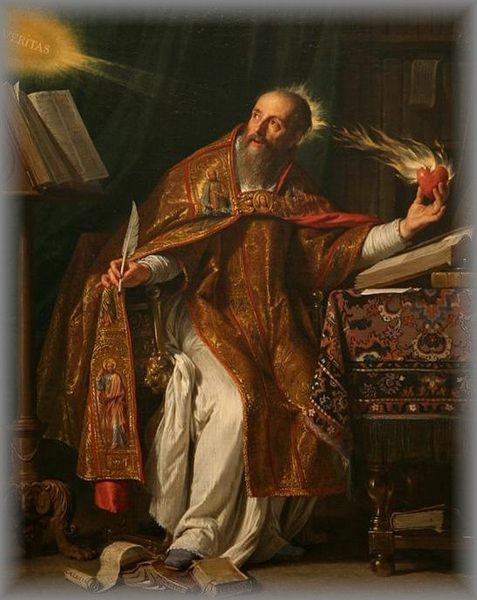
NO MERCY WITHOUT JUSTICE There is nothing more powerful than prayer as an act against war. We know there is no mercy without justice and no justice without mercy. Theories have been around for centuries, Augustine (354 -430) was one of the first recognized although theorists date back and include Cicero (106 BCE-43 BCE). + THOMAS AQUINAS - 1225 - 1274
Mus?e du Louvre (Paris) + St Thomas Aquinas, centuries later, (1225 - 1274) used the authority of Augustine's arguments in an attempt to define the conditions under which a war could be just:[64] DO NOT BE TROUBLED
interesting links to follow
|
|
ST MICHAEL THE ARCHANGEL
|

*ST AUGUSTINE* |
|
JUST WAR THEORY John Langan, S.J. + ST. AUGUSTINE (354 - 430)
Los Angeles County Museum of Art + HIS JUST WAR THEORY INVOLVES EIGHT ELEMENTS: + (1) a punitive conception of war, (2) assessment of the evil of war in terms of the moral evil of attitudes and desires, (3) a search for authorization for the use of violence, (4) a dualistic epistemology which gives priority to spiritual goods, (5) interpretation of evangelical norms in terms of inner attitudes, (6) passive attitude to authority and social change, (7) use of Biblical texts to legitimate participation in war, and (8) an analogical conception of peace. It does not include noncombatant immunity or conscientious objection. A contemporary assessment of the elements is offered. + Augustine agreed strongly with the conventional wisdom of the time, that Christians should be pacifists in their personal lives. But he routinely argued that this did not apply to the defense of innocents. In essence, the pursuit of peace must include the option of fighting to preserve it in the long-term.[62] Such a war could not be preemptive, but defensive, to restore peace.[63] |
|
*CATHOLIC CATECHISM* |
|
IN THE CATECHISM OF THE CATHOLIC CHURCH II. SAFEGUARDING PEACE + PEACE +
2302
By recalling the commandment, "You shall not kill," [Mt. 5:21] our Lord asked for peace of heart and denounced murderous anger and hatred as immoral. Anger is a desire for revenge. "To desire vengeance in order to do evil to someone who should be punished is illicit," but it is praiseworthy to impose restitution "to correct vices maintain justice." [St. Thomas Aquinas, ST II-II q158, a1 ad3] If anger reaches the point of a deliberate desire to kill or seriously wound a neighbor, it is gravely against charity; it is a mortal sin. The Lord says, "Everyone who is angry with his brother shall be liable to judgment." [Mt. 5:22] +
2303
Deliberate hatred is contrary to charity. Hatred of the neighbor is a sin when one deliberately wishes him evil. Hatred of the neighbor is a grave sin when one deliberately desires him grave harm. "But I say to you, Love your enemies and pray for those who persecute you, so that you may be sons of your Father who is in heaven." [Mt. 5:44-45] +
2304
Respect for and development of human life require peace. Peace is not merely the absence of war, and it is not limited to maintaining a balance of powers between adversaries. Peace cannot be attained on earth without safeguarding the goods of persons, free communication among men, respect for the dignity of persons and peoples, and the assiduous practice of fraternity. Peace is "the tranquility of order." [St. Augustine, City of God 19, 13,1] Peace is the work of justice and the effect of charity. [Cf. Is. 32:17; cf. Vatican II, Guadium et spes #78, 1-2] +
2305
Earthly peace is the image and fruit of the peace of Christ, the messianic "Prince of Peace." [Is. 9:5] By the blood of his Cross, "in his own person he killed the hostility," [Eph. 2:16; cf. Col. 1:20-22] he reconciled men with God and made his Church the sacrament of the unity of the human race and of its union with God. "He is our peace." [Eph. 2:14] He has declared: "Blessed are the peacemakers." [Mt. 5:9] +
2306
Those who renounce violence and bloodshed and, in order to safeguard human rights, make use of those means of defense available to the weakest, bear witness to evangelical charity, provided they do so without harming the rights and obligations of other men and societies. They bear legitimate witness to the gravity of the physical and moral risks of recourse to violence, with all its destruction and death. [Cf. Vatican II, Guadium et spes 78, 5] + AVOIDING WAR +
2307
The fifth commandment forbids the intentional destruction of human life. Because of the evils and injustices that accompany all war, the Church insistently urges everyone to prayer and to action so that the divine Goodness may free us from the ancient bondage of war. [Cf. Vatican II, Guadium et spes 81, 4] All citizens and all governments are obliged to work for the avoidance of war. However, "as long as the danger of war persists and there is no international authority with the necessary competence and power, governments cannot be denied the right of lawful self-defense, once all peace efforts have failed." [Cf. Vatican II, Guadium et spes 79, 4] +
2308
All citizens and all governments are obliged to work for the avoidance of war. However, "as long as the danger of war persists and there is no international authority with the necessary competence and power, governments cannot be denied the right of lawful self-defense, once all peace efforts have failed."[105] +
2309
The strict conditions for legitimate defense by military force require rigorous consideration. The gravity of such a decision makes it subject to rigorous conditions of moral legitimacy. At one and the same time: - the damage inflicted by the aggressor on the nation or community of nations must be lasting, grave, and certain; - all other means of putting an end to it must have been shown to be impractical or ineffective; - there must be serious prospects of success; - the use of arms must not produce evils and disorders graver than the evil to be eliminated. The power of modern means of destruction weighs very heavily in evaluating this condition. These are the traditional elements enumerated in what is called the "just war" doctrine. The evaluation of these conditions for moral legitimacy belongs to the prudential judgment of those who have responsibility for the common good. +
2310
Public authorities, in this case, have the right and duty to impose on citizens the obligations necessary for national defense. Those who are sworn to serve their country in the armed forces are servants of the security and freedom of nations. If they carry out their duty honorably, they truly contribute to the common good of the nation and the maintenance of peace.[Cf. Vatican II, Guadium et spes 79, 5] +
2311
Public authorities should make equitable provision for those who for reasons of conscience refuse to bear arms; these are nonetheless obliged to serve the human community in some other way.[Cf. Vatican II, Guadium et spes 79, 3] 2312 The Church and human reason both assert the permanent validity of the moral law during armed conflict. "The mere fact that war has regrettably broken out does not mean that everything becomes licit between the warring parties." [Cf. Vatican II, Guadium et spes 79, 4] +
2313
Non-combatants, wounded soldiers, and prisoners must be respected and treated humanely. Actions deliberately contrary to the law of nations and to its universal principles are crimes, as are the orders that command such actions. Blind obedience does not suffice to excuse those who carry them out. Thus the extermination of a people, nation, or ethnic minority must be condemned as a mortal sin. One is morally bound to resist orders that command genocide. +
2314
"Every act of war directed to the indiscriminate destruction of whole cities or vast areas with their inhabitants is a crime against God and man, which merits firm and unequivocal condemnation." [Cf. Vatican II, Guadium et spes 80, 3]A danger of modern warfare is that it provides the opportunity to those who possess modern scientific weapons - especially atomic, biological, or chemical weapons - to commit such crimes. +
2315
The accumulation of arms strikes many as a paradoxically suitable way of deterring potential adversaries from war. They see it as the most effective means of ensuring peace among nations. This method of deterrence gives rise to strong moral reservations. The arms race does not ensure peace. Far from eliminating the causes of war, it risks aggravating them. Spending enormous sums to produce ever new types of weapons impedes efforts to aid needy populations; [Pope Paul VI, Populorum Progressio 53] it thwarts the development of peoples. Over- armament multiplies reasons for conflict and increases the danger of escalation. +
2316
The production and the sale of arms affect the common good of nations and of the international community. Hence public authorities have the right and duty to regulate them. The short-term pursuit of private or collective interests cannot legitimate undertakings that promote violence and conflict among nations and compromise the international juridical order. +
2317
Injustice, excessive economic or social inequalities, envy, distrust, and pride raging among men and nations constantly threaten peace and cause wars. Everything done to overcome these disorders contributes to building up peace and avoiding war: Insofar as men are sinners, the threat of war hangs over them and will so continue until Christ comes again; but insofar as they can vanquish sin by coming together in charity, violence itself will be vanquished and these words will be fulfilled: "they shall beat their swords into plowshares, and their spears into pruning hooks; nation shall not lift up sword against nation, neither shall they learn war any more." [Cf. Vatican II, Guadium et spes 78, 6; cf. Is. 2:4] + |
|
*7 PRINCIPLES* |
|
THE JUST WAR THEORY
1.
A just war can only be waged as a last resort. All non-violent options must be exhausted before the use of force can be justified.
2.
A war is just only if it is waged by a legitimate authority. Even just causes cannot be served by actions taken by individuals or groups who do not constitute an authority sanctioned by whatever the society and outsiders to the society deem legitimate.
3.
A just war can only be fought to redress a wrong suffered. For example, self-defense against an armed attack is always considered to be a just cause (although the justice of the cause is not sufficient--see point #4). Further, a just war can only be fought with "right" intentions: the only permissible objective of a just war is to redress the injury. 4 .
A war can only be just if it is fought with a reasonable chance of success. Deaths and injury incurred in a hopeless cause are not morally justifiable. 5.
The ultimate goal of a just war is to re-establish peace. More specifically, the peace established after the war must be preferable to the peace that would have prevailed if the war had not been fought.
6.
The violence used in the war must be proportional to the injury suffered. States are prohibited fromusing force not necessary to attain the limited objective of addressing the injury suffered. 7.
The weapons used in war must discriminate between combatants and non-combatants. Civilians are never permissible targets of war, and every effort must be taken to avoid killing civilians. The deaths of civilians are justified only if they are unavoidable victims of a deliberate attack on a military target. |
|
*JUSTICE for BEN LADEN ?* |
|
Msgr. Stuart Swetland, professor of ethics at Mount St. Mary’s University and Seminary (Emmitsburg, Md.) is a graduate of the US Naval Academy, said he believes the killing of OSB is morally justified, but reminds us 'We should not take delight in the death of another' and quotes: EZEKIEL 33: 11
|
|
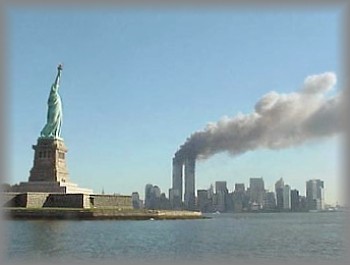
*9 11* |
THE
DATE OF THE
|
|
MISSION STATEMENT Our vision is to provide the finest handmade rosaries, chaplets and other fine religious art forms for personal worship we can make using the finest supplies available. The Guild believes the work of our hands should give visual Glory to God, therefore for us, the best for you is very, very important. +++
MUSEUM
- HISTORY
- PRAYER
OFFICE
HOURS
|
|
secure-online - credit card -[or]- mail in - mo/personal check |