| MUSEUM
Antique Rosaries |
HISTORY
of the Rosary |
for you index |
cord instructions |
LINKS |
EMAIL
US+
877 695 3561 |

|
A wonderful opportunity to see the transition of design from the 1700s through the 1800s from Equador, Cusco and Bolivia during the early Spanish influence of the Colonies, known as New Spain. +
THANK YOU! With special thanks to Equatoria for sharing their private collection through these images for your study and use as students and lovers of religious art. We hope you enjoy our online museum where collectors from all over the world have allowed us to use their images for educational purposes.
for
more information see
|

*EQUADORIA* |
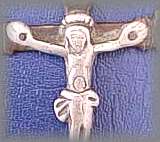
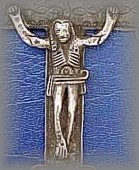
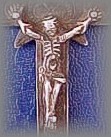
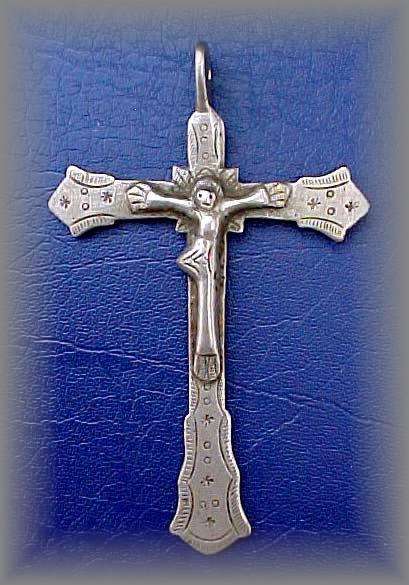
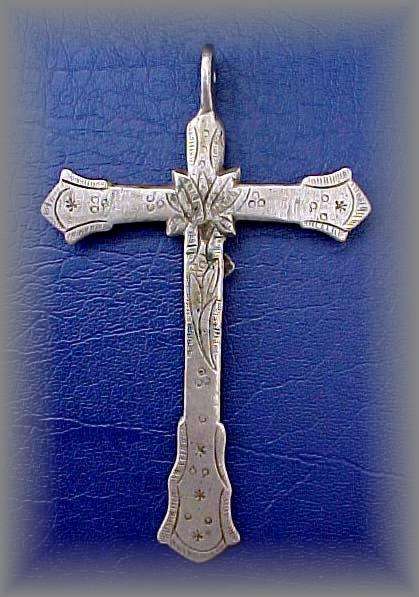
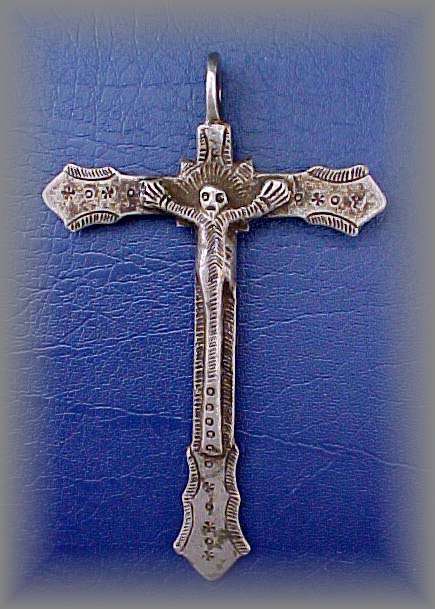
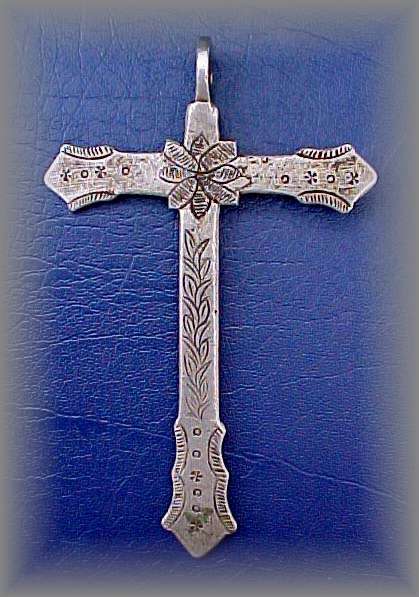
+ OLDEST IN OUR COLLECTION These two crucifixes are both from Ecuador, probably 1750 to 1850. They seem to be more coin silver than sterling. They are both hand made and indigenous to their village/place of origin in Ecuador. Both were acquired some years ago from a dealer who specialized in Latin American items. They are probably the oldest ones I have, and they may have an even earlier date. |
+ BOTH HEAVY AND WORN Both are heavy and worn, and quite wonderful. I was told at the time of purchase that the natives sometimes referred to them as the "monkey gods", probably because many of them at the time they were made, and as they were passed from hand to hand over the decades/centuries, may have had little real understanding of what these naive crucifixes represented, and also because the images of the figures are so primitive. I love them for this quality of naivety. |
|
*CUSCO* |
|
Quosco - Often called the 'Sacred City of the Incas', this city dates back thousands of years. The first Spaniards arrived November 15th 1533. It was renamed by Francisco Pizarro who gave it to the Spanish King following the Spanish tradition (March 23rd 1534). Calling it, 'The Very Noble and Great City of Cuzco. +
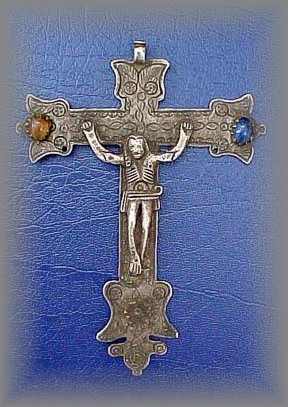
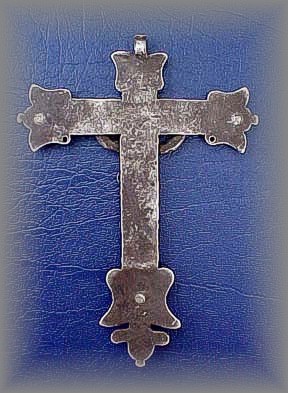
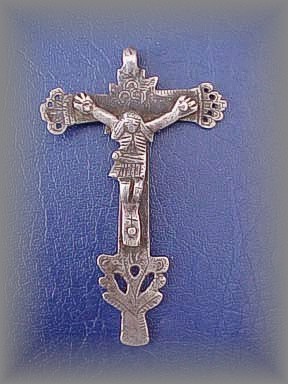
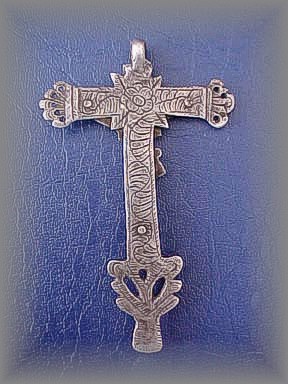
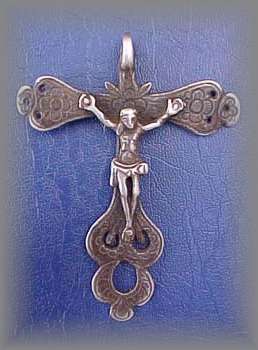
+ NOTE EXQUISITE CRAFTSMANSHIP These (3) crucifixes are from the same collector some years ago, who indicated to me in a general way that they were from Peru and more specifically from Cusco, and that they were getting very hard to find. (Not long after that Peru banned export of such artifacts.) They appear to be made of silver, or in the case of the one with stones, (I) perhaps coin silver. It is not as heavily constructed, perhaps because of its size, and it has no embellishment on the back. + But note the exquisite craftsmanship and detail of the corpus and the naturalistic designs on the face of the cross. Although there are holes for two small crosses to dangle from, the small crosses have long since been lost. |
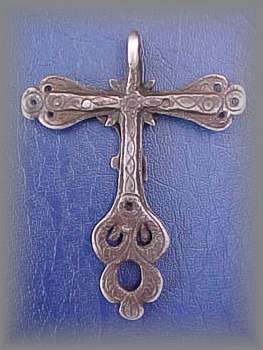
+ HEAVILY EMBELLISHED The second crucifix is of heavier construction, although smaller. It seems to have a higher silver content. The corpus in this one is also quite wonderful, although a little more naive. Note the way the body is formed, and the oversized hands and feet. The cross is heavily embellished with naturalistic designs of flowers and fern forms no doubt indigenous to the maker's village area. It too has holes for dangling small crosses and they have also been lost. |
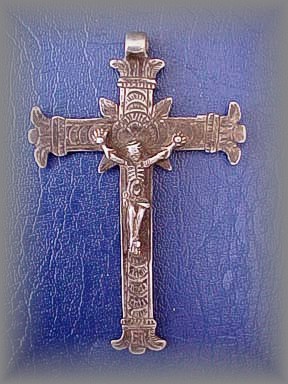
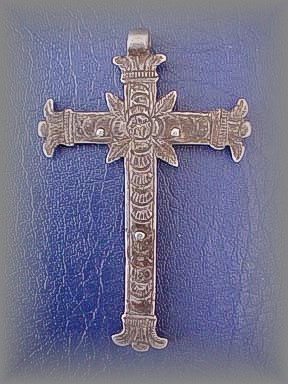
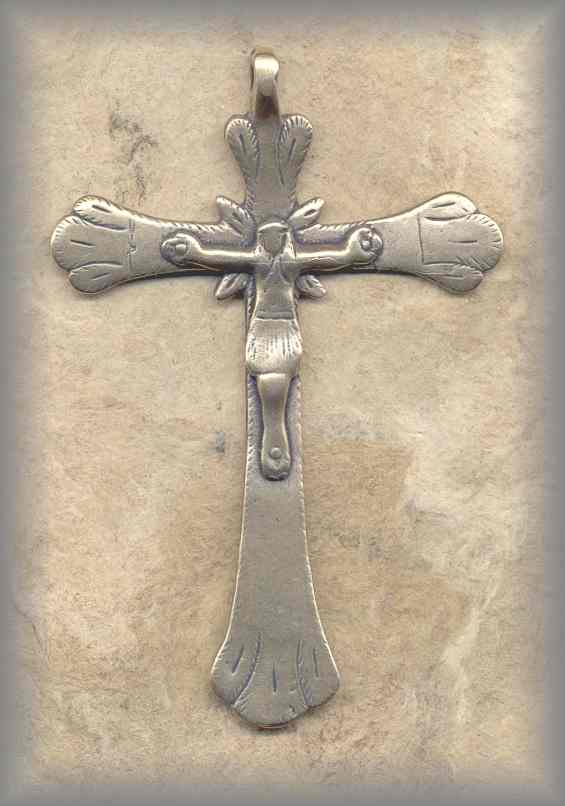
+ 'FEATHERED' The third crucifix has what is sometimes called the "feathered" embellishments, most notably behind the head of the corpus and at all four terminations of the cross. It is also well defined on the back. The corpus is naive in proportions, with large hands and feet and a shorter body. It is well worn. It appears to have a high silver content. |
|
*BOLIVIA* |
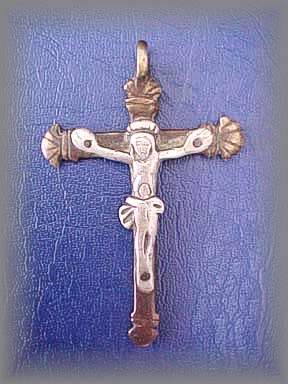
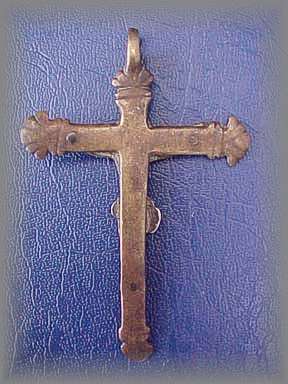
+ SILVER ON BRONZE This first crucifix is from Bolivia, and exhibits a very simple craftsmanship quite different from those originating in Peru .The corpus is silver mounted on bronze or brass, the halo is attached to the corpus, and the cross is not embellished, although the termination areas show a fan-shaped design.The corpus itself is less dimensional, with large hands and simple abstracted feet more like those on the crucifixes from Ecuador. It is very worn. |
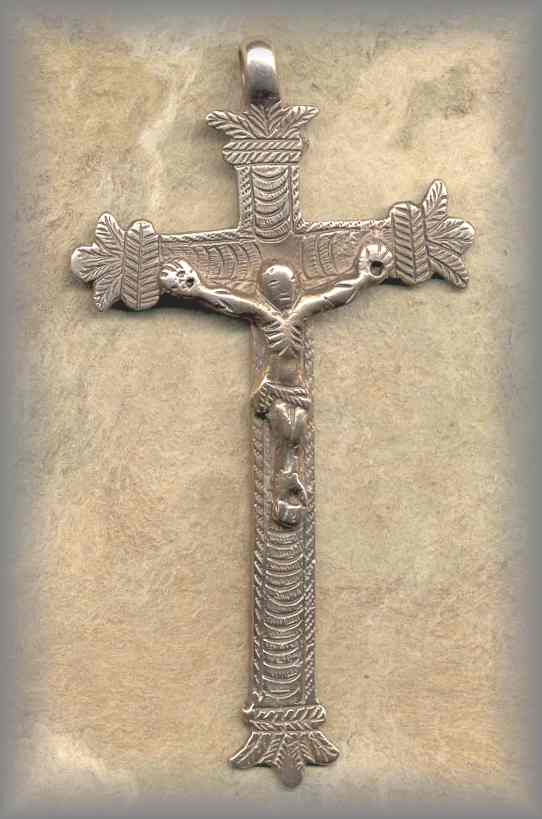
+ HIGH IN SILVER CONTENT The second crucifix exhibits an entirely different, rounded shape and a very solid supporting structure in the back. It is most probably from Peru but could as well be from Bolivia. It is heavy and appears to have a high silver content.It is embellished front and back with flower and leaf designs. The corpus is well detailed and the arms of the cross have holes for attaching small dangling crosses which have long been lost. |
|
*CUERNAVACA* |
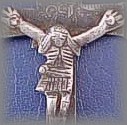
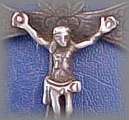
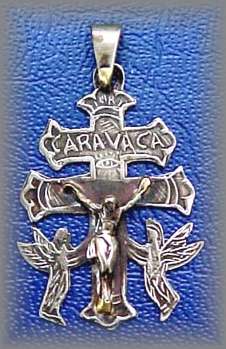
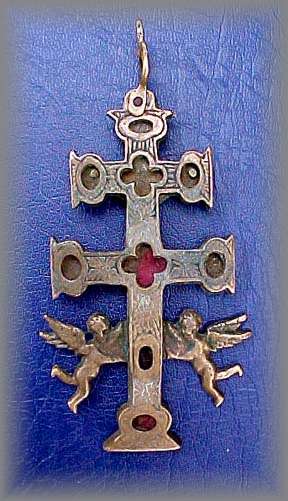
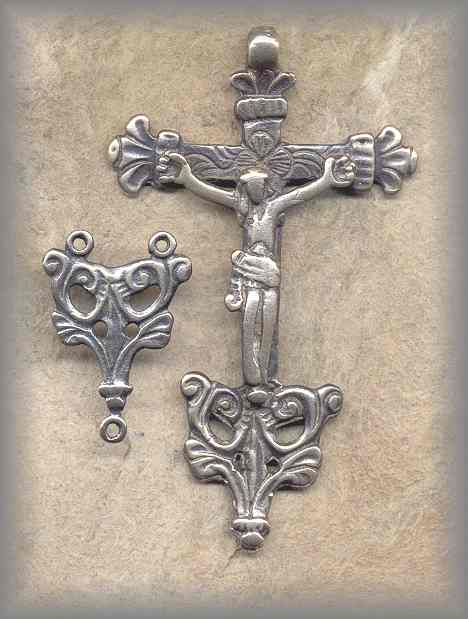
+ EXAMPLE OF OLD CRUCIFIX STYLE A small Cuernavaca, or Caravaca Crucifix. It is 1.5" with the bail, by 1". Made of silver, it is from Mexico and is not old. I found it in Oaxaca several years ago and thought it was an interesting form of the old Cuernavaca crucifix (see below).. It may be an item made largely for tourists. |
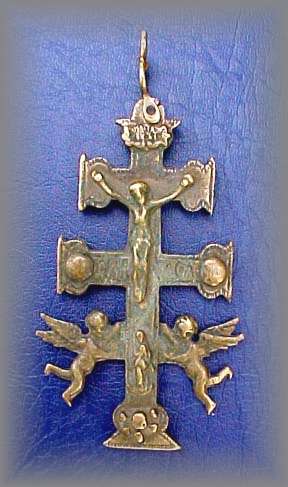
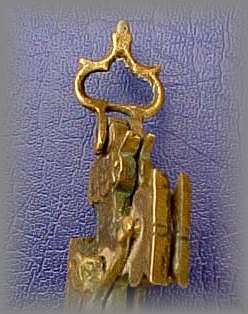
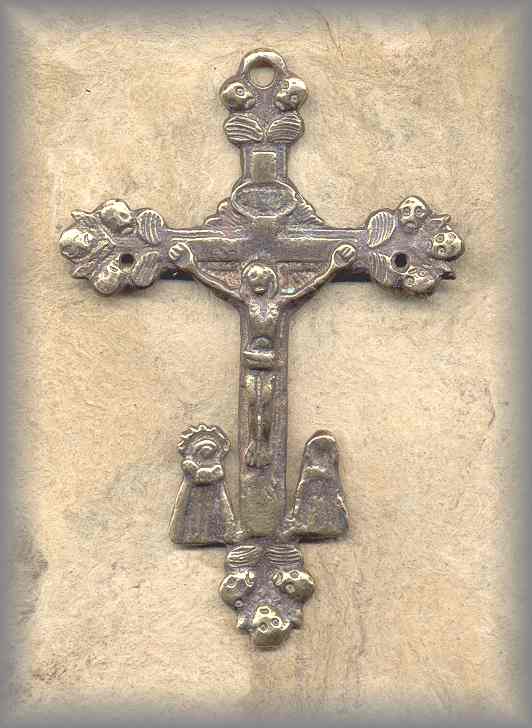
+ CLOSE UP OF TOP It is made of heavy brass I believe it is from Spain and seems tobe a relic crucifix, something I didn't know when I bought it, nor did the vendor know, Note red fragment of fabric showing in the back openings and I can only guess that this is probably a relic. I've never seen one like this. (note cross will open to show the relics inside.) |
|
*CROSSES CAST from ANTIQUES*
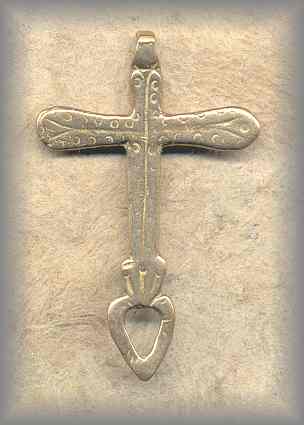
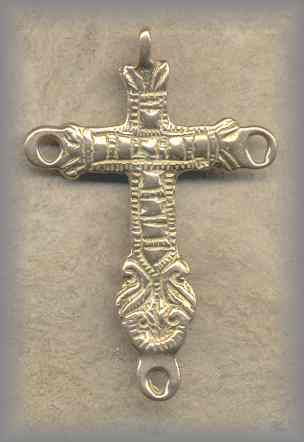
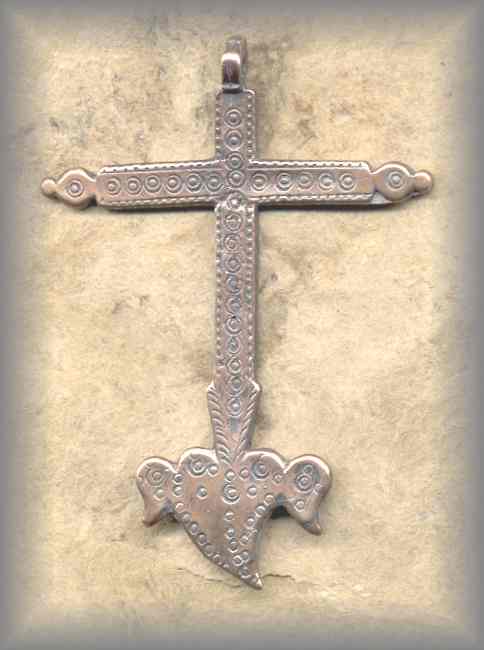
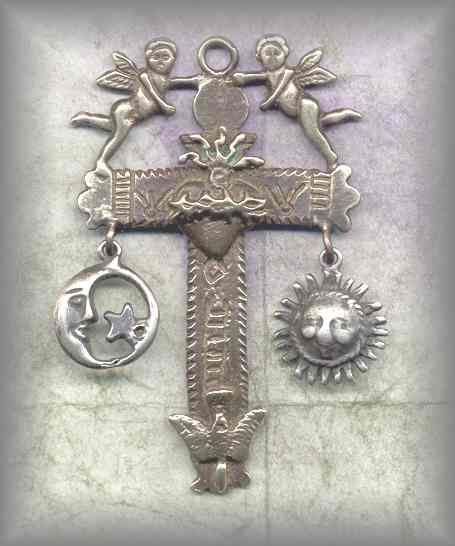
+ ITEMS AVAILABLE ROW 1: items below are from the same period (Spanish Colonial) as above. ROW 2: more Antique Latin American crosses (newer). All have been hand cast in solid bronze and sterling silver (then antiqued to bring back original patina). They are part of the Equatoria Collection they have chosen to have reproduced. They may be purchase in our catalog under - COPY AND
PASTE ITEM NUMBER
|
EQ.040 |
EQ.077 |
EQ.078 |
EQ.200 |
EQ.079 |
EQ.080 |
EQ.083 |
EQ.262 |
|
MISSION STATEMENT Our vision is to provide the finest handmade rosaries, chaplets and other fine religious art forms for personal worship we can make using the finest supplies available. The Guild believes the work of our hands should give visual Glory to God, therefore for us, the best for you is very, very important. +++ QUESTIONS? copy and paste beadsong@hotmail.com OR CALL WEEKDAYS - 9 to 5central 877.695.3561
MUSEUM
- HISTORY
- PRAYER
OFFICE
HOURS
|
|
secure-online - credit card -[or]- mail in - mo/personal check |