| MUSEUM
Antique Rosaries |
HISTORY
of the Rosary |
for you index |
cord instructions |
LINKS |
EMAIL
US+
877 695 3561 |

 |
 |
|
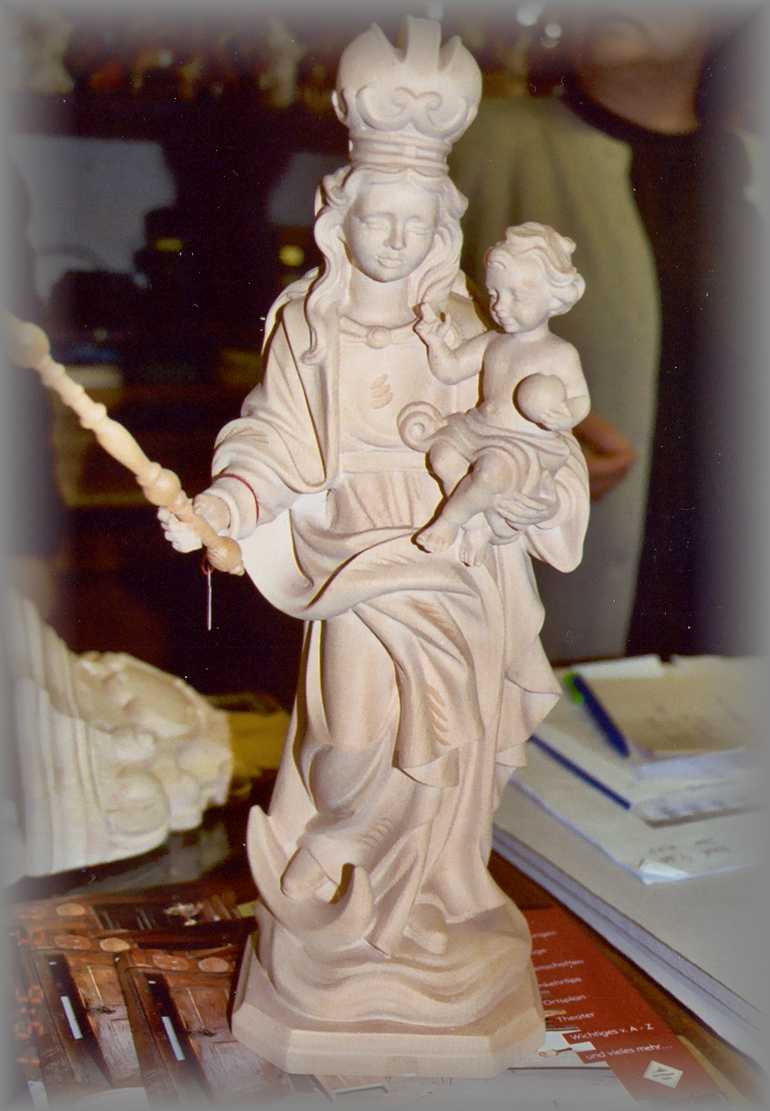
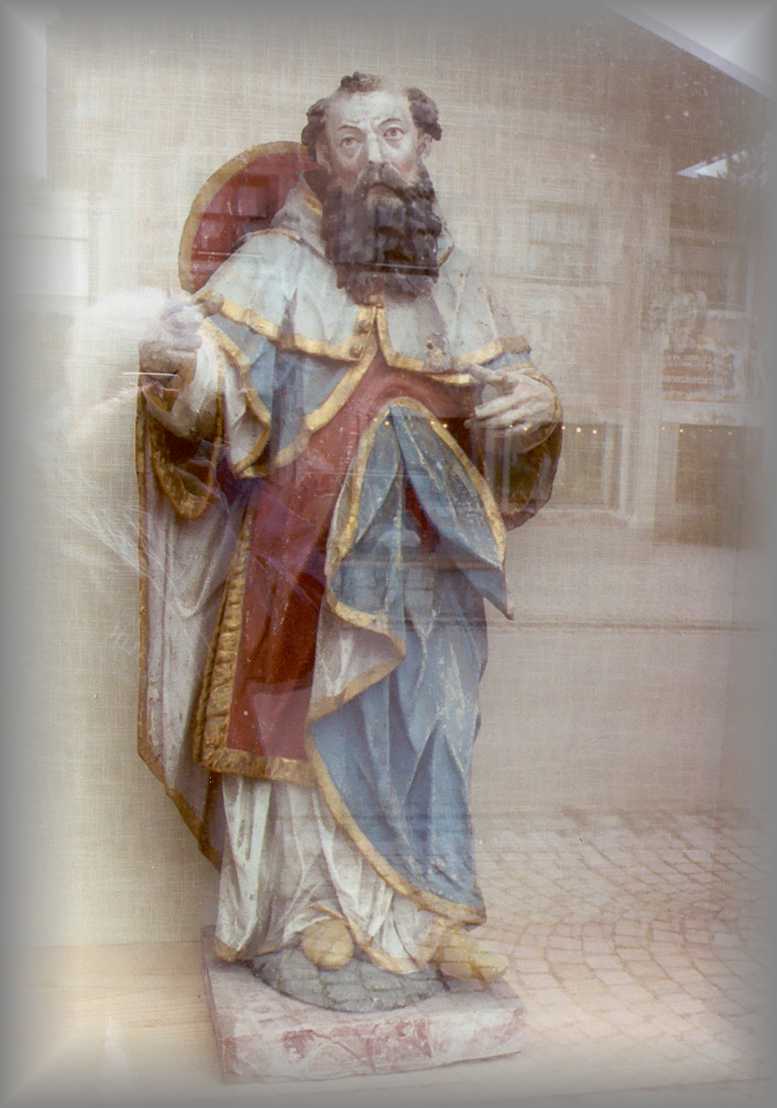
A well dressed saint stands on the side of the Queen of Bavaria who holds her baby Jesus. The unfinished Madonna may also be found ornately painted. Both are beautiful. The male saint is antiqued using the traditional and very old matted paint finish. for more information see
|

8WINDOW SHOPPING* |
|
In 2003 we went to Bavaria for Easter. Oberammergau is one of our favorite spots to do more window shopping. Some old treasures, some new, some dedicated to the old traditions, they are all reminders of a dedicated people. It is hard to know where to look as each window is set into the side of a beautifully frescoed building telling the story of the Passion of Jesus. The background of all this beauty is the snow covered Bavarian Alps. |
 |
 |
|
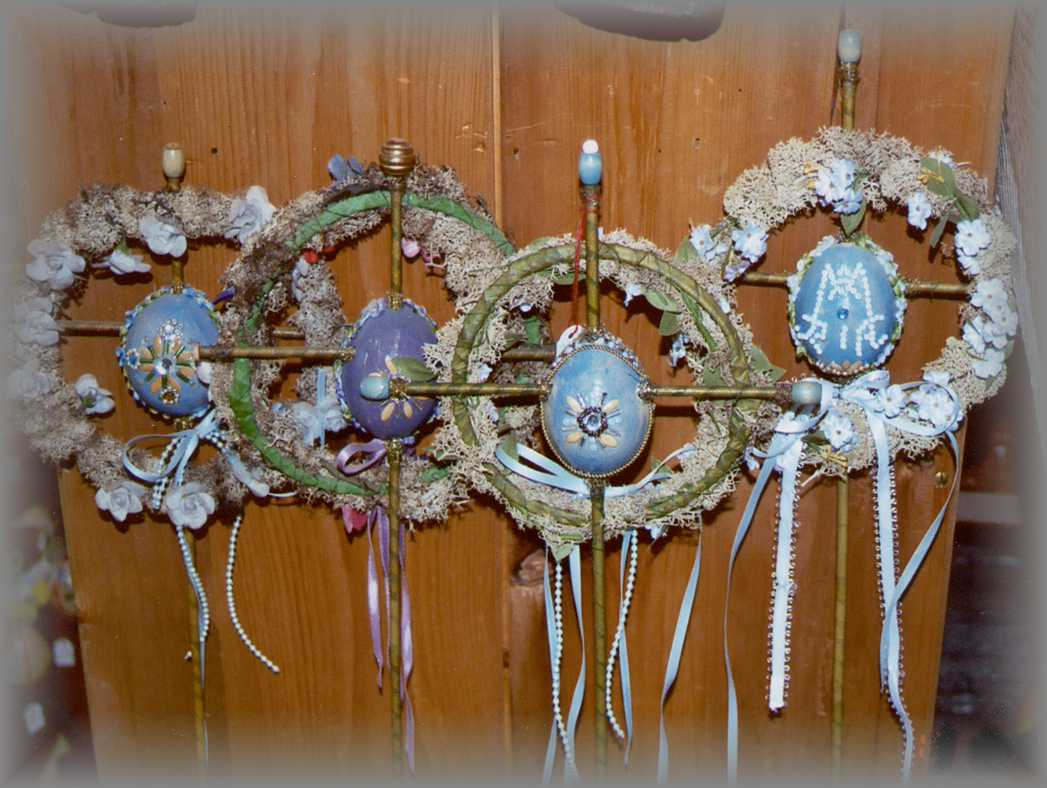
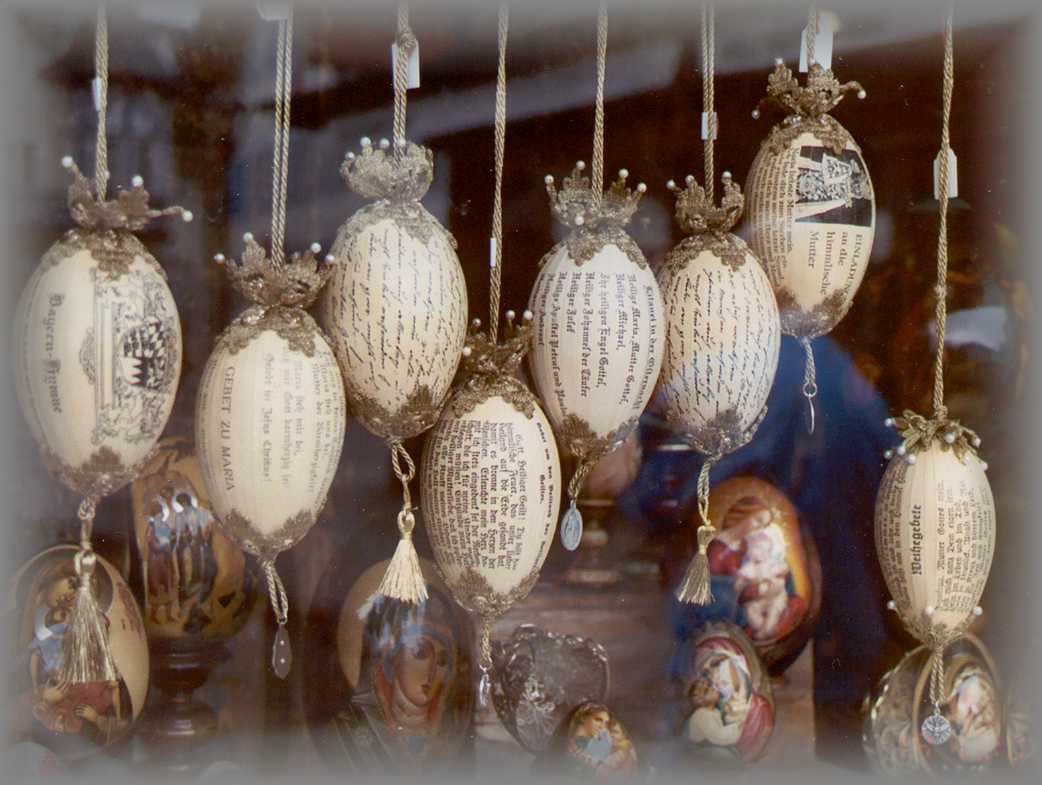
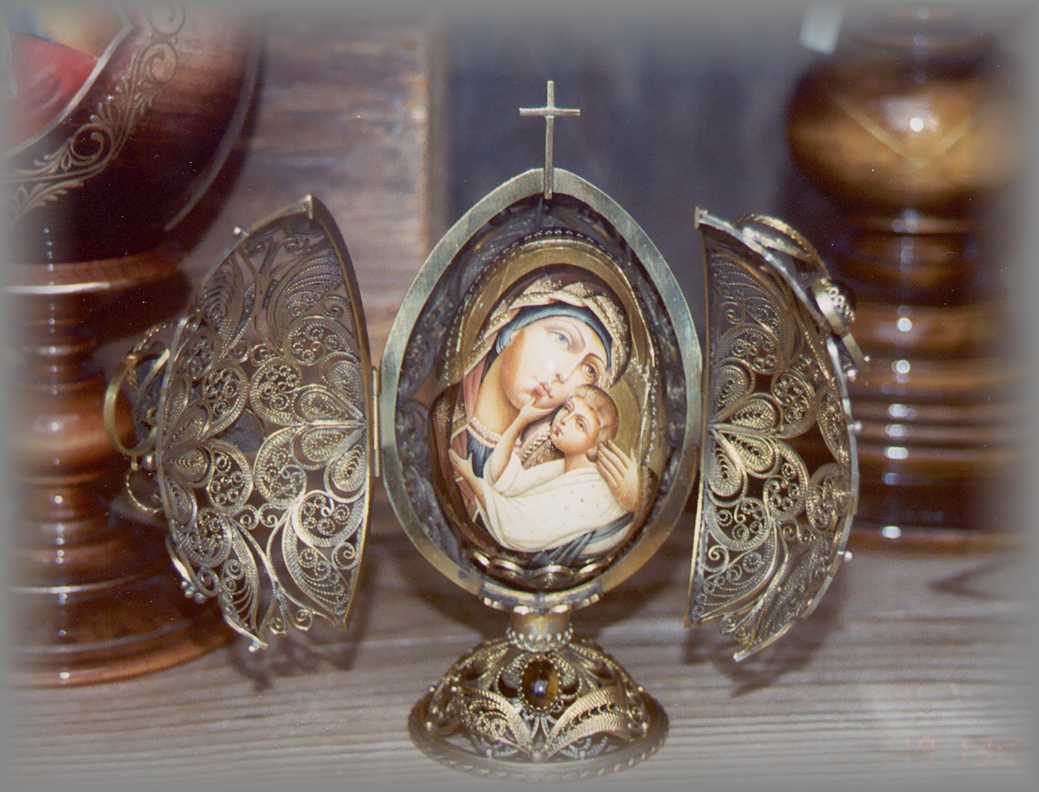
Beautifully painted eggs are pierced by a cross and framed in a circlet of dried flowers with ribbon streamers. The large goose eggs hanging in the window on the left are covered with thin strips of paper (scripture readings) and finished with antique gold passementerie. |
 |
 |
|
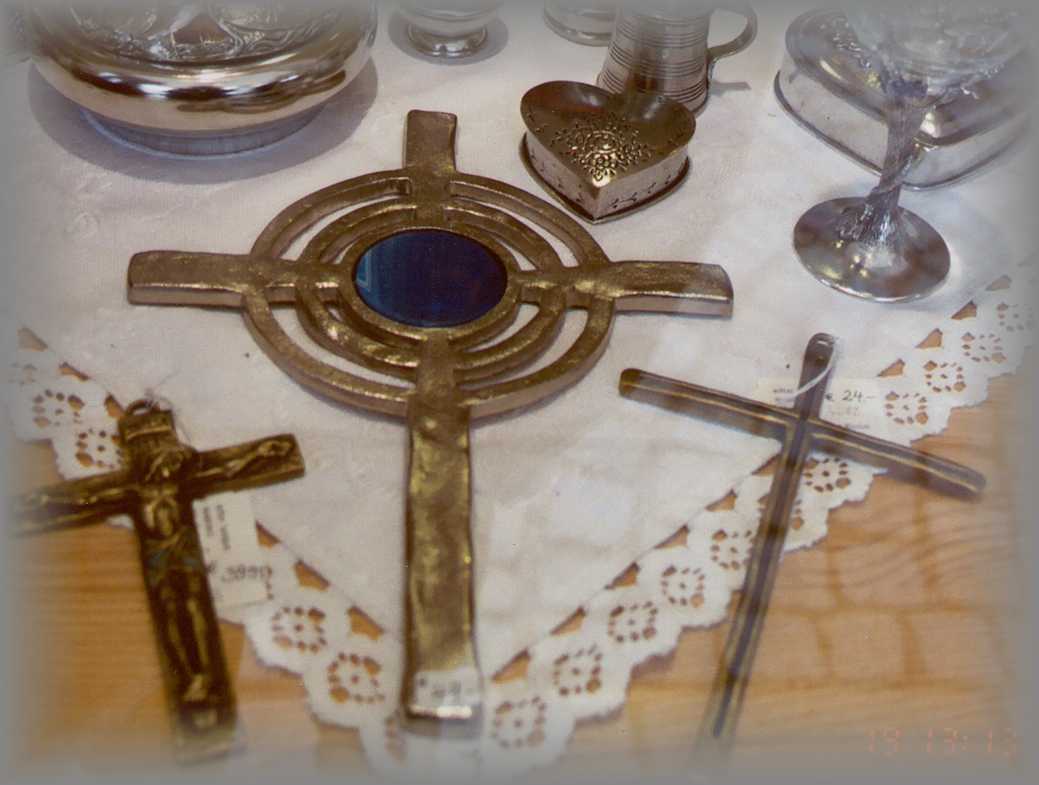
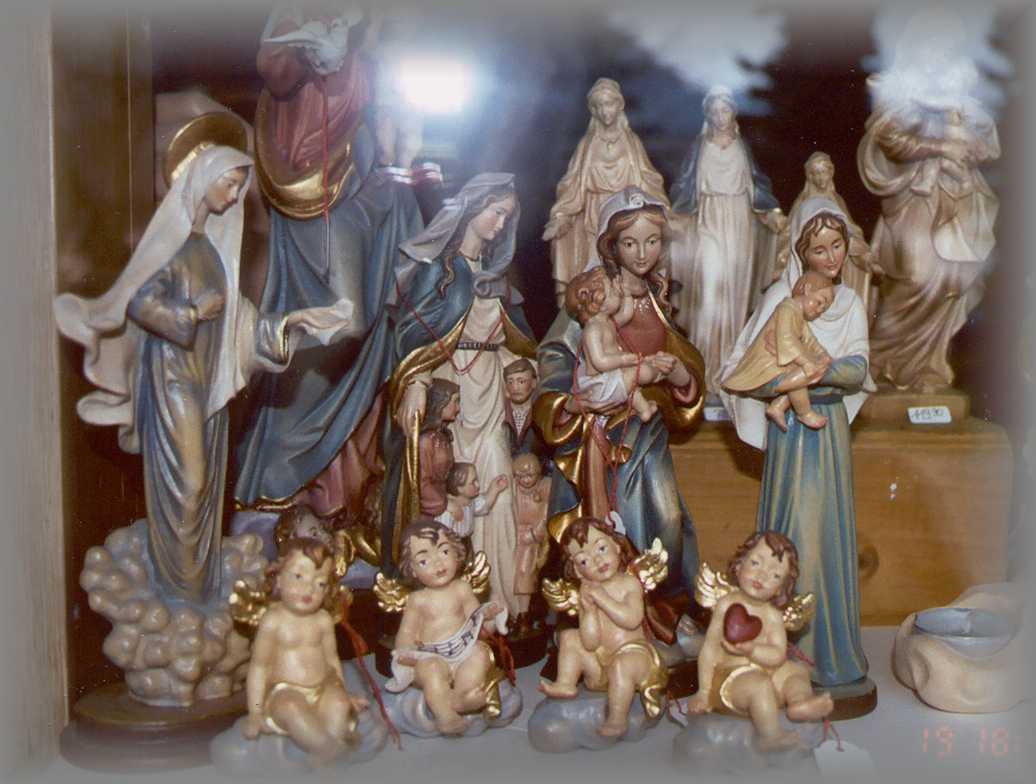
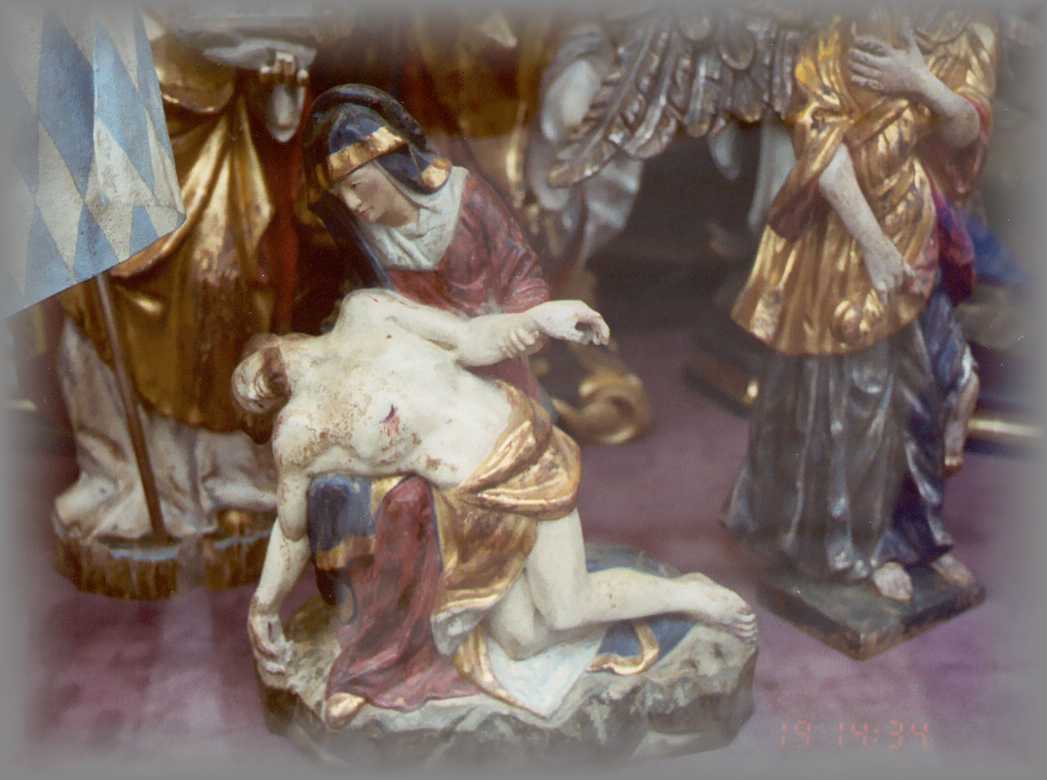
We loved the beautiful, unending shelves of cherubs, saints and madonnas. Beautiful crèche scenes in all sizes, many fit for churches. Hand carved and hand painted statues stood with wooden machine cut statues and it was hard at first glance to tell, sometimes only the price revealed the difference. Icons and beautifully shaped bronze crosses abound. Germany is famous for all the above and it is hard to come away with only a few. |
 |
 |
|
About one half of the people of Oberammergau are involved in the Passion Play. You may be walking or talking to 'Mary' or 'Jesus' and not even realize it! The play has been carried generation to generation every 10 years since 1633 when the black plague was upon them and many died. + The people vowed to perform the Play as a sign of their repentance over the death of Jesus - a typical response of the people in Bavaria and Austria at this time. In the chronicles of the period, it is written that when the people gathered around a cross 'to swear this sacred vow, no other person died of the plague in their town.' |
|
*EASTER in BAVARIA* |
|
BRIGHTLY COLORED EGGS FROM THE FARM Easter is not taken lightly in Bavaria, not many Easter rabbits but more emphasis on the risen Christ. Easter baskets carry chocolate crosses and other religious symbols along with brightly colored eggs (available boiled and colored by your local poultry folk). + EASTER MASS - OVERWHELMING Easter Mass was truly overwhelming. The choir was a full blown orchestra with voices from heaven. As the people filed into the old church, we noted the men in their Bavarian attire as they removed their wonderful feathered hats. Many of the women were in traditional garments, carrying a basket. Each basket was carefully covered with a finely pressed white linen napkin and many had a skewer that pierced the cloth going into its contents of food below. Small banners and religious symbols were on the top of the skewers. We were told this was food from their Easter table and was brought for a blessing from the Priest.. |
|
*RABBITS & BASKETS & EGGS* |
|
Since the rabbit or hare is the most prolific of all the animals known in pre Christian times, they served as symbols of new life during spring. It is believed that the Easter Bunny evolved in Germany around the 1500's. By the 1800's Germans were baking sugared pastry bunnies called 'Oschter Haws'. This custom came to the new country in the 1700's when they settled in Pennsylvania. It was believed if they were good, the Oschter Haws would come and bring colored eggs to the children. The custom was for the children to build nests in a secret place in the barn, garden or home. Often boys used their hats and girls used their bonnets to make nests. + EASTER BASKETS This custom actually has its roots from the Old Testament. Remember the story about bringing the first crops to the temple to ensure a successful growing season? It is still a custom in many European countries and we saw this in Bavaria on Easter Sunday (see above). This custom has been around for centuries we are told, to bring part of ones Easter meal to Mass to be blessed. + EASTER EGGS Not only are eggs a symbol of spring in ancient times but Medieval records suggest eggs were given at Easter to servants by their masters. More recently, the egg has been used to explain the Holy Trinity to children in its 3 in 1 concept. It remains a symbol of renewal of life. The rabbit, basket and egg seemed to evolve in the latter part of the nineteenth century and has been a popular Easter custom ever since. It is good to know about the Christian roots and share them with children as they grow up. We hope they will pass them on to their children so they again will not be lost. + parts shared from an article 'THE EASTER BUNNY AND THE RESURRECTION' by Tina Roberts (South County Chronicle, VA) |
|
MISSION STATEMENT Our vision is to provide the finest handmade rosaries, chaplets and other fine religious art forms for personal worship we can make using the finest supplies available. The Guild believes the work of our hands should give visual Glory to God, therefore for us, the best for you is very, very important. +++
MUSEUM
- HISTORY
- PRAYER
OFFICE
HOURS
|
|
secure-online - credit card -[or]- mail in - mo/personal check |