| MUSEUM
Antique Rosaries |
HISTORY
of the Rosary |
for you index |
cord instructions |
LINKS |
EMAIL
US+
877 695 3561 |

|
S. Pietro in Vatican (Major Basilica) 
RBW.1810 (copy and paste item number in SHOPPING LINKS) |
|
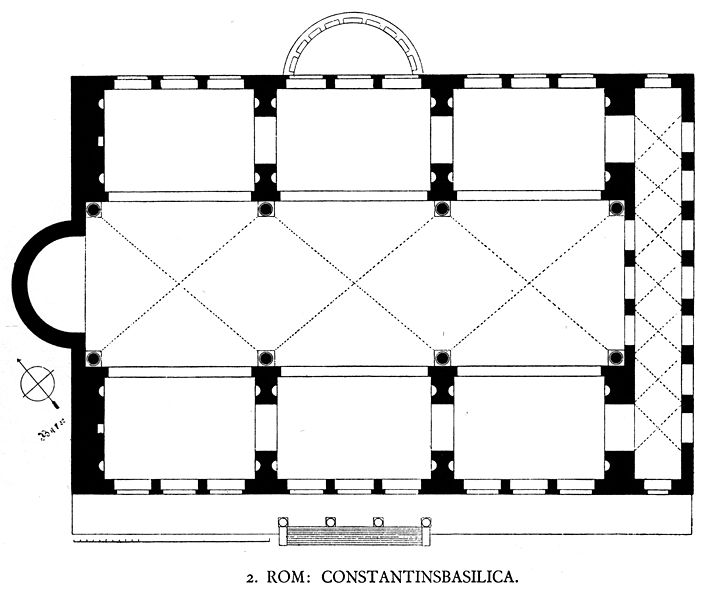
+ LEARN ABOUT THE 4 MAJOR BASILICAS RBW - BASILICA WINDOWS Found these faceted beads called 'Cathedral Windows' What is the difference between a Basilica and a Cathedral? Read below. + WHAT IS A BASILICA? Basilica (Stoa basilike, or basileios).The term Basilica is an ancient term coming from the Romans. During the time of Constantine, Christianity became the legal religion of the Roman Empire. Architectural changes were made so the new churches did not look like the Roman public buildings. The 4 Major Basilicas were built during this time. St Peters Basilica (below) was replaced during the 16th and 17th c. + DEDICATED TO THE BASILICAS OF ROME Everyone SHOULD go to Rome once in their life. But all Roman Catholics NEED to make a pilgrimage to Rome! The 4 major basilicas of Rome each contain great art - masterpieces along with treasures and relics which tell the story of Our Lord, Jesus. Few early Christians could read so visual reminders helped them to know about and learn more about the Lord and his saints. + "UPON THIS ROCK I WILL BUILD MY CHURCH" And the Lord did. He spoke these words to Peter (Rock) and on Peters death, the great Basilica of St. Peters, was built on top of his grave. We hope the information below will give you insight on seven of these great churches in Rome. enjoy the following links ROSARIES - BASILICAS // CATHEDRALS EARLY PILGRIMAGES - ABOUT PRESSED BEADS and for more links MORE LINKS (use back button to return to this page) |

*ROSARIES UPGRADED*
click on small image for details and pricing available in (b) bronze and (s) sterling |
 |
S. Pietro in Vatican (Major Basilica)
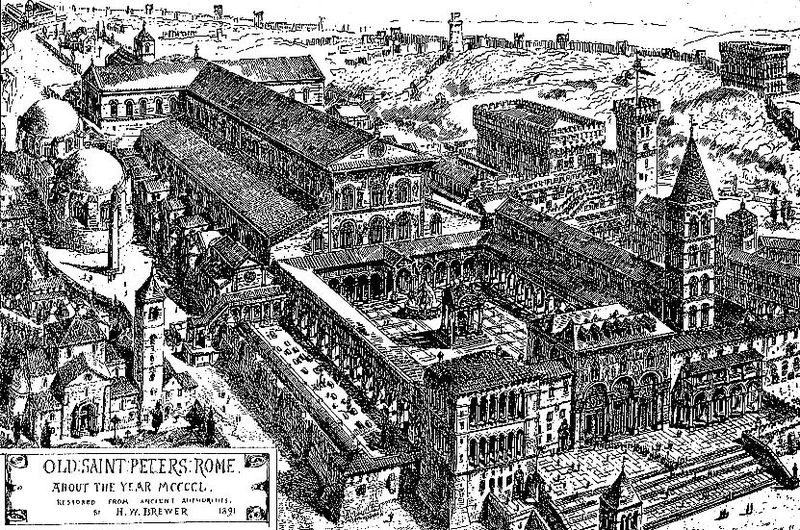
+ST PETERS BASILICA IV - RBW.21810 crystal / topaz / moss - AVE BEADS: Beautifully faceted 8mmCrystal/topaz glass beads from Czechoslovakia in a design called 'Cathedral Windows'. Pressed from the design of old glass bead molds. Very fine quality. PATER BEADS:hand made silver druks capped with antiqued filigrees. Our fourth edition of this series - and the most beautiful of all! Very elegant. ABOUT ST PETERS: Peter was buried in this spot next to Nero's Circus in AD 67. In 324 Constantine built the first basilica over the tomb - giving life to 'Upon this rock I will build my church!" - chaplet available. For larger image,
click icon
|
 |
Basilica of San Clemente
ST CLEMENT III - RBW.21820 jet / iris - AVE BEADS: Beautifully faceted 8mm Crystal/topaz glass beads from Czechoslovakia in a design called 'Cathedral Windows'. Pressed from the design of old glass bead molds. PATER BEADS: faceted peach turbines capped with antiqued metals - Very fine quality. ABOUT ST CLEMENTS: Visit this 1st c house of Clement where there was a room set aside for Eucharistic celebration - and tradition shares - celebrated by Peter and by Paul . For larger image,
click icon
|
 |
Santa Maria Maggiore (Major Basilica)
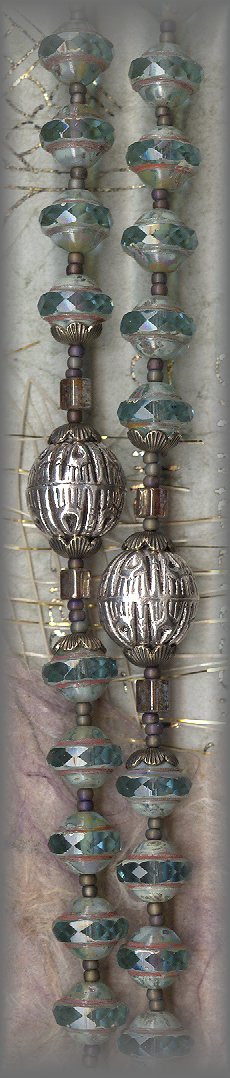
+ST MARY MAJOR BASILICA III - RBW.21830 blue / topaz - AVE BEADS: Beautifully faceted 8mm sky blue glass beads from Czechoslovakia in a design called 'Cathedral Windows'. Pressed from the design of old glass bead molds. Very fine quality. PATER BEADS: Sterling filigree beads in the old tradition so popular during the 18c for Filigree Rosaries ABOUT ST MARY MAJOR: in honor of Mary, 'Our Lady of the Snows' - the largest church dedicated to Mary in the world. The Eucarist has been continuously celebrated here since the 5th century. Chaplet available For larger image,
click icon
|
 |
S. Giovanni in Laterano (Major
Basilica)
+ST JOHN LATERAN III - RBW.21840 jet / bronze - AVE BEADS:: (both the same as in traditional rosaries) Beautifully faceted 8mm Crystal/jet black s beads from Czechoslovakia in a design called 'Cathedral Windows'. Pressed from the design of old glass bead molds. Very fine quality PATER BEADS: Mini floral beads in silver over Copper - very rare. ABOUT ST JOHN LATERAN: 'The mother of all churches' - this is the church of the bishop of Rome, Pope Francis. No one may celebrate mass at this main altar except the Pope. Some of the mosaics date to the 5th century. Chaplet available. For larger image,
click icon
|
 |
Santa Croce in Gerusalemme
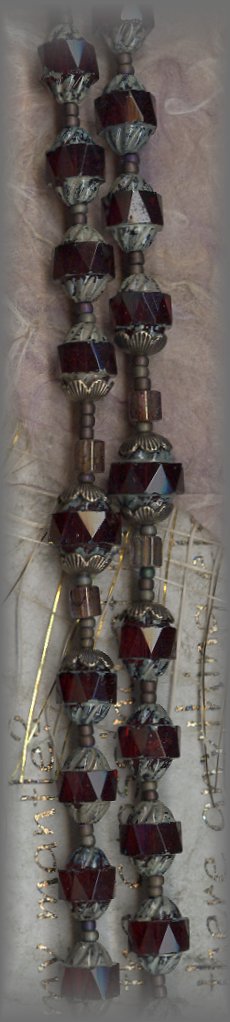
HOLY CROSS in JERUSALEM III - RBW.21850 ruby / granite - AVE BEADS, PATER BEADS: (both the same as in traditional rosaries) Beautifully faceted 8mm Crystal/ruby red beads from Czechoslovakia in a design called 'Cathedral Windows'. Pressed from the design of old glass bead molds. Very fine quality. ABOUT HOLY CROSS IN JERUSALEM: Relics of the true cross, a nail, thorns, title board - all remind us of what Christ did for us - are contained in this church actually built on earth brought from Jerusalem by Constantines mother, St Helen. For larger image,
click icon
|
 |
S. Paolo Fuori le Mura (Major
Basilica)
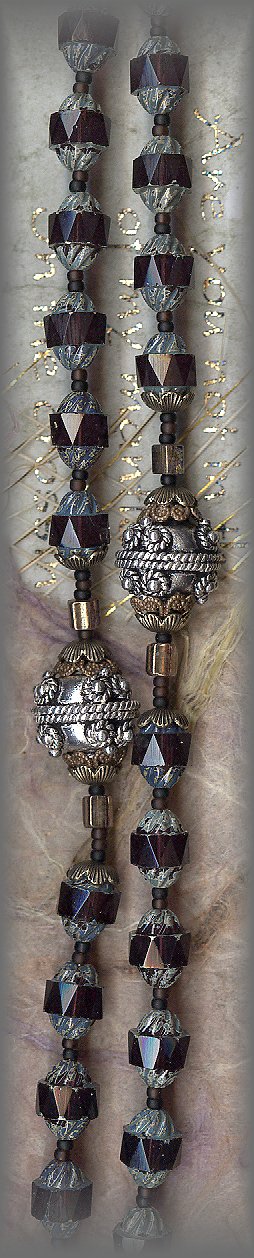
+ST PAUL'S OUTSIDE the WALLS V - RBW.21860 deep amethyst / granite - AVE BEADS: Beautifully faceted 8mm Crystal/amethyst beads from Czechoslovakia in a design called 'Cathedral Windows' with textured Pressed in from the design of old glass bead molds. Very fine quality. PATER BEADS: Rare hand made Filigree silver beads with a history. Our fifth edition of this series - and the most beautiful of all! Very elegant. ABOUT ST PAULS: in 330, Construction begun under Constantine who built a church on the site of Paul's tomb. It was completed in 395. A major fire destroyed it in 1823 and donations came from around the world to rebuild. For larger image,
click icon
|
 |
San Sebastiano fuori le Mura
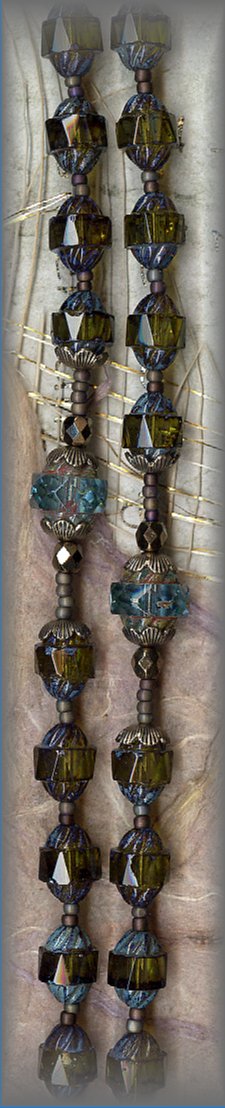
ST SEBASTIAN'S IV - RBW.21870 moss green / lt blue - AVE BEADS: Beautifully faceted 8mm Crystal/moss beads from Czechoslovakia in a design called 'Cathedral Windows' with textured Pressed from the design of old glass bead molds. Very fine quality. Light amethyst blue. Our third edition of this series - and the most beautiful of all! Very elegant. ABOUT ST SEBASTIANS: This ancient basilica was dedicated to St Sebastian (3rd century martyr). The first church (4th century) was built over several pagan tombs outside the walls of Rome near one of the Catacombs . For larger image,
click icon
|
|
*BASILICAS and CATHEDRALS* |
|
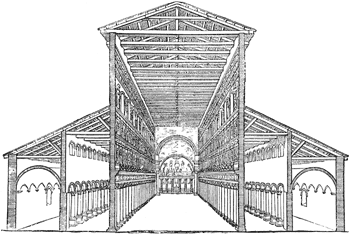
The Basilica was a natural transition used as a designator for early churches of special beauty and importance. It can indicate either the architectural style of a church, or its canonical status. Architecturally, many of the early Basilicas had two rows of colonnades which divided the church into 3 parts.
+ Each Major Basilica has a throne for the pope and an altar that is specially for the pope to celebrate mass. No-one else can use that altar without the pope's permission. All the other basilicas are called "Minor Basilicas". + CATHEDRALS AND BASILICAS But Canonically, A Cathedral, (Lat. cathedra,"seat", Greek kathedra , seat, bench, chair) is a Christian church that contains the seat of a bishop. A Cathedral, can also be a Basilica, (but out ranks them.) There is 1 Cathedral in a diocese for the seat of the bishop while there may be many Basilicas in a city or diocese such as Rome. The beads used in htis series are called Cathedral Windows and design is an old tradition. WHAT IS A DOMUS
ECCLESIA?
|
|
*EARLY PILGRIMAGES* |
|
(for more rosaries, information scroll down) + LEARN ABOUT THE 4 MAJOR BASILICAS RBW - BASILICA WINDOWS Found these faceted beads called 'Cathedral Windows' What is the difference between a Basilica and a Cathedral? Read below. + WHAT IS A BASILICA? Basilica (Stoa basilike, or basileios).The term Basilica is an ancient term coming from the Romans. During the time of Constantine, Christianity became the legal religion of the Roman Empire. Architectural changes were made so the new churches did not look like the Roman public buildings. The 4 Major Basilicas were built during this time. St Peters Basilica (below) was replaced during the 16th and 17th c. +
+ DEDICATED TO THE BASILICAS OF ROME Everyone SHOULD go to Rome once in their life. But all Roman Catholics NEED to make a pilgrimage to Rome! The 4 major basilicas of Rome each contain great art - masterpieces along with treasures and relics which tell the story of Our Lord, Jesus. Few early Christians could read so visual reminders helped them to know about and learn more about the Lord and his saints. + "UPON THIS ROCK I WILL BUILD MY CHURCH" And the Lord did. He spoke these words to Peter (Rock) and on Peters death, the great Basilica of St. Peters, was built on top of his grave. We hope the information below will give you insight on seven of these great churches in Rome. Psalm 27:4-6
|
|
Above is an engraving of the old St Peters in Rome (ca mid 15c) originally established byConstantine along with 3 other Major Basilicas.
THEY SANG, PRAYED
AND ATE ABUNDANTLY
|
|
*HOW PRESSED BEADS are FORMED* |
|
This technique of making beads was recorded in Murano from as early as the 15th century. First, the glass blower would take a blob of molten glass from the furnace. It had a bubble of air caught inside. He would then draw or pull the hot glass into long strips about 20 meters long. This took great patience as sometimes these rods were drawn to 1mm in thickness to make seed beads - called 'drawn beads'. The glass had to be of the highest quality to sustain such refinement so the glass maker had to be a master at his craft. + TO BOHEMIA, TO NEU GABLONZ The bubble of air became a long thin line as it was drawn or stretched along with the glass and just as if planned by a higher power, became the threading hole. After the glass had cooled, it was then broken into workable 'cane' lengths which are roughly 3 feet long. The glass cane was then re-softened and used as the fill for a two part mold which was basically a pair of tongs. If one was to go into the work area of an old bead maker, he might see these tongs lined up on the wall as each produced a different pattern or bead design. This beadmaking process became very popular because of the variety of beads it produced. It became a standard technique in pre war Bohemia (Gablonz) and then in Germany (Neu Gablonz) according to 'The History of Beads' by Lois Sherr Dubin. |
|
MISSION STATEMENT Our vision is to provide the finest handmade rosaries, chaplets and other fine religious art forms for personal worship we can make using the finest supplies available. The Guild believes the work of our hands should give visual Glory to God, therefore for us, the best for you is very, very important. +++ QUESTIONS? ask us: copy and paste now beadsong@hotmail.com OR CALL WEEKDAYS - 9 to 5 central 877.695.3561
MUSEUM
- HISTORY
- PRAYER
very interesting
links
OFFICE
HOURS
|
|
secure-online - credit card -[or]- mail in - personal check or M.O. |