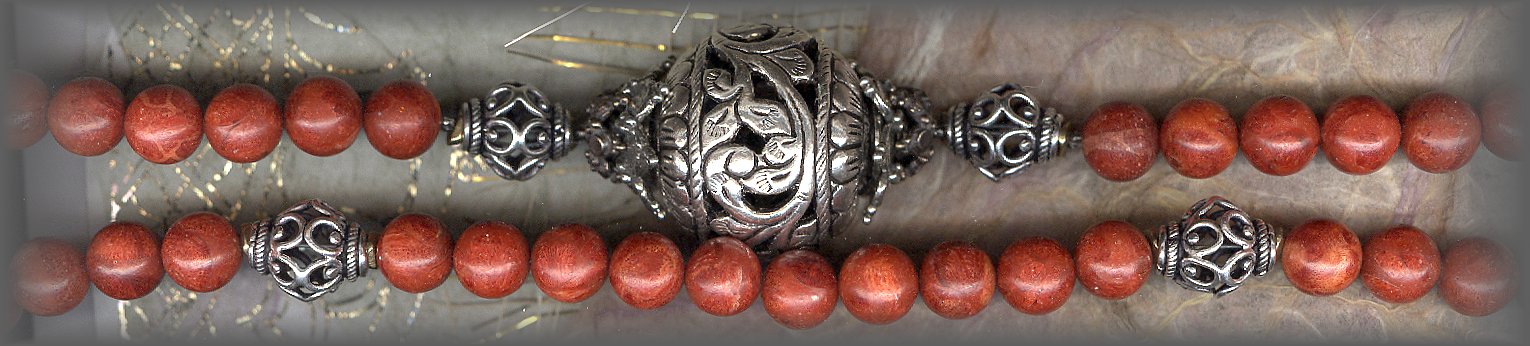
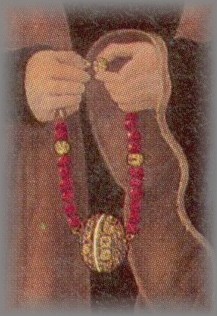
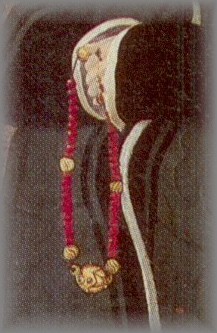
(for more information, scroll down) + POMANDER BEADS ... "GAUDES RMI: MUSEUM INSPIRED SERIES in the majestic name of the LORD, his God; And they shall remain, for now his greatness shall reach to the ends of the earth; 4 he shall be peace. + THE TELLING OF THE BEADS We purchased these huge, sterling filigree beads many years ago with the intention of making an all in one circle coral and silver prayer counter as shown in these paintings below. + MICAH 5:2-4
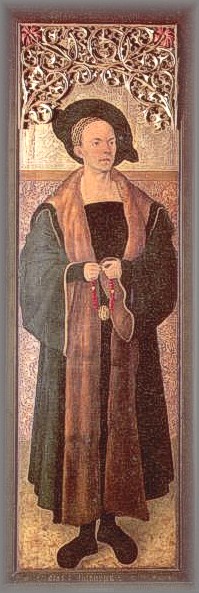
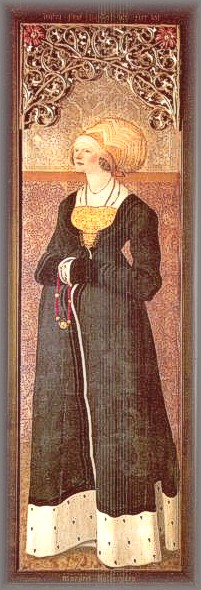
THE TELLING OF THE BEADS We purchased these huge, sterling filigree beads many years ago with the intention of making an all in one circle coral and silver prayer counter as shown in these paintings below. + Claus Stalburg des Reichen and his wife, Margarethe of the Rhine.
Unknown Master + GAUDES Note differences in large Pomander beads (also known as 'Gauds' because of their 'fancy design'): LEFT: the count of 4 sets of 6 coral (Ave) beads with 3 gauds (Paters) and his wife's RIGHT: 4 sets of ten. These beads are traditionally strung on a loose cord then moved one at a time along the cord as prayers are 'told'. Inspired by diptych below along with others of the period. We tried it on as a necklace and it worked beautifully! (would require a hook in center back) for more information POMANDER & SILVER FILIGREE ROSARY RARE COMPONENTS - MORE LINKS |
|
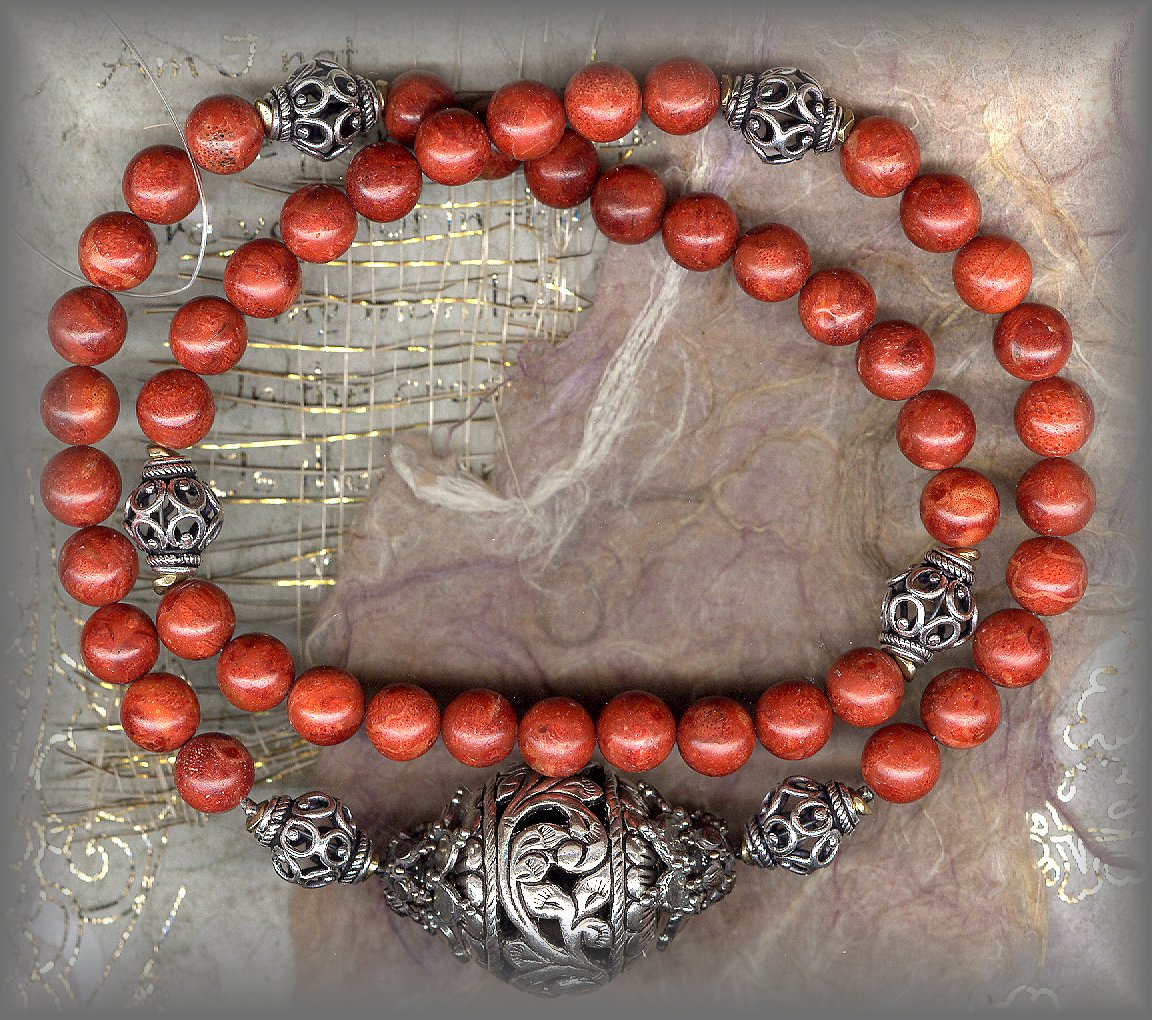
Coral was believed to carry special healing powers and give the pray-er or wearer spiritual insight, an open heart and protection against evil. Very popular usage in rosaries for children as well as adults. Coral was also believed to enhance ones memory. +
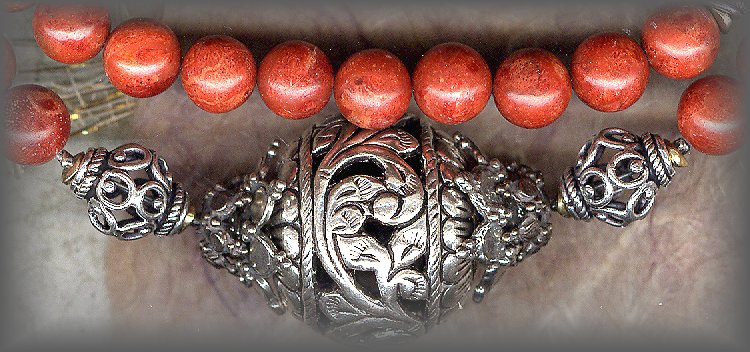
POMANDER (French pomme dambre, i.e. apple of amber) A pomander, in its original concept, is a ball made of perfumes, such as ambergris, musk, cloves or myrrh or civet . It was worn or carried in a box or case often shaped like flowers and other natural shapes or a bead, as a protection against infection during times of pestilence and plague. (They were usually filigree or openwork so the aromas could escape) It was also used to modify bad smells as baths were not a daily event. Pomanders were hung from a neck chain or attached to the waist or on a rosary. + GOLD, SILVER, PRECIOUS STONES Royalty and wealthy preferred Pomanders of precious medals (gold or silver) and often set with precious stones while the common folk wore simple cloth bags around their necks. It was not unusual for a Pomander to have several partitions to divide different aromatic herbs, spices, crushed flowers or perfumes. The British Museum has an an early 16th Spanish pomander set with emeralds, that was found in the Thames. If only it could talk! + SCENTED DRIED FRUIT AND FLOWERS Others believe the aroma is like the ‘sweet incense of prayer rising to heaven’ and is given to God. The traditional circle of beads will eventually be seen as similar to a wedding ring or God never ending. Women also enjoy adding small trinkets such as figurines, images and gemstones to their rosaries along with the scented dried fruit and flowers. |

~ SILVER POMANDER BEAD ~ |
|
AS A NECKLACE - CLASP
+ AVE BEADS: coral is a very popular bead for rosaries, then and now. It was believed to have healing powers and enhance ones memory PATER BEADS: Filigree silver beads believed to carry pomander. One, to dispel germs and protect the pray.er and two, to cover personal aromas as bathing was few and far between. + Inspired by coral rosaries of the renaissance but ours has the 5 decade (50 Ave coral root beads) configuration in an 'all in one loop'. See full view below). May be worn as a necklace when clasp is added to the center back. Just ask. + METAL PARTS AVAILABLE ALONE All rosary parts, crucifixes, centers and religious medals are available individually. Each hand cast in sterling and solid bronze from antique pieces, then antiqued to restore original patina - see SUPPLIES catalog for full line.) |
+ pricing subject to change without notice
15 in Loop |
|
WITH RARE COMPONENTS Working with rare components does make a difference in the finished design. Crucifixes, rosary centers and religious medals cast from antiques in sterling and bronze along with hard to find antique beads (or those inspired by them) do make the difference. But most of all, it is in the way a designer chooses to put it all together. These old rosaries and chaplets from the 16 - 19c speak to the heart in a special way, regardless if they were put together by an artist or by a guild - or simply by someone who took what they had, such as a necklace, and strung it into a prayer chain. These early results are so beautiful that they are now resting in museums all over Europe. And as so many of you have said, 'they invite you to prayer'. |
|
MISSION STATEMENT Our vision is to provide the finest handmade rosaries, chaplets and other fine religious art forms for personal worship we can make using the best supplies available. The Guild believes the work of our hands should give visual Glory to God, therefore for us, the best for you is very, very important. for more inspiration from the past visit PRAYER BEADS IN ART RMI INDEX - TOP OF PAGE |
|
secure-online - credit card - icheck -[or]- mail in - mo/personal check |
|
|
|
|
|
|
|
|
|
|
|
|
|
|