RWSP.21018 - (pricing // order) |
|
(for more information, scroll page down) + MY LITTLEST SON III RWSP: SIGNATURE PIECES SERIES "Do not be troubled or weighed down with grief. Do not fear any illness or vexation, anxiety or pain. Am I not here who am your Mother? Are you not under my shadow and protection? Am I not the fountain of life? Are you not in the folds of my mantle?In the crossing of my arms? Is there anything else you need?" SHE CALLED HIM,
1548 at 74 + he answred her:
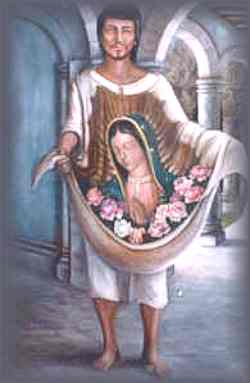
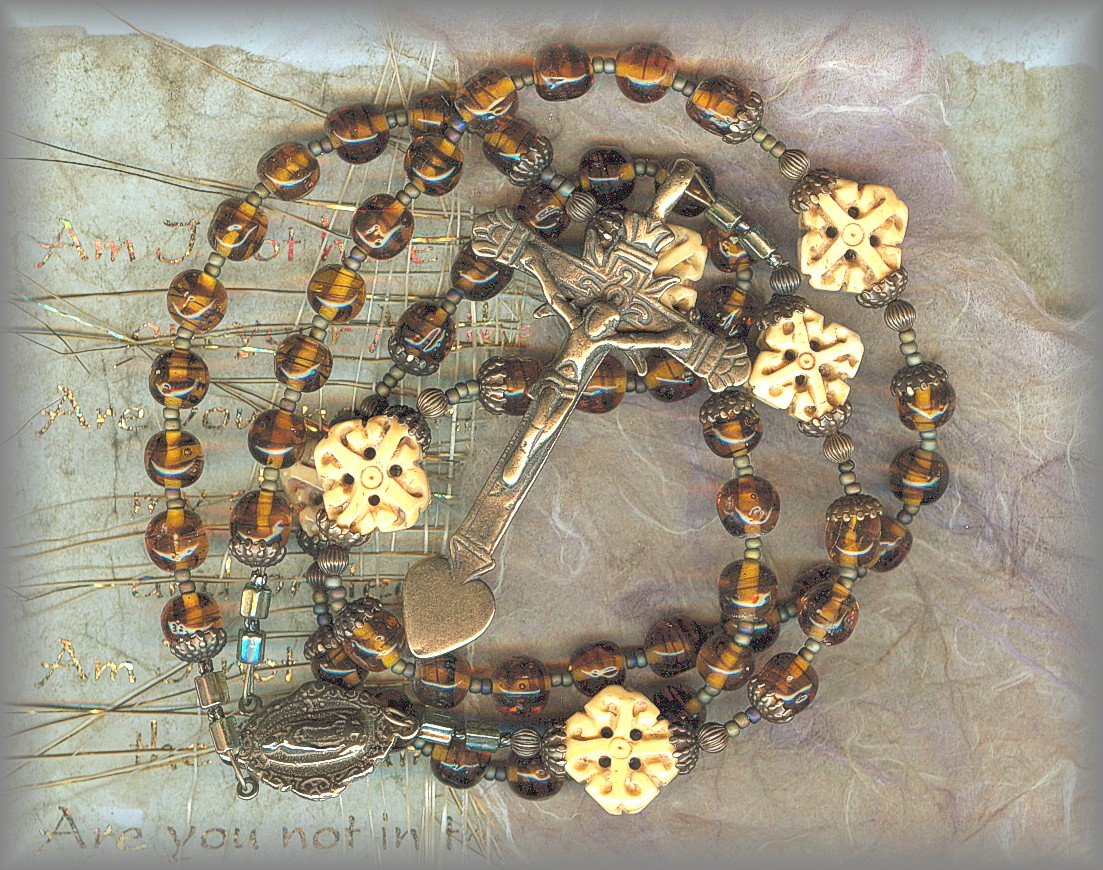
HE WAS AN AZTEC We didn't know what to call this rosary - but it became clear after Mass during Eucharistic Adoration. We knew we were to dedicate a rosary to Juan Diego but baffled over the design after many tries over several weeks. Finally, again several days later, again at Mass, the design cleared and items purchased 6 months before were to be used as they told the story in symbols of this Aztec man who converted to Christianity. It is a beautiful rosary and it is a joy to have been a part of its design . God is patient! for more information see ROSARY - CHAPLET TRADITION OF CROSS - NEW APPARITION EVIDENCE also see these links below ABOUT SAINT JUAN DIEGO SHOPPING CART (use back button to return) |

~ "MY LITTLEST SON III" ROSARY ~ |
|
DEDICATED TO ST JUAN DIEGO
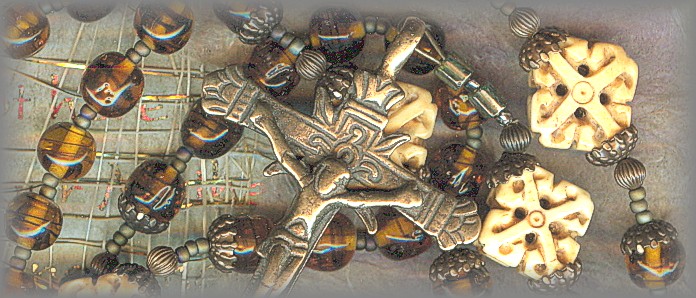
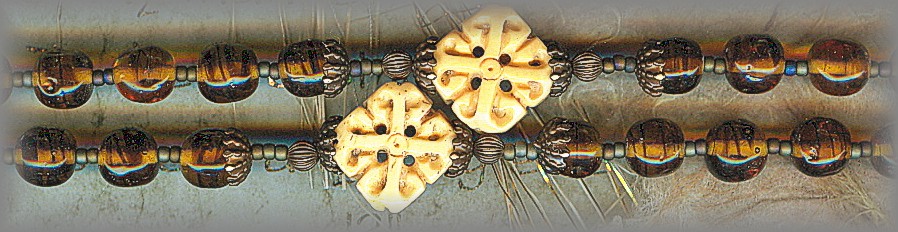
+ AVE BEADS: Made by hand by the famous glass bead artist, Willie Wilhelm using the ancient technique called lampwork where hot glass is wound around a mandrel. (slight impediments here and there give away the fact they are individually hand made) PATER BEADS: Hand carved antiqued bone crosses, very reminiscent of the Spanish crosses of the period. (color is more a natural, bone, not yellow/whitr as seen here). + CENTER: Our Lady of Guadalupe, CRUCIFIX: Cast from Latin American piece (18 - 19 c) + ALL MEDALS MAY BE PURCHASED INDIVIDUALLY All crosses, crucifixes and religious medals may be purchased individually. Each handcast in sterling or sold bronze from antique pieces. See full collection at SUPPLIES link on top of page. |
+ pricing subject to change without notice
and solid bronze 25 in. |
|
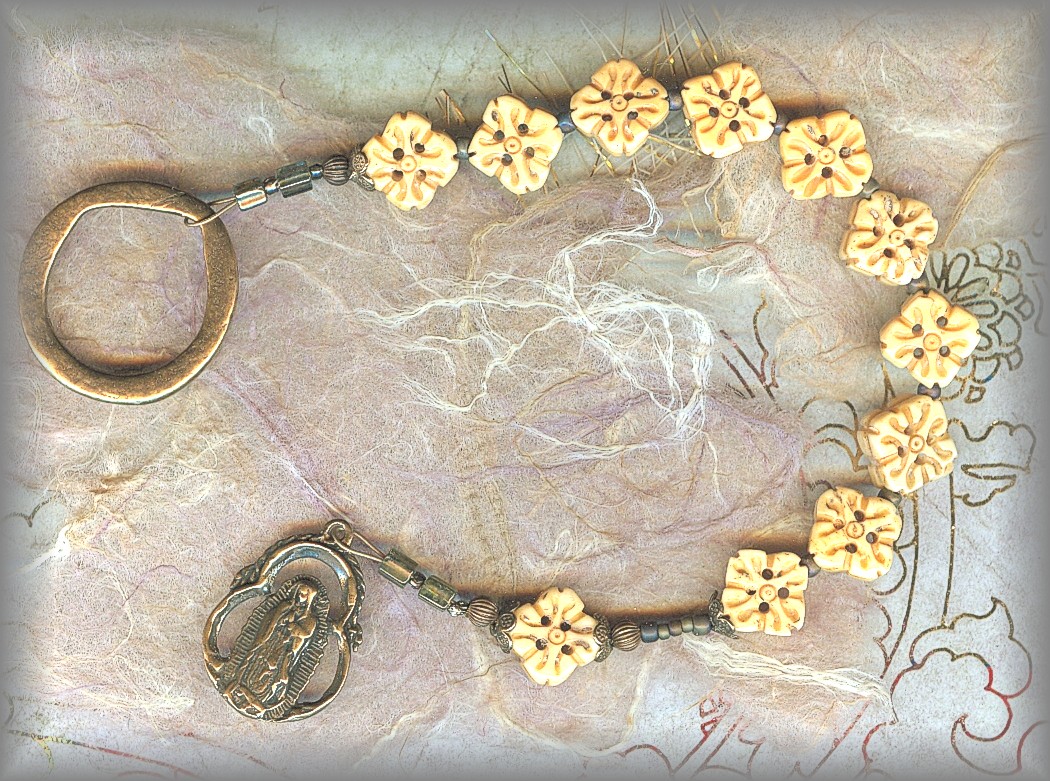
~ "MY LITTLEST SON III" CHAPLET ~ |
|
Note chaplet below is in the traditional "open loop" with not center medal, just as in the tradition of the 15c rosaries. This configuration is easier to pray and kinder to the hands!
+ pricing subject to change without notice
and solid bronze |
|
~ TRADITION of the CROSS ~ |
|
WITH CROSSES ON THEIR SAILS This rosary is filled with symbols. The cross beads remind us of the vision Montezuma's sister had in 1509. Princess Papantzin fell ill then into a deep coma. Believed dead, she was buried. When she came from her tomb, she was released and shared a vision. She told her brother that a luminous figure came to her and told her that many ships were coming with crosses on their sails and on the helmets of the men on board. They would defeat the powerful Aztec Nation. They would also bring knowledge of the true God. + THEY WERE CONVERTED This is exactly what happened. Along with a full compliment of men including horses and field equipment, there were bibles, religious statues, and 12 Franciscan Friars on the ships. On August 13, 1521 Cortez, after a bloody battle of three months, conquered the Aztec Nation (Tenochtitlan). The faith of the True God was spread by the Franciscans and records show Princess Papantzin, along with Juan Diego, his wife and his uncle were baptized into the new and true faith in the year of our Lord, 1525. + ANSWERED PRAYER Ten years after Cortez, we know that Our Lady appeared to Juan Diego several times asking him to visit the Bishop. But he was unable to convince the Bishop she had visited him. Whtt was not known was that the Bishop had prayed for a sign. + On here last visit, Mary arranged out of season Castilian Roses that were growing on the hill called Tepeyac, into his tilma. She assured him this would convince the Bishop she was indeed the Lady from Heaven. Joan Diego carried the roses in his tilma to Bishop Zummarraga. When he opened his tilma, the roses fell out onto the feet of the Bishop and as they fell, the image of Our Lady appeared on his tilma, not made of human hands. The Bishop was convinced. + WHY? Because Bishop Zummarraga - in prayer - had requested a sign. That sign was Castillian Roses which were unheard of in Mexico. And certainly out of season in December. + This exquisite full sized image on cloth, and again, not made by human hands ,is still in tact and may be seen in the Basilica of Our Lady of Guadalupe in Mexico City. We visited it several years ago and know it is a sign of Mary's love for all her children, especially in the Americas. This is espccially endearing as our new Holy Father, Pope Francis, is from the Americas. |
|
~ NEW EVIDENCE ~ |
|
VIRGIN OF GUADALUPE TAKEN TO ROME MEXICO CITY, 27 (NE) A high relief witnessing the apparition of the Virgen de Guadalupe in Mexico, which dates back to the XVI century. It has been sent to Rome as further evidence for the cause of canonization of Blessed Juan Diego. T + FOUR MONTHS AFTER THE APPARITION he high relief was sculpted by a group of stone sculptors of Xochimilco, four months after the Virgin's apparition to Blessed Juan Diego on December 12, 1531. The work of art was donated as a gift for the Chapel of the Assumption, so it could be appreciated and would help evangelization, for this place was a necessary stop in the way to Acapulco. In the XIX century, the colonial temple of Assumption, built between 1529 and 1552, became the Cathedral of Cuernavaca. + The artwork shows God the Father crowning Blessed Mary, as a native girl. The "Guadalupana" -the Virgin's image as it appeared to Blessed Juan Diego- stands upon a half moon supported by four couples of angels. Two more angels are at each side, playing the trumpets, as a manifestation of joy. Specialists explain that the work is of European inspiration, but of Indian craftsmanship. Therefore it has the artistic traits of that age, and also a traditional Franciscan's seal: the rose. + Members of the Commission for the Cause of Canonization of Blessed Juan Diego have emphasized the value of this work. "The relief depicts the Virgin of Guadalupe. Each of the elements verifies that there is a tradition of Guadalupe, even by the type of rock with which it was elaborated. The style is well defined, eloquent and beautiful," they stated. After the historicity of the work was proved, the image was taken to Rome for further studies and as further evidence for the apparitions of the Virgin to Blessed Juan Diego. |
|
MISSION STATEMENT Our vision is to provide the finest handmade rosaries, chaplets and other fine religious art forms for personal worship we can make using the best supplies available. The Guild believes the work of our hands should give visual Glory to God, therefore for us, the best for you is very, very important. read more about SAINT JUAN DIEGO IMAGES OF OUR LADY OF GUADALUPE Other Rosaries and Chaplets dedicated to Our Lady of Guadalupe & Juan Diego GUADALUPAN CHAPLETS - TILMA OF JUAN DIEGO MADONNA OF TEPEYAC - MYSTICAL ROSE SERIES see more here FLOWERS OF TEPEYAC - MY LITTLEST SON back to signature rosaries |
|
secure-online - credit card -[or]- mail in - mo/personal check |
|
|
|
|
|
|
|
|
|
|
|
|
|
|