| MUSEUM
Antique Rosaries |
HISTORY
of the Rosary |
for you index |
cord instructions |
LINKS |
EMAIL
US+
877.695.3561 |

#F (forming crimp bead) |
#B (decade ave beads) |
|
Traditionally prayer counters have been made three basic ways over the centuries. Records tell us that the knotted cord were probably the earliest with strung rosaries and chain rosaries following. Each serve their purpose very well today. How a rosary is made may depend on several things: materials available and/or how they will be used or distributed. So to say one method is better than the other is not an issue here. MAKING ROSARIES
FOR LOVED ONES
SAMPLE ROSARY NOT
FOR SALE
CONFIGURATION
OF 5 DECADE ROSARY - STRUNG
ROSARIES - CHAIN
ROSARIES
|

*CONFIGURATION*
5 DECADE ROSARY
with
PENDANT
|
|
|
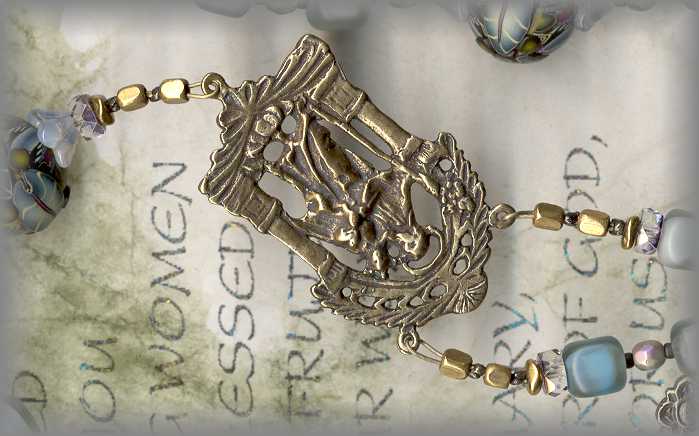
Not: 2 large Pater beads, one at each end of 3 smaller Ave beads attached to lower ring of rosary center and ending in a crucifix All 4 connecting areas where wire is attached to either the center or cross are the same and design is created through repetition by using functional 'connecting' beads. (Large holed beads for wire to pass through twice.)
|
|
*STRUNG ROSARIES*
INSTRUCTIONS - STRINGING
THE BEADS
To save on wire do not cut the needed length of wire from spool. Simply begin stringing beads onto the wire while it is still attached to the spool. This also holds the beads on the wire while you are working. |
||
|
53 ? AVE'S >
53 - 8 mm beads
|
||
|
.019 SOFTFLEX WIRE
|
|
HOW TO CRIMP |
|
|
|
|
We would encourage you to practice crimping beads before you start. To practice, cut a 6 in length of wire and double it, thread on several crimps and begin the crimping process. (see how to crimp above) It will be important to practice on 2 wires, not 1!
|
|
|
|
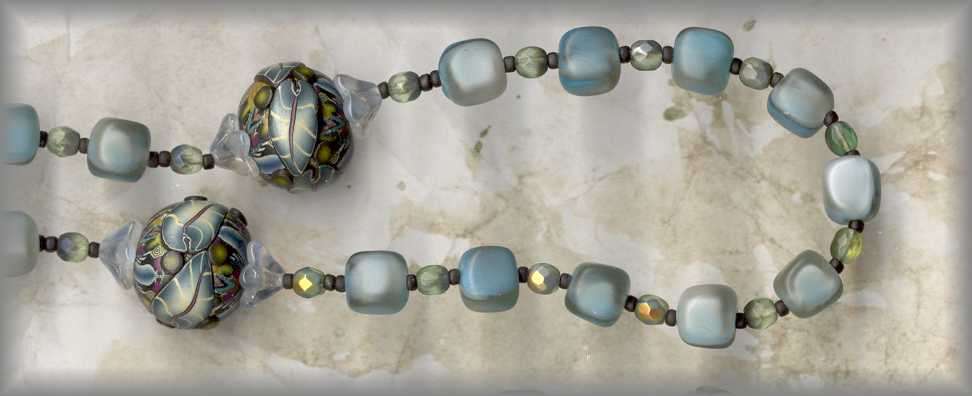
DECADE of 10 AVE BEADS
|
|
|
|
ADDING PATER BEAD
|
|
|
|
REPEAT SEQUENCE
beads ( you will end with an AVE bead, not a PATER bead) DESIGN NOTE At the end of the 5th Decade, repeat A adding two more crimping beads. |
|
|
|
TO ADD CENTER
lower ring for the pendant) thread about 2 1/2 inches of wire through ring and back through 2 crimps and first 2 beads. 2. Adjust so wire loop is 5 mm or less. Make sure all loops are all the same size. |
|
TO FORM CRIMPING BEAD
|
|
|
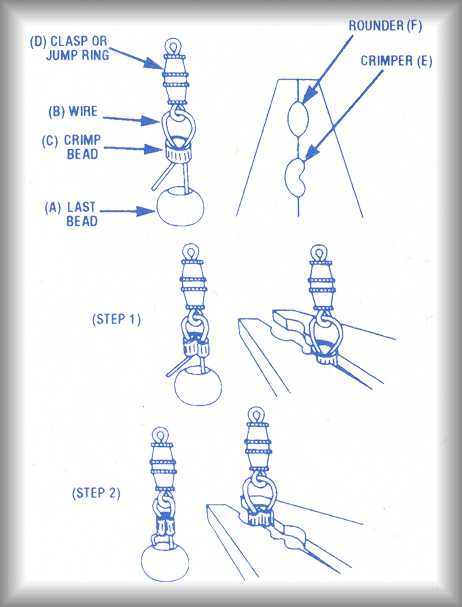
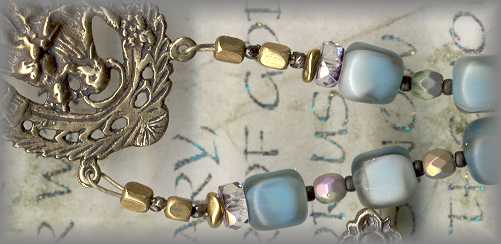
Make sure wire that is looped through the center, 'ender' beads and crimping beads is positioned parallel to itself. If it cross over itself it may cause the rosary to twist at the last minute - then begin crimping: + To form a tight, clean and well shaped crimped bead you will need crimping pliers. Check images above noting difference in shape of the two areas for crimping. (For proper crimping - make sure you hold the pliers so curve points towards you and not away) + 1. Set crimp into inside 'crimper' - crimp bead into a 'c' shape to tighten and secure both wires. 2. Set crimp in outside 'folder or rounder' - to fold and flatten bead back onto itself. 3. In same hole, turn bead 1/4 turn - crimp lightly but firmly again to round bead off. (never work your pliars too hard as the crimp may cut through the wire causing it to break later) It becomes the weakest spot on the rosary if not careful. |
|
TO COMPLETE LOOP + CONSTRUCTION NOTE Hold rosary so center hangs down and spool is on top to release and let beads 'settle' on wire. Make sure beads are not caught on wire creating empty spaces by running fingers down the beads several times. This also helps release any twisting of the wire. Cut wire off of spool about 3 inches beyond beads. Repeat E using other top ring and making sure your wire connecting loops are all the same size before crimping. |
|
TO COMPLETE PENDANT WITH CRUCIFIX, USE TECHNIQUES and IMAGES ABOVE. + DESIGN NOTE note that the 4 'ender' bead configurations are the same. The purpose of this is to create the same design on each end as 3 connect to the center and 1 connects the crucifix. + CONSTRUCTION NOTE Before crimping pendant to center , check to make sure center and crucifix are facing in the same direction. Make sure your wire is parallel to itself as crimping overlapping wires may cause the metals to twist at the last minute. SAMPLE ROSARY NOT
FOR SALE
|
|
*CHAIN ROSARIES*
INSTRUCTIONS - MAKING THE CHAIN under construction |
|
53 ? AVE'S >
53 - 8 mm beads
# gauge wire for making chain. (Silver or gold color, Bronze or sterling) TOOLS
|
|
*KNOTTED CORD ROSARIES*
link to knotted cord and ranger rosaries
... I am not Catholic
but ...
... always been
devoted to the rosary ...
|
|
*MAGAZINE ARTICLE*
sorry, this issue is now sold out
|
|
MISSION STATEMENT Our vision is to provide the finest handmade rosaries, chaplets and other fine religious art forms for personal worship we can make using the finest supplies available. The Guild believes the work of our hands should give visual Glory to God, therefore for us, the best for you is very, very important. +++ QUESTIONS? ask us: copy and paste now beadsong@hotmail.com OR CALL WEEKDAYS - 9 to 5 central 877.695.3561
MUSEUM
- HISTORY
- PRAYER
OFFICE
HOURS
|
|
secure-online - credit card -[or]- mail in - mo/personal check |