| MUSEUM
Antique Rosaries |
HISTORY
of the Rosary |
for you index |
cord instructions |
LINKSE |
EMAIL
US+
877 695 3561 |

|
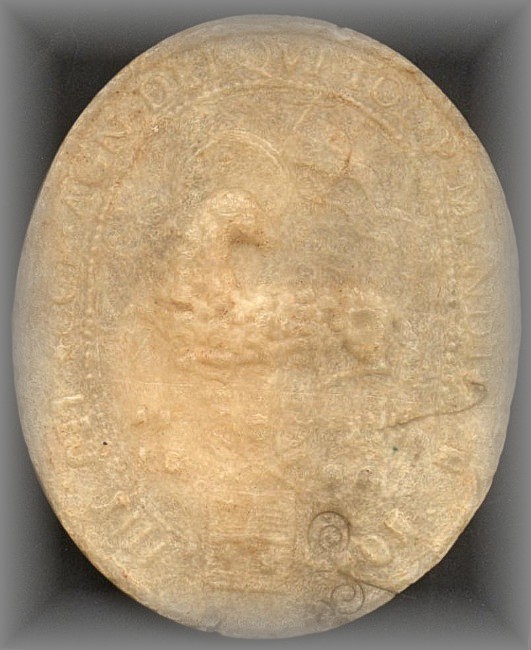
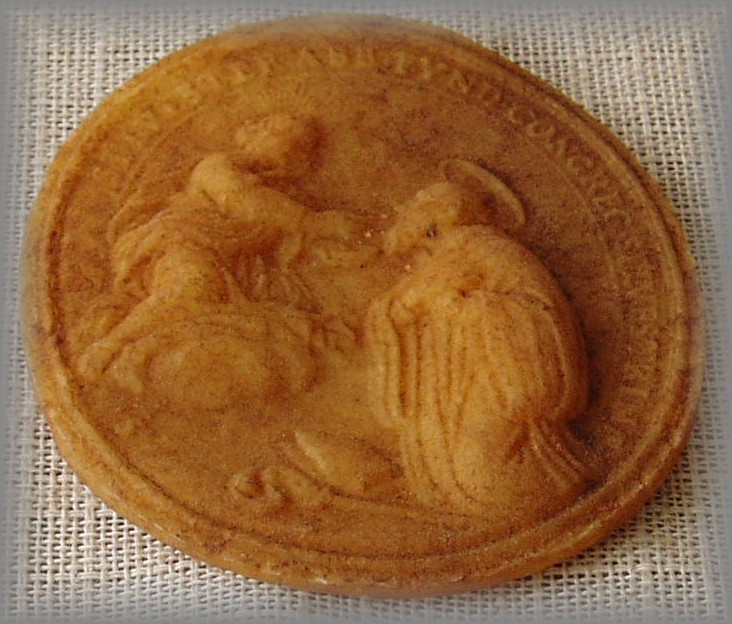
HISTORY:WHAT IS AN AGNUS DEI? What is an Agnus Dei? The Lamb of God. It is a sacramental - a small disc of round or oval impressed wax. Image is often a lamb bearing a flag or a cross on one side and other symbols on the reverse such as: Papal Coat of Arms, figures or names of saints are common. It is believed to have started in Rome about the 5th century during the last days of the overthrow of paganism in that city. Written history dates from 820 ad. + 'ADORATION OF THE LAMB'
(Jan von Eyck 1432) for more information
see
|

*MORE ABOUT AGNUS DEI* |
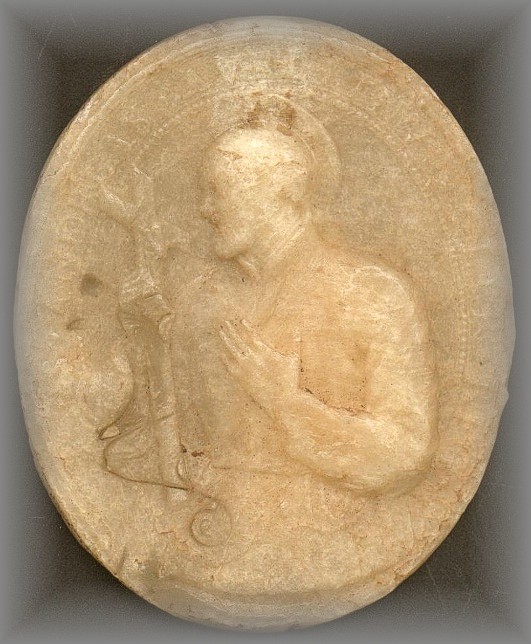
LEFT: Lamb of God - 1880 (Pope Leo XIII (1878 - 1903) RIGHT: Saint Andreas (c3-60: size 8mm) |
|
on this and other sacrametals, please follow link at end of page to the Immaculate Heart of Mary's Hermitage for an excellent summary.
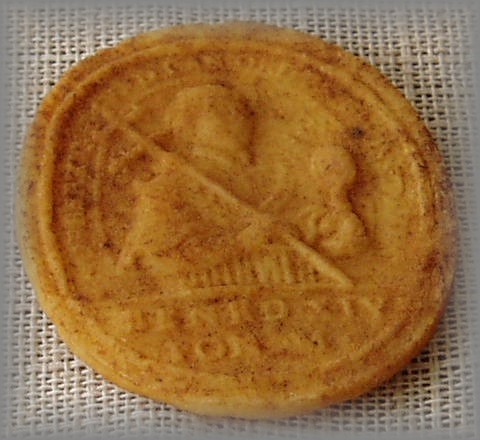
LEFT: 1741 - Pope
Benedict XIV, REVERSE: St. Norbert (c1080-1134) 50mm
|
|
They are traditionally made from the wax and remnants of the paschal candle from the preceding year. As early as 510, these wax fragments were used as 'protection against tempests and blight', states the Catholic Encyclopedia. As time went on it became a custom for the Pope to send these sacramental remnants as gifts to important people. |
|
During the 9th century Agnus Deis were made on Holy Saturday morning by using clean wax mixed with chrism. Later the Pope blessed and help distribute them. This great consecration traditionally took place during the first year of each pontificate then every 7th year after that - and continues today. Today, chrism is not used by the monks who prepare the discs of wax. |
|
On the wednesday of Easter Week, the Holy Father takes the discs and dips them in water with chrism and balsam. With special prayers he then distributes them the following Saturday after Mass by putting a packet into the inverted mitre of the cardinals and bishops who come up to receive them. |
|
The paschal candle wax is symbolic of the virgin flesh of Christ and the lamb symbol represents the victim offered in sacrifice. The blood of the lamb reminds us of the Old Testament and how it was marked on the household for protection. In the blessing that goes with these consecrated medallions one reads of special protection against storms and pestilence, fire and flood. It is also traditional to protect mothers during childbirth. |
|
The Catholic Encyclopedia also writes of a grey wax which receives its color from the dust of bones of martyers. they are looked upon as relics and need no special consecration. They are also called 'Martyr's Paste' or 'Paste de' SS.Martiri'. |
|
Sung or recited, the Agnus Dei has been a part of the Mass since it was introduced by Pope Sergius I (687–701). It was inspired from the scriptural reference in John 1:29 to Jesus ("Behold the Lamb of God that taketh away the sin of the world") +
OR Lamb of God, you who take away the sin(s) of the world, have mercy upon us. Lamb of God, you who take away the sin(s) of the world, have mercy upon us. Lamb of God, you who take away the sin(s) of the world, grant us peace. + and sometimes added: Jesus, Lamb of God, have mercy on us. |
|
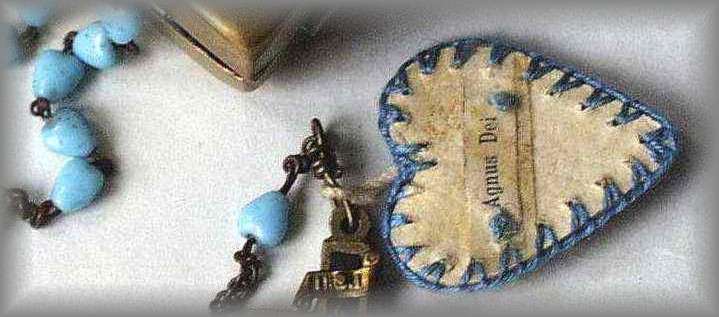
*ROSARY with AGNUS DEI* |
FROM
A GERMAN COLLECTOR
|
|
MISSION STATEMENT Our vision is to provide the finest handmade rosaries, chaplets and other fine religious art forms for personal worship we can make using the finest supplies available. The Guild believes the work of our hands should give visual Glory to God, therefore for us, the best for you is very, very important. ++++++ QUESTIONS? ask us: copy and paste now beadsong@hotmail.com OR CALL WEEKDAYS - 9 to 5central 877.695.3561
MUSEUM
- HISTORY
- PRAYER
OFFICE
HOURS
also see
|
|
secure-online - credit card -[or]- mail in - personal check or M.O. |