| MUSEUM
Antique Rosaries |
HISTORY
of the Rosary |
for you index |
cord instructions |
LINKS |
EMAIL
US+
877 695 3561 |
|
GOLGATHA
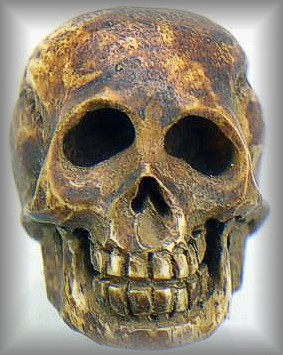
THE SKULL OF ADAM THE PLACE OF THE SKULL The hill where Christ was crucified was called the hill of Golgotha or Golgatha (The Place of the Skull) long before the time of Christ. The ancients, the Jews believed it was called Golgatha because this was where the skull of Adam was buried. This tradition of Adam's skull became known as The Place of the Skull. Was Christ crucified over the tomb of Adam, the skull of Adam? This tradition was first recorded by Alexandrian theologian Origen (c AD 185 -245) + MARK 15:22 (also see Matt 27:33, Luke 24:33, John 19:17)
CHRIST CRUCIFIED OVER THE SKULL OF ADAM? 2000 years ago Golgatha was outside the city and where Roman soldiers executed criminals and near where travelers could see and be reminded. But even more incredible was the symbol of Christ overcoming the sin of Adam, redeeming us all. Eventually, the symbolism of the Skull and Crossbones under the feet of the crucified Christ became known as 'Victory over Death.' For more information, see VARIATIONS below: follow the links below to see the variations
|

|
Crucifixes of this kind were traditionally worn around the waist by religious (Priests, Brothers, Sisters) and often attached to full rosaries (15 decades). They were 'Profession Crucifixes' and given when one took his or her vow of profession. After Vatican II (1960s), their use began to dwindle. + We receive many requests for information on these crosses and crucifixes that people find in antique stores or family collections. We have supplied the little we know for starters but are open to hear what you have learned so we can share it with others. |
|
CROSSES WITH INSERTS More recently, around the turn of the century and late 1800s, a new metal called 'aluminum' replaced the metals used in the images below. It was very popular with the religious who wore them as it was so much lighter in weight. Aluminum crosses with inserts may be dated from about 1889 on. It is interesting to note that when aluminum was first extracted (around 1787) it was considered a precious metal and sold for $1200 per kilogram by 1852. |

*VICTORIAN SHRINE* |
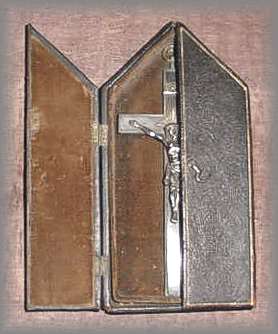
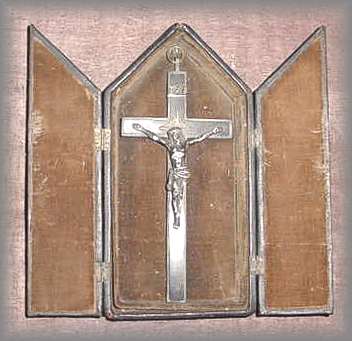
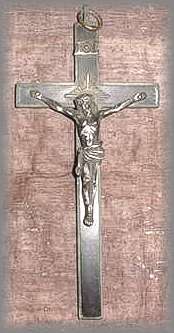
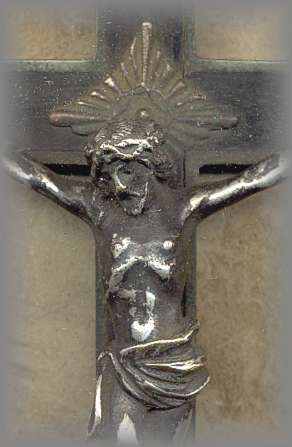
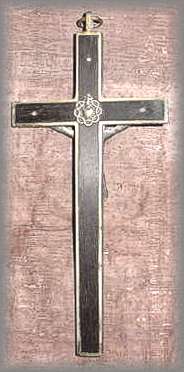
A RARE FIND IN IRELAND A beautiful leather box lined in velvet contains a well detailed crucifix of black ebony wood inserts, front and back. Purchased in Ireland (Roscommon) dated by the antique dealer as 'Victorian' (1880s). 6.75 x 3.25 in |
|
*3 VARIATIONS - EUROPEAN* |
|
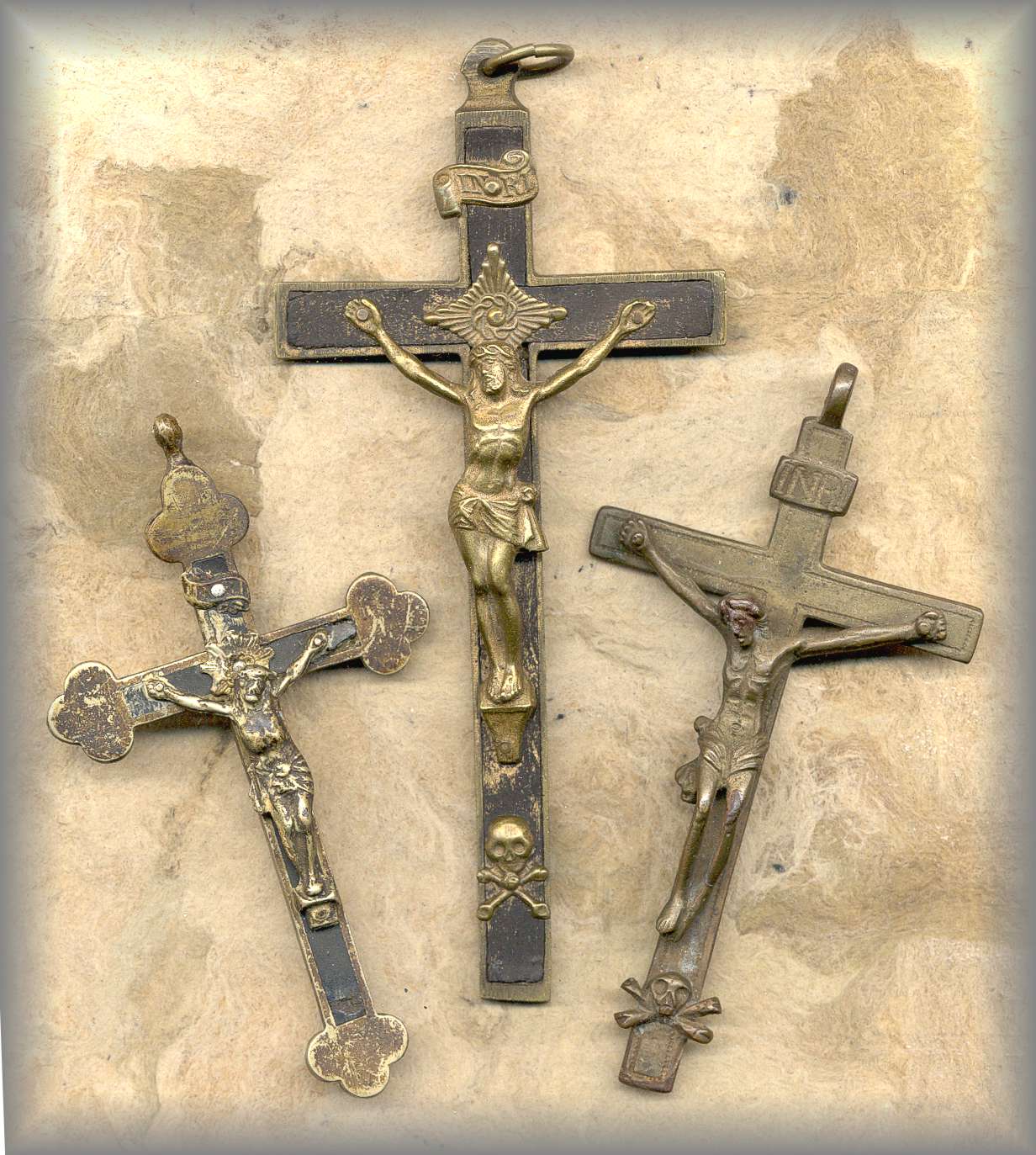
The middle crucifix (below) is called a 'coffin crucifix'. It was placed on the inside lid of the coffin, and later given to relatives. Andy (Canada) - Thanks for the information, Andy - RW +
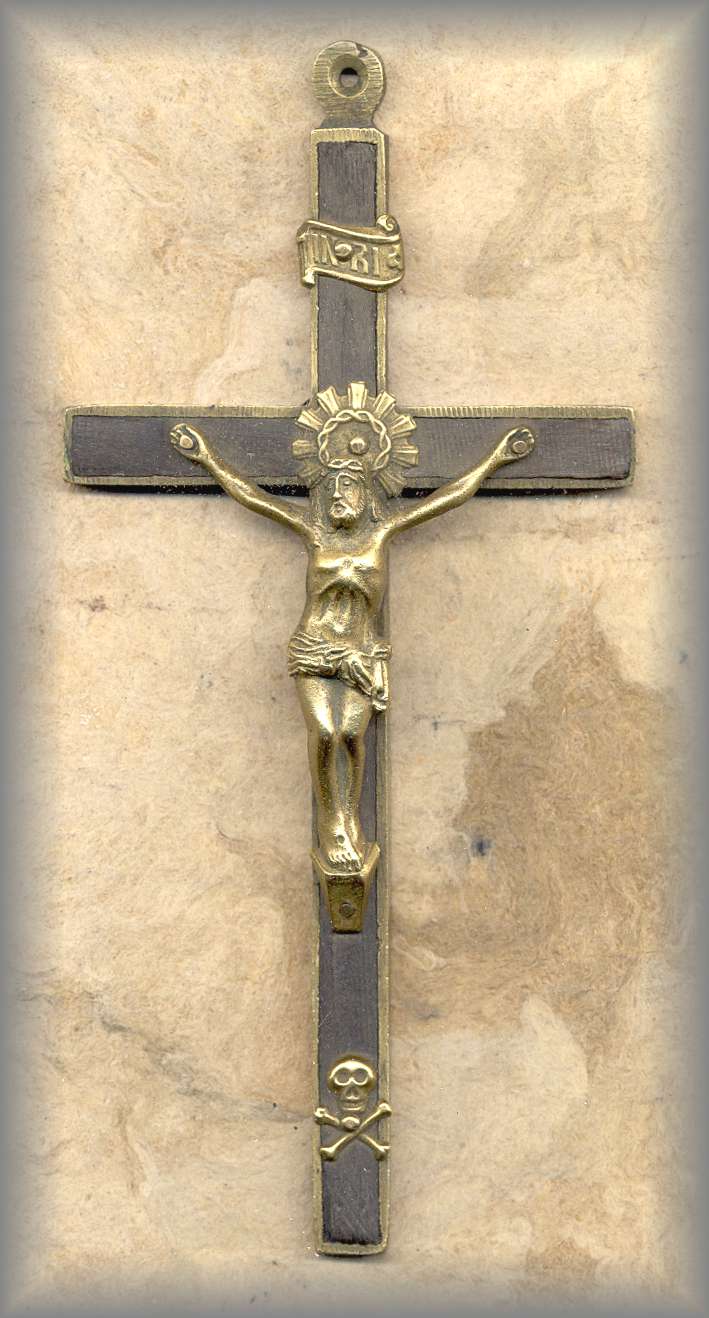
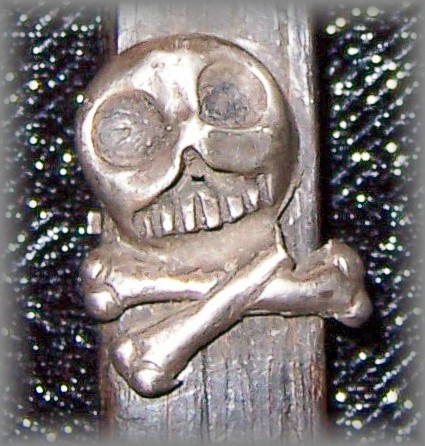
3 CRUCIFIXES WITH VARIATIONS LEFT ABOVE: 'trifoil' or 'budding' cross is very European, with inserts of ebony wood. MIDDLE: A good example of the style of crucifix worn by religious on a rosary, but smaller. (This one, because of its size was probably a coffin crucifix, as noted above, or hung over a bed.) Note the skull and crossbones at the foot of the cross. (victory over death) +
SKULL ? CROSSBONES CAST AS PART OF THE CROSS RIGHT: all metal crucifix with no inserts of wood. (none of these crucifixes has a design on reverse) Note the crucifix on the right as looks more Spanish than German but carries the skull and crossbones at the bottom and are cast all in one piece. |
|
*TRADITIONALLY - GERMAN* |
|
This crucifix has the filemarks on the sides, telling us that it is hand made and may
date back to the late 1700s to early 1800s. Inserts are ebony wood. (6
X 3 in.)
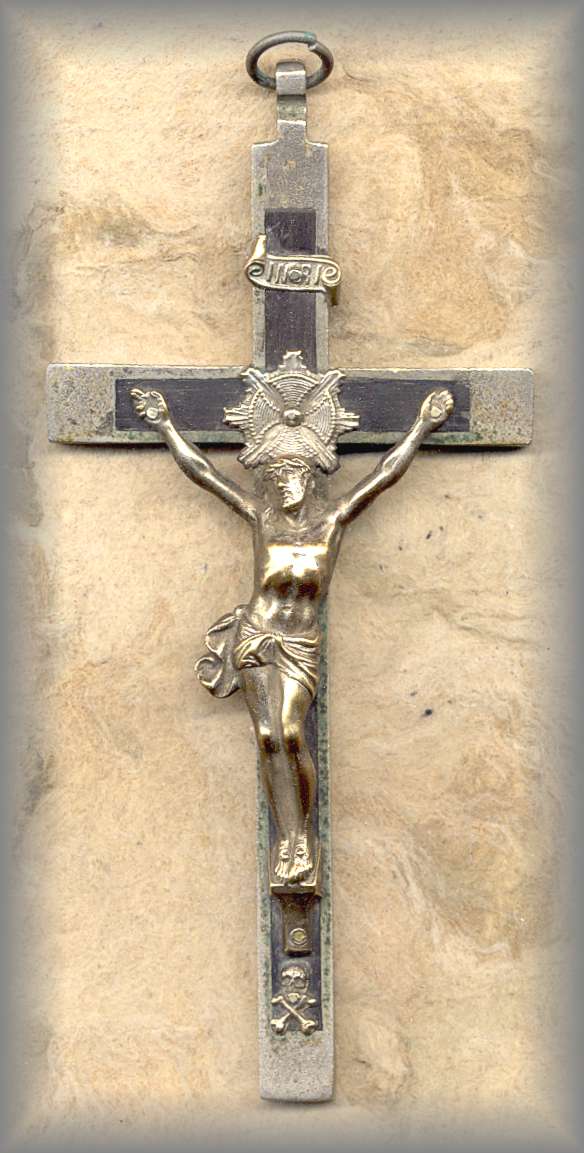
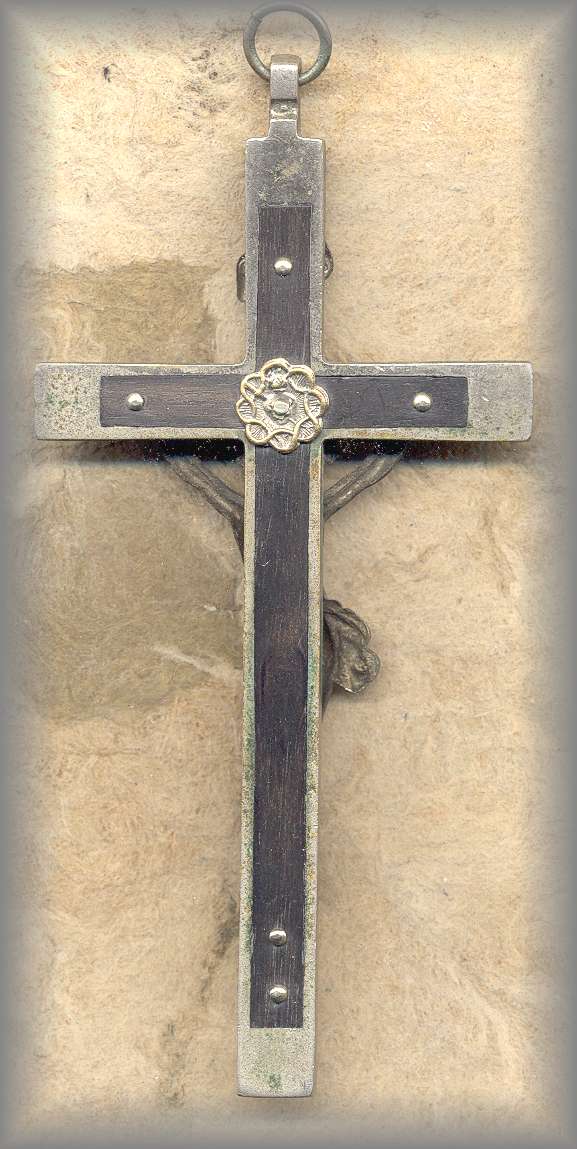
GERMAN CRUCIFIX - II Purchased in Ireland, antique dealer dated this crucifix 1800s. Note the insert is smaller. Inlay is ebony wood and metal is brass with a silver plate. It is most likely German dating mid 1800s. (5.25 x 2.5 in.) +
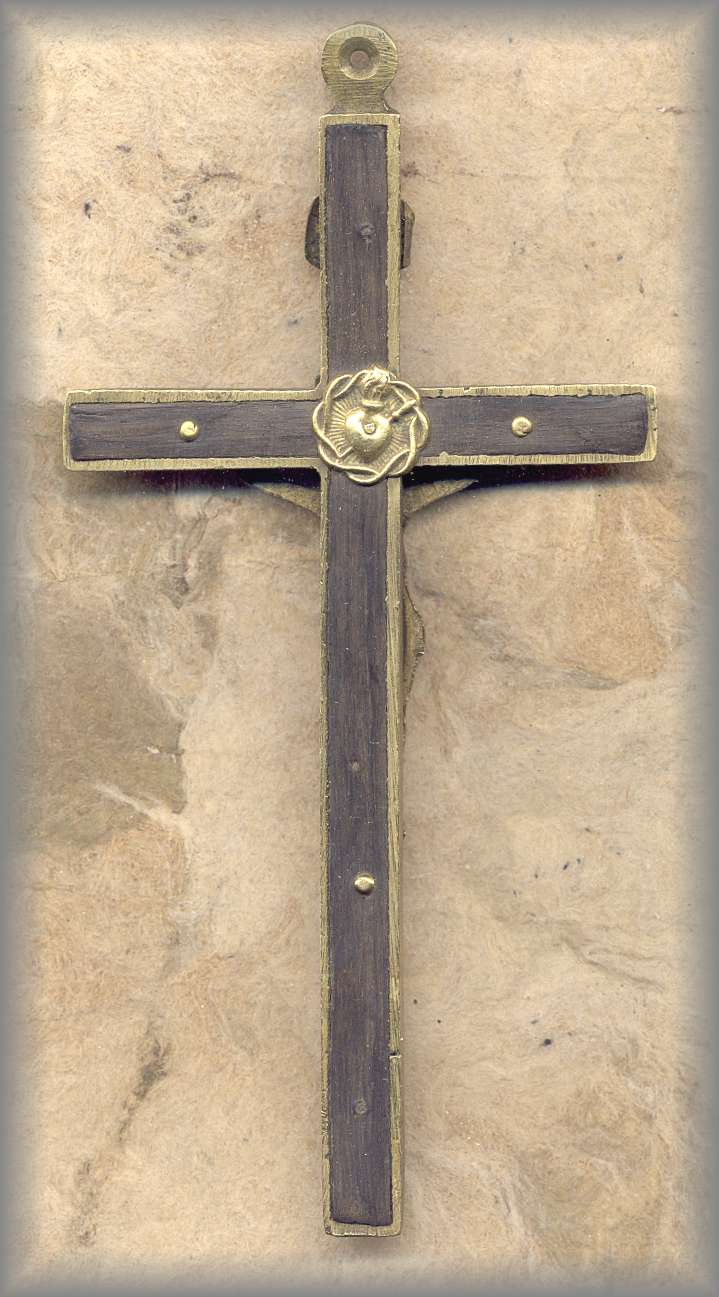
MADE BY HAND These old inlaid crucifixes were all manufactured by hand. Usually you can still see the grinding and file marks and they are not perfectly symmetrical. The crucifixes with a manufacturing hallmark stamped on them are generally newer (late 1800’s early 1900’s). The "older" ones (early 1700’s to late 1800’s) seldom have a manufacturing mark (sometimes a "blacksmith mark"). They can be "inlaid" with almost anything. Usually the inlay reflects the character of the rest of the rosary. Hence, ebony bead rosaries usually (but not always) have ebony inlaid Crucifixes. I have seen them inlaid with ebony, walnut, rosewood, oak, grape vine, olive wood, gutta-percha, leather (usually died black), and I’ve been told porcelain (but I have never seen one). + Newer reproductions of these Crucifixes are usually inlaid with enamel or plastic and have no "grinding marks". The rarest of them have a "Skull ? Crossbones" on them, attached just below the feet of the Corpus. Most are made of silver washed brass, although I have seen some that were unmarked Sterling (very rare) and a few marked Sterling (also rare) and an occasional aluminum one. Linda Schmit of My Brocante (ebay) - thanks, Linda |
|
*THE HALO* |
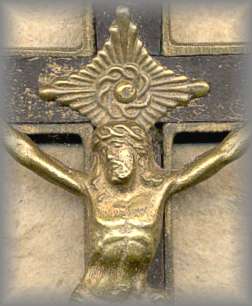
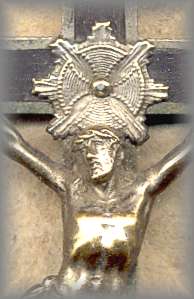
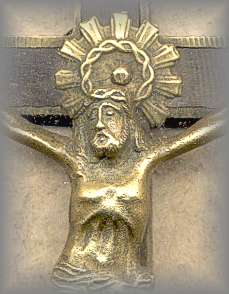
FILE MARKINGS ON RIGHT The halo behind the head of Christ is different in each of the crucifixes below. Also note the file marks, especially the one on the right and left that identify that the crucifix was hand made. |
|
*THE PIERCED HEART* |
|
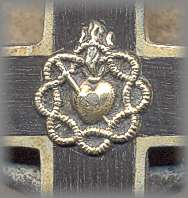
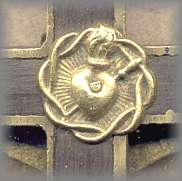
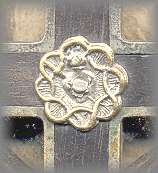
CROWNED WITH THORNS
MESSAGE IN THE HEART Variations on design are always interesting, the symbolic pierced heart surrounded by the crown of thorns is a beautiful example. Not how they stay close to the similarities of message in the crown, pierced and burning heart. |
|
*TITLE BOARDS* |
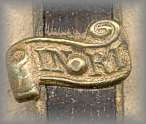
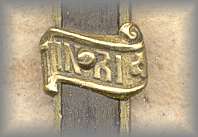
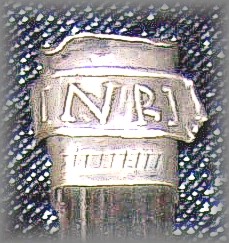
KING OF THE JEWS The title board was hammered to the crucifix above the head of Jesus. It was written in Hebrew, Latin and Greek: JESUS THE NAZOREAN, THE KING OF THE JEWS (for more information on title board) |
|
Pilate also had an inscription written and put on the cross. It read, "Jesus the Nazorean, the King of the Jews." Now many of the Jews read this inscription, because the place where Jesus was crucified was near the city; and it was written in Hebrew, Latin, and Greek. So the chief priests of the Jews said to Pilate, "Do not write 'The King of the Jews,' but that he said, 'I am the King of the Jews.'" Pilate answered, "What I have written, I have written." |
|
*SKULL / CROSSBONES* |
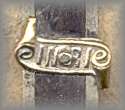
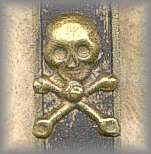
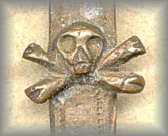
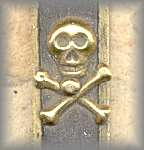
VICTORY OVER DEATH The Skull and Crossbones symbolize several things in Christian Art, especially on Crucifixes. the skull of Adam for one as it was believed Christ was crucified over the Grave of Adam. It is shown at the bottom of the Crucifix. MEMENTO MORI: Also seen on old rosaries and chaplets as 'Memento Mori' (Remember thy Death). |
|
16 Then he handed him over to them to be crucified. 6 So they took Jesus, 17 and carrying the cross himself 7 he went out to what is called the Place of the Skull, in Hebrew, Golgotha. |
|
The skull and crossbones symbol carries a very old tradition that Adam was created and also buried on Calvary, GOLGATHA ('The place of the skull') and this is where Christ was crucified. His blood, the blood of salvation, the living blood, the blood that gave and gives life ran down the cross onto the buried skull of Adam. (Believed to be a Jewish tradition.) + THE NEW ADAM +Since early times, Jesus is seen as the 'New Adam' ( And Mary as the New Eve ) overcoming the sins of Adam through his passion, death and resurrection. So the skull symbol -to many- represents Adam. Rare but seen, two skulls at the bottom of the crucifix, that of Adam and Eve. See EXAMPLE(also see St Paul's words about the New Adam below: ...
GENESIS 3:5 ...
|
|
*SKULLS IN ART* |
|
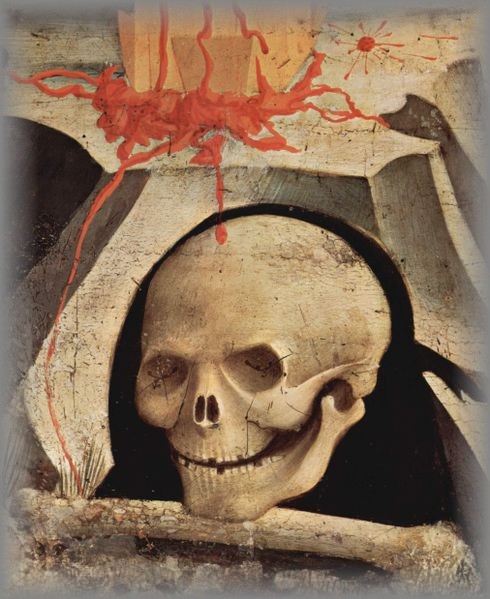
Fra Angelico (1395 - 1455) The detail below is from the fresco (1435) titled "Sch?del Adams am Berge Golgatha, Detail einer Kreuzigung mit Hl. Nikolaus und Hl. Franziskus" ( Head of Adam to mountains Golgatha, detail of a Kreuzigung with Hl. Nikolaus and Hl. Franziskus). It shows the skull of Adam under the base of the cross of Christ. The blood of Christ brings redemption as it flows over the skull of Adam. +
1 CORINTHIANS 15:45 45 So, too, it is written, "The first man, Adam, became a living being," the last Adam a life-giving spirit. click for more information |
|
*SKULLS on ROSARIES* |
|
COW BONE FOR CONVENT ROSARIES
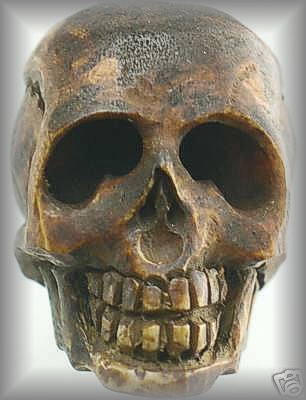
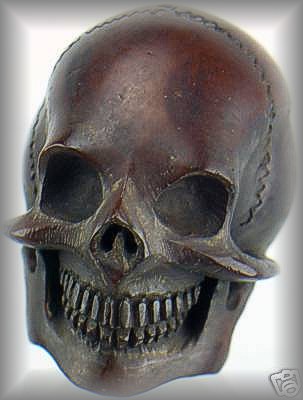
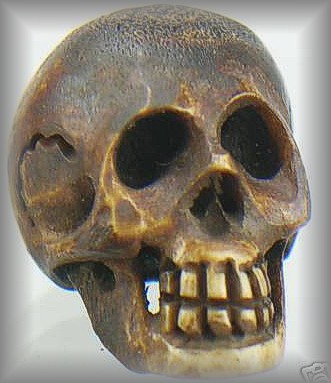
JOE PEREZ (from Church-Woman, Ebay) shared the following: "We never know when another of these rare relics will turn up again, and then after months of waiting, one or two arrive from one of the convents we work with. These little skulls were placed on a nun’s rosary as an ever present reminder of their mortality. You could say they were used to help focus when a nun was in silent prayer or meditating ... THANKS JOE ! |
|
... To attach the skull to the rosary, a hole was drilled through the top of the skull down to its base. Then a doubled up silver wire in the shape of an up side down "U", would be inserted to make a bail on the top of the skull. These have been in storage at the convents museum annex and have never been used. We were only sent a few for auction and then there will be no more." + Our special thanks go to Joe and Berta for allowing us to share this valuable look into history. (for more information or to see similar fine religious antiques, please visit Church-Woman on eBay. |
|
*1700 CRUCIFIX* |
|
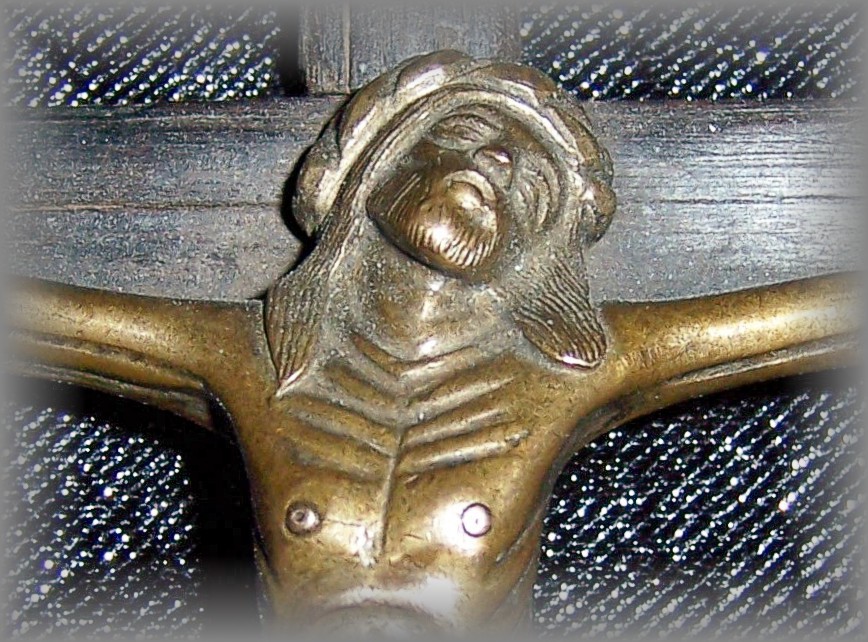
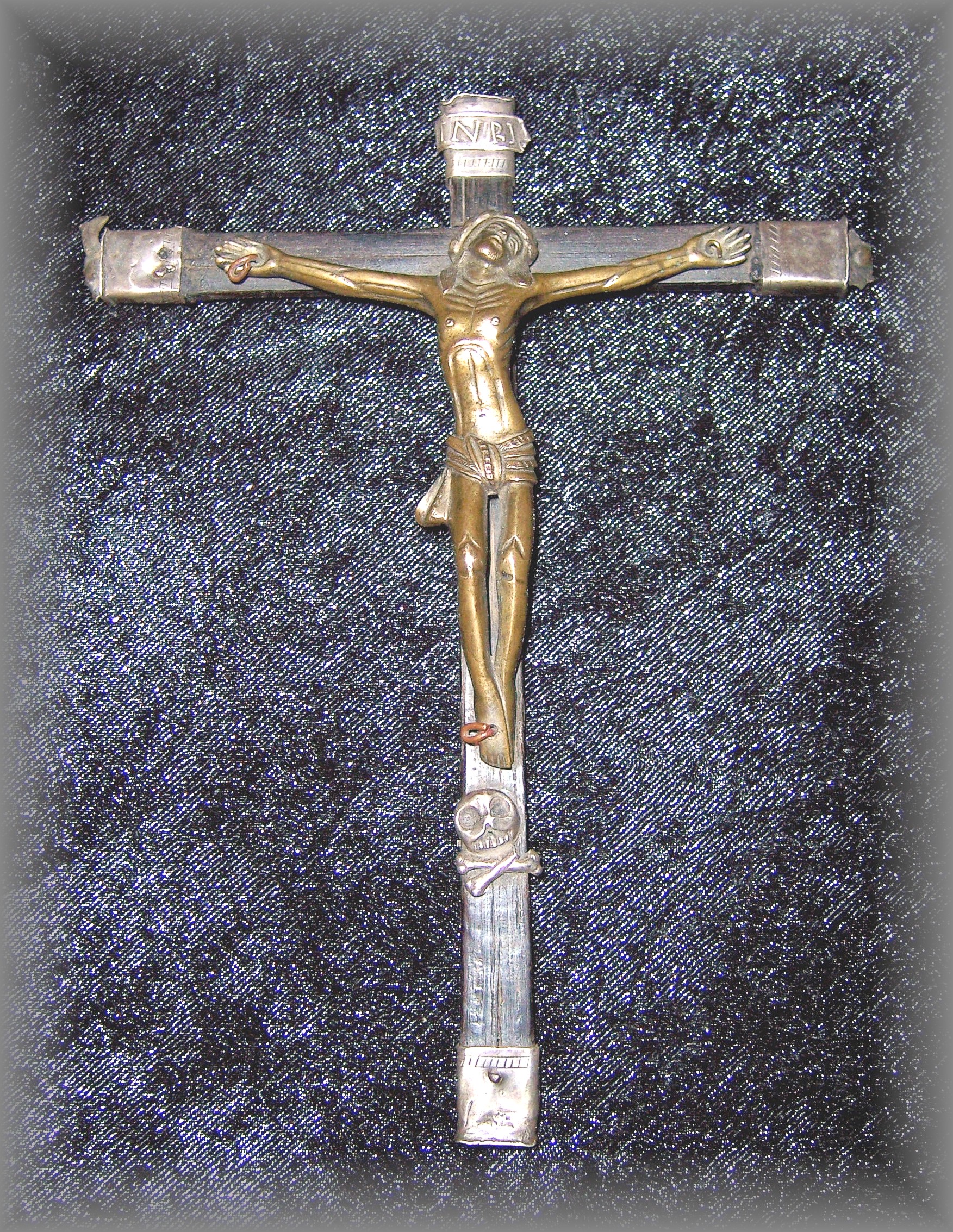
HISTORY / DESCRIPTION A friend of mine bought it from an auction held by a Church/missionary from Florida to raise funds, he was told it belonged to a woman but may have spent many decades + in the custody of a mission -Spanish- in the South America. Nuns possibly ... It was in a church as a devotional piece. The estimated time was 1700 +. He just gave me this piece thinking I may feel an affinity with it. I am interested in finding more about it. +
This cross has the original attachments / pins of its time ... silver is tarnished as it should be if not polished. No rust, nothing. Well preserved. Some cast is missing between the ends of the length, it could have been an arc of silver going around one extremity to the other. Patina is superb. Wood is definitively old, ancient. That is all I can say ... Maybe you will be able to tell more. +\ VICTORY OVER DEATH (Skull and crossbones at his feet)
CORPUS MAY BE SPANISH The corpus appears to be Spanish and with its history above, suspect that it was brought to New Spain (Latin American). The Skull and Crossbones were traditional for the period symbolizing Victory over Death. We believe this dates it somewhere between mid 1600s to mid 1800s when the custom was discontinued. At 7 in tall, it was probably used above a bed in a convent or rectory. RW |
|
beadsong@hotmail.com please identify your email so it will not be deleted by mistake + DO YOU HAVE AN INTERESTING IMAGE TO SHARE? IMAGE MUST BE CLEAR. Send an image of the whole piece with smaller close-ups of interesting parts of the rosary. Please include any history you may have about the item, family passed it down, may be from Ireland, Spain, etc. We will also need the bead size, overall length, etc. of the item. |
|
read about the
tradition of the skull
|
|
MISSION STATEMENT Our vision is to provide the finest handmade rosaries, chaplets and other fine religious art forms for personal worship we can make using the finest supplies available. The Guild believes the work of our hands should give visual Glory to God, therefore for us, the best for you is very, very important. +++ QUESTIONS? copy and paste beadsong@hotmail.com OR CALL WEEKDAYS - 9 to 5central 877.695.3561
MUSEUM
- HISTORY
- PRAYER
OFFICE
HOURS
|
|
secure-online - credit card -[or]- mail in - mo/personal check |