| MUSEUM
Antique Rosaries |
HISTORY
of the Rosary |
for you index |
cord instructions |
LINKS |
EMAIL
US+
877 695 3561 |

 |
|
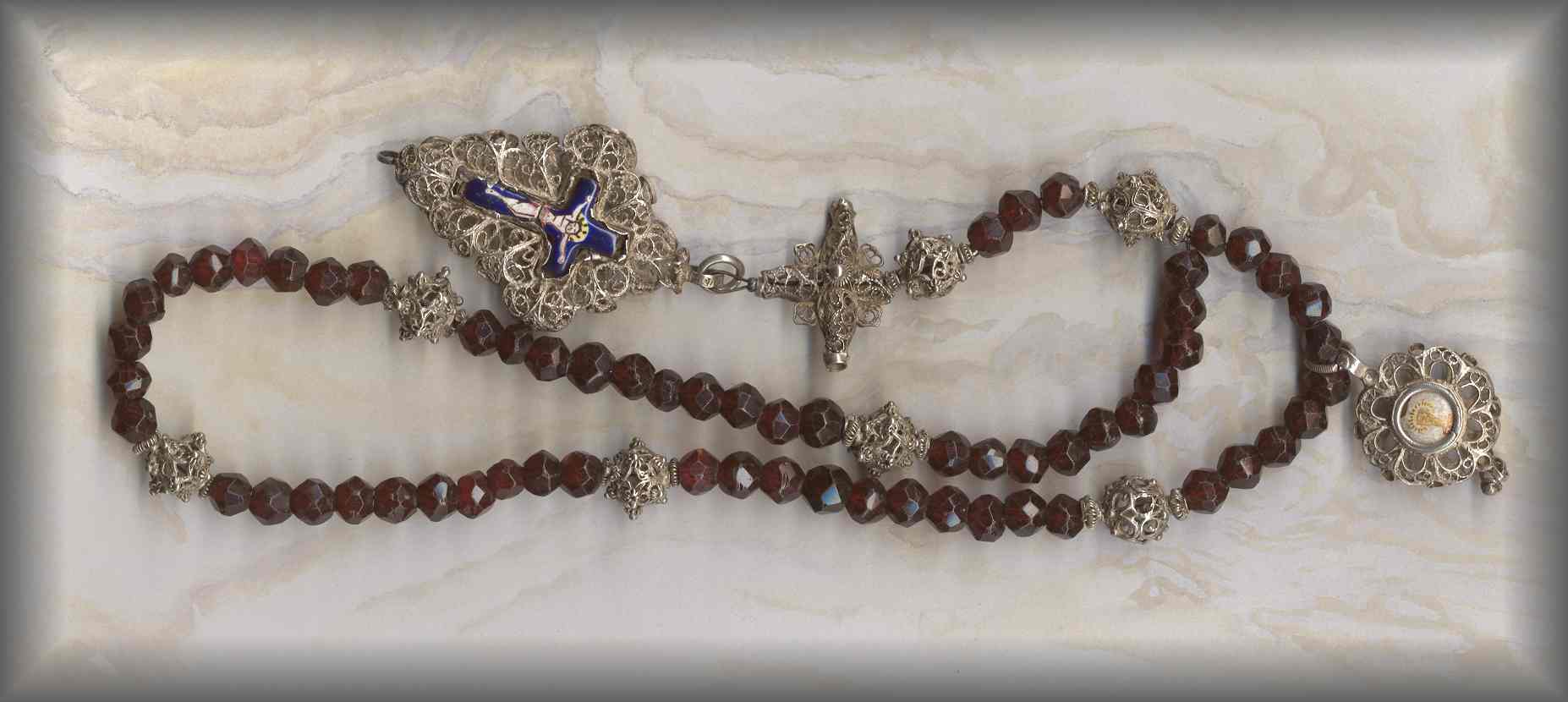
(for more information and more links to collections see below) + OUR GERMAN COLLECTOR MUSEUM COLLECION SERIES from private collections who have given us permission to use their images so we may be inspired by and may learn more about antique rosaries, chaplets and prayer beads. + ROSARY ABOVE AVE BEADS: traditionally faceted red beads were most popular and ranged from red glass or garnet stones. PATER BEADS: the silver filigrees were the most popular as they matched up with the filigree crosses. Dated back hundreds of years. + COLLECTING FOR MANY YEARS We were delighted to hear from a gentleman from Germany, (who prefers to remain nameless) who has been collecting antique rosaries for over 10 years. His comments below are very helpful to those collecting rosaries or who are interested in the history of the filigree. Enjoy! He wrote: "It is easier to become a rosary from the 17th century that to find information about it but here goes...." for more information
see
|

*OUR COLLECTOR SHARES* |
|
Our collector continues ... During the 18th century there came a new form of beads - the filigree. People loved it so. In the testaments (the best information about the history of rosaries) it mentions that in the last quarter of the 18th century the filigree bead could be found in quantity and thus began the mass production of the filigree rosary. The center for this production was Schw?bisch Gm?nd - (upper Bavaria). In the 18th century there were about 250 Filigree productions. These were mostly made up of women and children. They became very ornate as people wanted to show what they had. Costly ones were made of coral and semi-precious stones. They were also made of colored glass. This style of rosary and cross replaced all other materials used at this time. + Be careful when you buy filigree rosaries. I have seen a lot from the last part of the 20th century. |
|
When the people would go on pilgrimages to holy places, they would often give their costly rosaries as sacrifice to the statues of Madonna's. In this time the rosaries took on the character of jewelry. This is the reason they often became the supporters of medals. |
|
The form of the rosary is not always the same. During this time brotherhoods of the rosary were begun. The rules of the brotherhood often changed this formation or count of decades (4 to 7 decades) or overall count of beads. Note this one is 6 decades and is c alled a 'Brigittine' |
|
The little cross that comes before the bigger one on the filigree rosary is called the Credo Cross. It is on the open part of the rosary. It comes after the 3 Ave beads embedded in two holy Father beads and before the Large cross at the end. It comes from the Kounzil of Trient (1545-63). It is a sign to remember: Belief - Hope - Charity. The Credo Cross was given up during the 19th century." |
|
MISSION STATEMENT Our vision is to provide the finest handmade rosaries, chaplets and other fine religious art forms for personal worship we can make using the finest supplies available. The Guild believes the work of our hands should give visual Glory to God, therefore for us, the best for you is very, very important. +++
MUSEUM
- HISTORY
- PRAYER
PRAY
THE ONLINE ROSARY NOW
OFFICE
HOURS
|
|
secure-online - credit card -[or]- mail in - personal check or M.O. |