| MUSEUM
Antique Rosaries |
HISTORY
of the Rosary |
for you index |
cord instructions |
LINKS |
EMAIL
US+
877 695 3561 |

HUNT MUSEUM - LIMERICK IRELAND |
|
MUSEUM ROSARIES ARE NOT FOR SALE (for more information, scroll down) + HARD TO FIND INFO? HISTORY: OF THE IRISH ROSARY (Hunt Museum - Limerick Ireland) During a recent trip to Ireland, we asked an antiques dealer why it was so hard to find rosaries in Ireland. She explained it was because of the old custom of burying the rosary with its owner. So when we found the following rosaries at the Hunt Museum in Limerick City, we felt truly blessed. + UNDERSTANDING THE IRISH ROSARY We are grateful to the Hunt for allowing us to share this information and images with you the students and lovers of the history of the rosary so you may learn more about the precious rosaries of Ireland. All images are used with the permission of the Hunt Museum, Limerick Ireland. Please contact the Hunt directly for use of or further information regarding this collection. (See below) for more information
|

*THE GALWAY CROSS* |
|
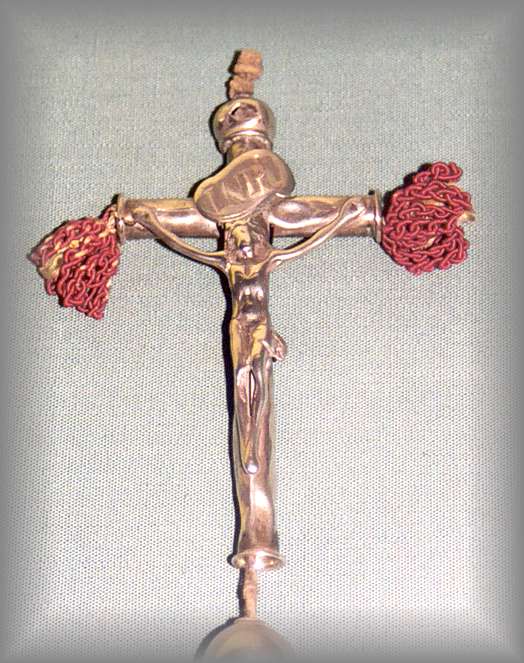
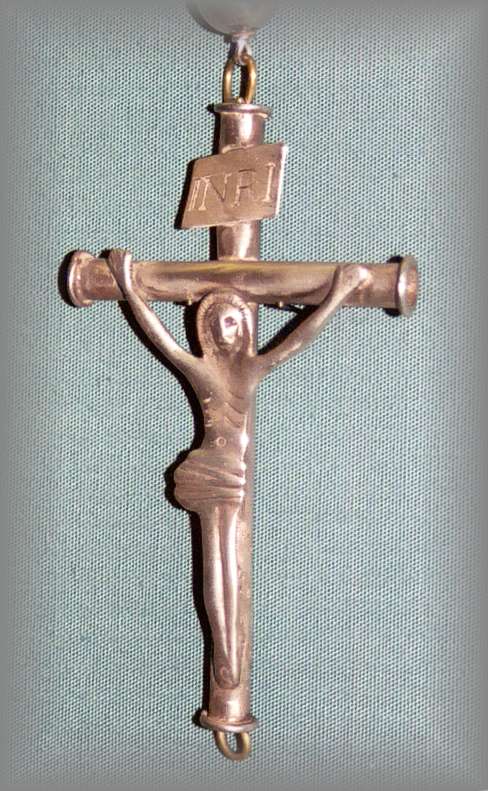
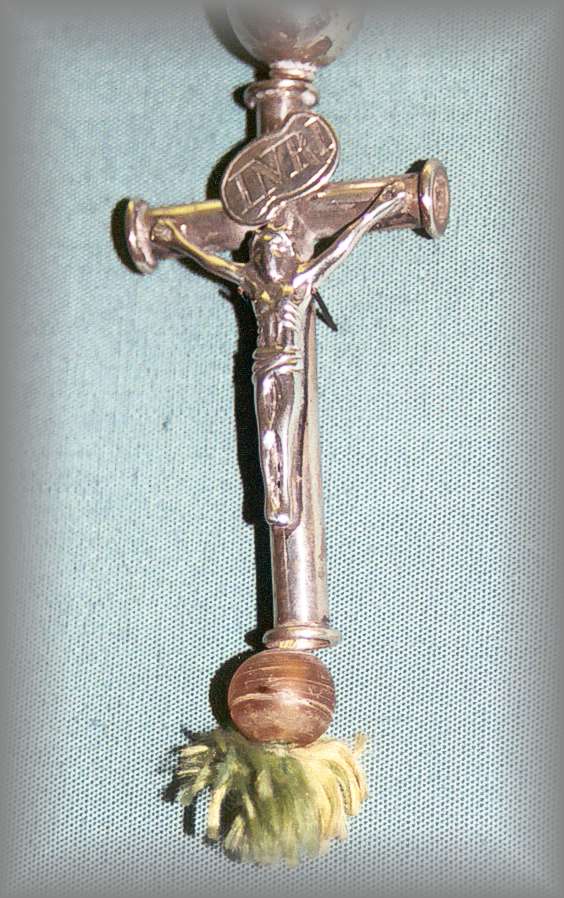
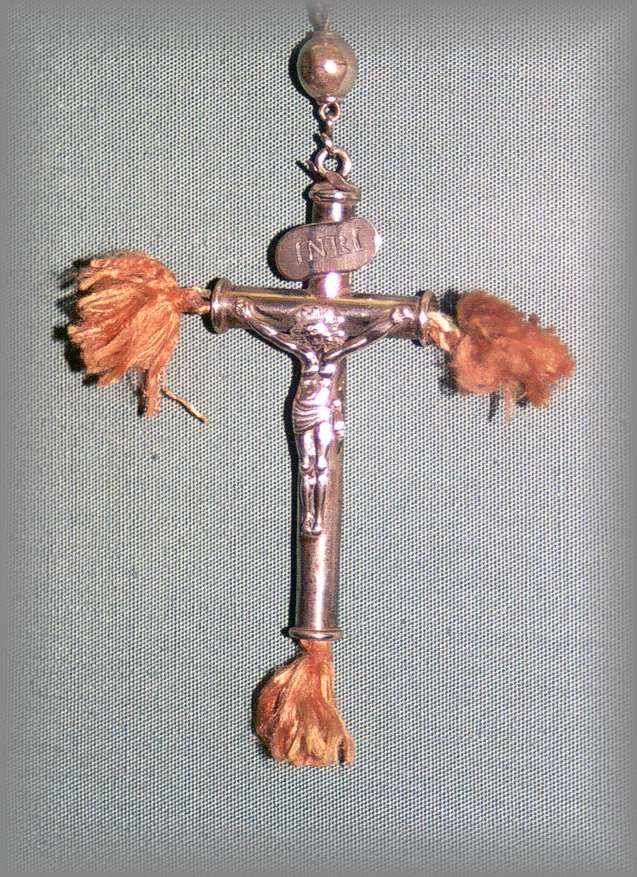
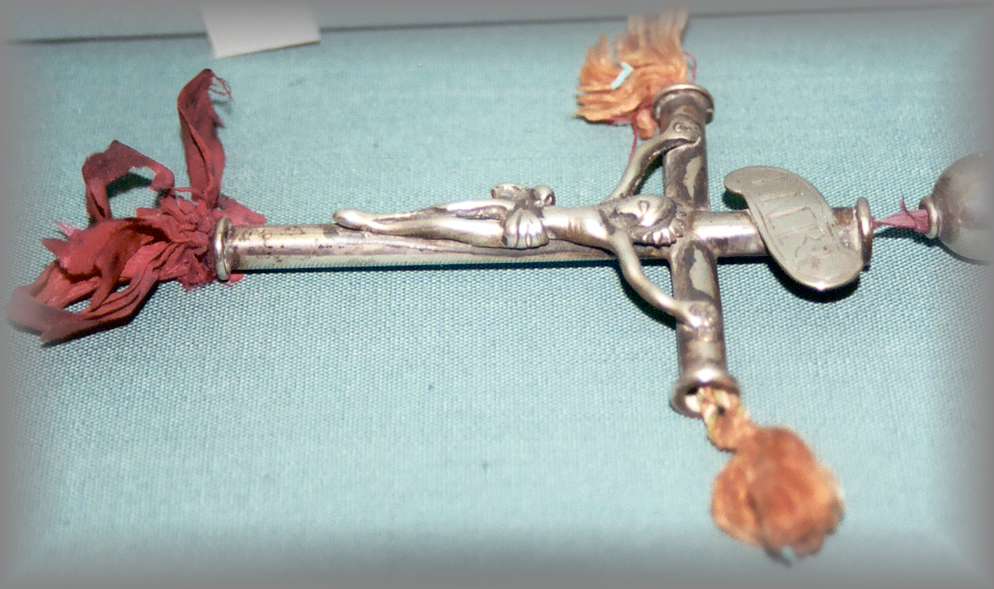
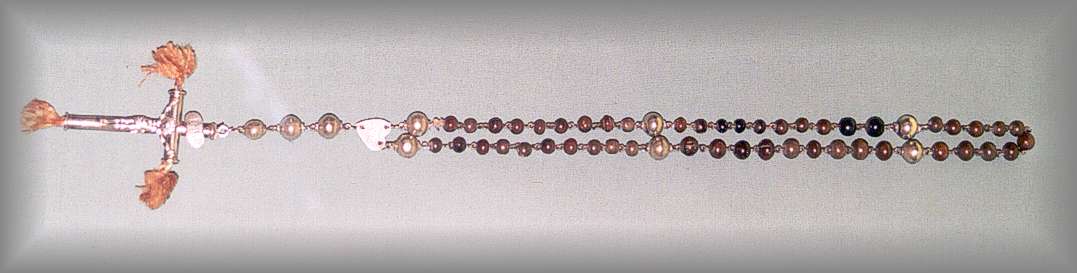
The GALWAY CROSS is made of 2 hollow tubes and is attached to the rosary in an unique way. Instead of a ring at the top of the crucifix, the cord (if strung) is pulled through the length of the tube. The chained rosaries are done in a similar way and the samples below appear to use cord or leather thong. +
ACTIVE SPANISH INFLUENCE The design (Especially the Corpus) of these tubular crucifixes reflects the active Spanish influence - because of trade - during the 18th and 19th centuries in Galway Bay, Ireland. This trade was created by the oppression ot England during the penal period. +
Often an anchor bead is attached to the bottom of the crucifix before the tassel is formed or connected. The arms of the cross carry a continuation of the design. Tassels were often used for functional and ornamental reasons yet carried the symbolism of 'wiping away the tears'. |
|
It is interesting that several of the 'tassels' use techniques found in military uniform passementerie (trim). +
GOLDEN SILK TASSELS ABOVE: The arms of the cross are finished with small, golden silk tassels. BELOW: The base is made from brown silk strips and gold bouillon passementerie trim. Gold bouillon is found on military uniforms and gear such as swords. Also used to form the skirt on fine tassels and other architectural appointments .+
SIMPLY AVAILABLE? This passementerie may have simply been available but since the rosary is often called a 'WEAPON AGAINST EVIL' we thought it very appropriate that a military touch be present! |
|
*CONFIGURATION* |
|
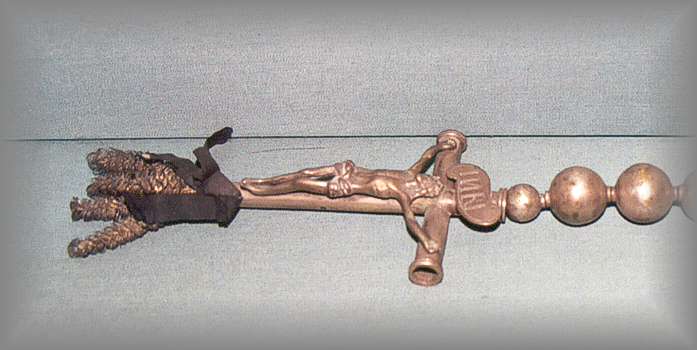
SILVER AND HORN (dated 18c) +
NOTE THE PATER BEADS The position of the 6 Pater beads in realation to the 5 decades and the pendant. Also see close up of Crucifix (above right). Chained, note center heart. Also the pendant 3 beads for 'an increase of Faith, Hope and Love'. |
|
*IRISH PENAL CROSS* |
|
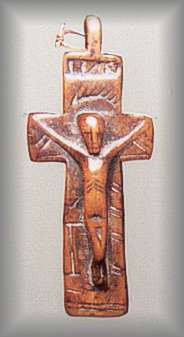
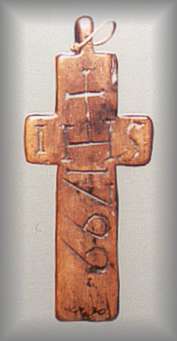
WOOD PENAL CROSS (1799 - Ireland) +
"Penal crosses are actually crucifixes that are thought to date back to the the time of the 17th century penal laws against the Roman Catholics in Ireland. These crosses often have symbols of the passion displayed around the corpus. It is likely that many of these penal crosses were produced as devotional souvenirs for pilgrims at Lough Derg. Co. Donegal. Pilgrimages still take place to *Lough Derg every summer.' (The Hunt Museum with permission) + The arms were kept short as they had a tendency to break off since they were carved from wood. This also made them easier to hide up ones sleeve if necessary. |
|
*ROSARY DIRECTORY*
For more information about the Penal Cross and rosary, see links below |
|
An overview of the rosary crosses of Ireland |
|
Unique tubular crucifixes in silver, influenced by the Spanish trade from the Hunt. |
|
18c Penal Rosaries and crosses, a mini history with pictures. |
|
Rosaries of amber and ivory, from the 1700s - 1800s |
|
a holy place, St Patricks Purgatory - Penal Cross |
|
... and back to Galway Bay for dinner |
|
*MORE CROSSES*
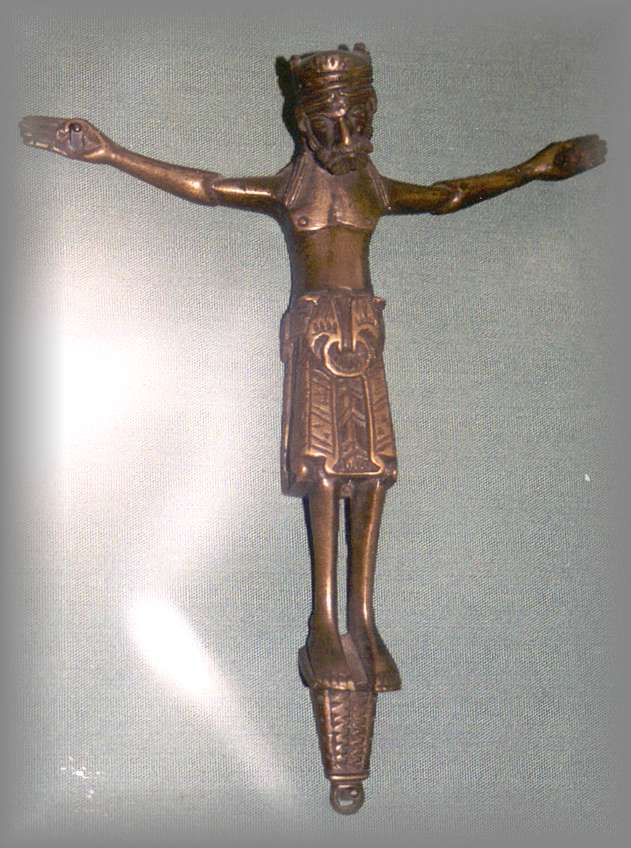
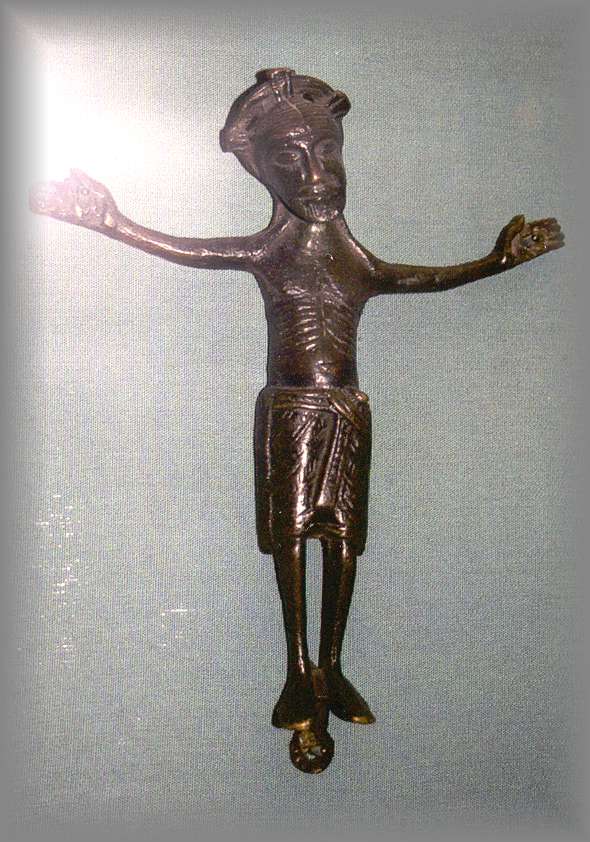
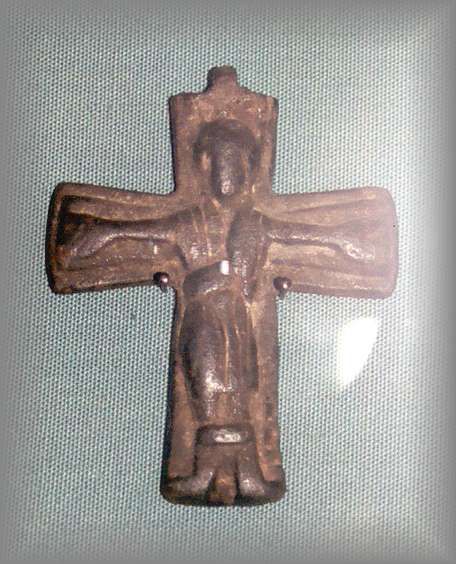
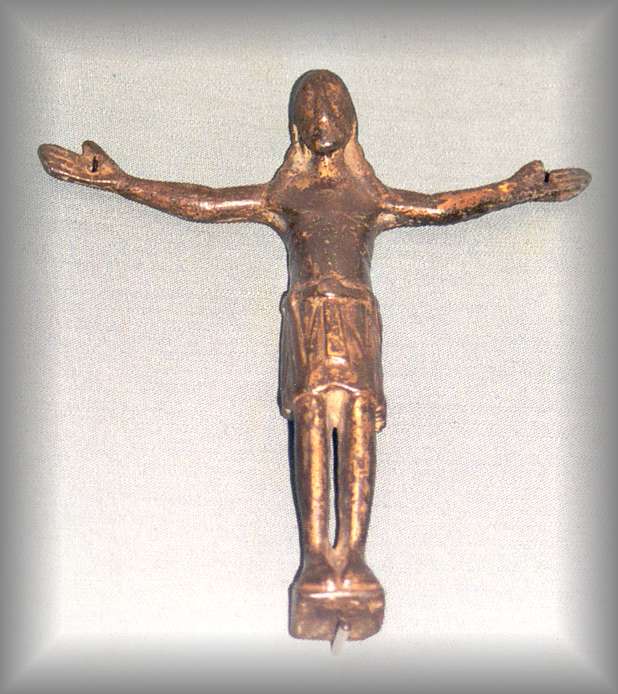
The Hunt Museum has a beautiful collection of bronze corpus' from old crosses, believed to be German (11th - 12th century. The third one over from the left is Anglo Saxon, 10th c.
HUNT MUSEUM then to 'online collection'. scroll down to 'R' (Religious / Ritual equipment) for an in depth look at the items above and more. |
|
The Custom House Rutland Street, Limerick Ireland Tel 061 452022 |
|
MISSION STATEMENT Our vision is to provide the finest handmade rosaries, chaplets and other fine religious art forms for personal worship we can make using the best supplies available. The Guild believes the work of our hands should give visual Glory to God, therefore for us, the best for you is very, very important. +++
MUSEUM
- HISTORY
- PRAYER
PRAY
THE ONLINE ROSARY NOW
OFFICE
HOURS
|
|
secure-online - credit card -[or]- mail in - personal check or M.O. |