| MUSEUM
Antique Rosaries |
HISTORY
of the Rosary |
for you index |
cord instructions |
LINKS |
EMAIL
US+
877 695 3561 |

 |
 |
|
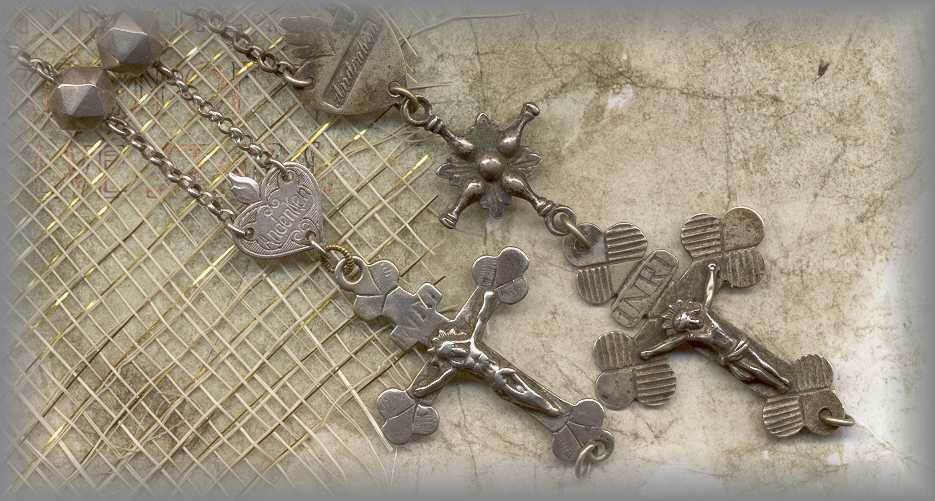
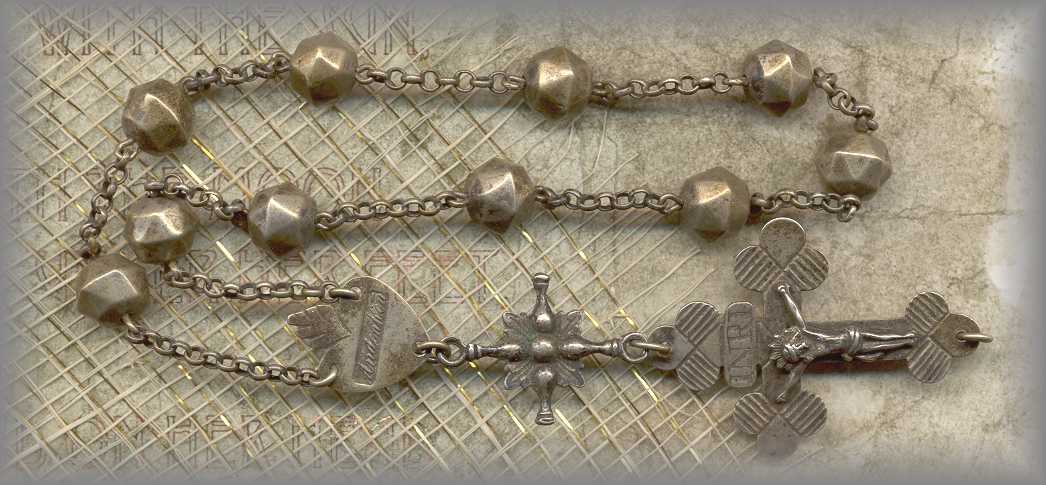
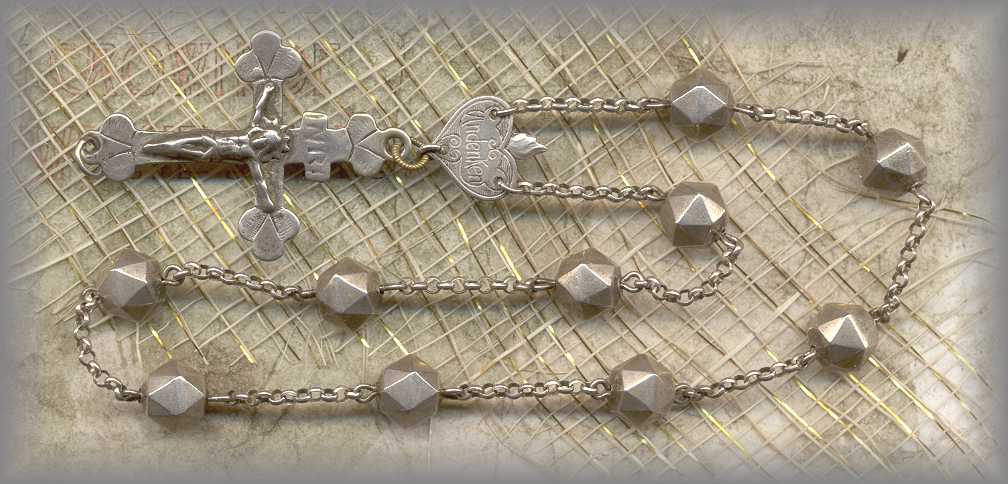
(for more information, scroll down) + FOR RESEARCH ONLY 19C MUSEUM COLLECTION SERIES These were purchased in Ober Ammergau, Germany and are from a private collection. They were dated between 1850-60 by the antique dealer. Made in Schw?bisch Gm?nd - (Upper Bavaria) + SCWABISH GMUND - 1850 - 1860 Traditionally, tenners were little pocket rosaries of 10 beads, one fifth of the standard five decade rosary carried today. The full rosary consists of 15 decades and we see these worn on the belt by many religious as part of their garments. Because they are cumbersome to carry around, the five decade 'necklace' rosary or 'chaplet' became popular. The 'pocket' or 'wrist rosary' or 'tenner', or 'zehner' is now enjoying a comeback and being used by women and children, as well as men. for more information
see:
|

*CONFIGURATION* |
|
This is a traditional circlet or crown 10 bead chaplet. Sometimes they were not looped into a circle but prayed as a string of beads either chained or strung on a cord. These two chained tenners use the traditional heart center for a juncture off of which the pendant hangs. 'AndenKen' is inscribed on the heart of both. We thought it was the name of the manufacturer but read below: +
Kevin McDermott wrote: "It is not a name, but the inscription '(zum) Andenken' which means 'in memory of' in the full form with 'zum', or just 'remembrance'. It is possible this rosary was made, and/or used, as a funeral gift to mourners; but '(zum) + Andenken' is also very frequently found on purchased souvenir items in German-speaking lands -- in fact, it means just what 'souvenir' does to us. Because there's no personal name engraved on the rosary, I think it's likely this little Zehner was the memento of a pilgrimage somewhere. I hope this will be of interest to you. Sincerely, Kevin McDermott (thanks Kevin, RW) |
|
*BEADS* |
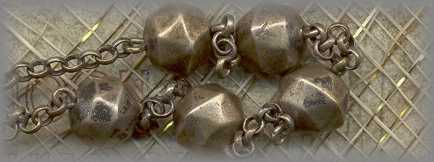
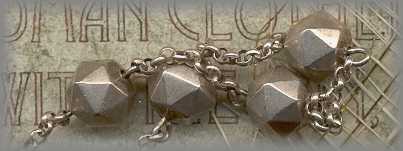
The beads on the first tenner (top) appear to be older and more worn than the second (bottom). It is a hollow bead which is generally constructed in two parts then soldered together. Each is individually formed by hammering or pressing a thin, flat sheet of silver into a mold. You will also see these chaplets using ten filigree beads. |
|
*CREDOS / CRUCIFIXES* |
|
The pendant of the first tenner, the older of the two, has the Credo-Kreus (credo cross) above the crucifix. Once the Creed had been recited, one was reminded to ask for an increase of faith, hope and love. The Credo Cross was added during the Council of Trent (1545 - 1563) +
SOME ARE OPEN ENDED There may have been a credo cross on the newer one (top). It may have been lost or removed. The following little prayer for an increase of faith, hope and charity was dropped during the late 19th century according to our source in Germany, although many people still ask while praying the rosary today. It is still said in our church during the recitation of the rosary today. |
|
MISSION STATEMENT Our vision is to provide the finest handmade rosaries, chaplets and other fine religious art forms for personal worship we can make using the finest supplies available. The Guild believes the work of our hands should give visual Glory to God, therefore for us, the best for you is very, very important. +++ QUESTIONS? copy and paste beadsong@hotmail.com OR CALL WEEKDAYS - 9 to 5central 877.695.3561
MUSEUM
- HISTORY
- PRAYER
PRAY
THE ONLINE ROSARY NOW
for more information
see:
OFFICE
HOURS
|
|
secure-online - credit card -[or]- mail in - personal check or M.O. |