| MUSEUM
Antique Rosaries |
HISTORY
of the Rosary |
for you index |
cord instructions |
STORE |
EMAIL
US
questions |

|
In 1826, the ‘Living Rosary’ is formed. Fifteen members create a circle of prayer, each agreeing to say a single decade each day. With this, each circle completes the whole Rosary. + 'TENNERS' FOR MEN Although the 10 bead chaplet has a longer history than this century, they are very popular with men during the mid 1800's, especially in Germay. +
WEAVE A CROWN OF FLOWERS In 1834, Eustace Sirena authors hymns of the Rosary which are to be sung at 1st Vespers, Matins, Lauds and 2nd vespers. They include the mysteries and end with an invitation for one to ‘weave a crown of flowers’ from the prayers of the Rosary for Mary. for more information see DIRECTORY |

~ DIRECTORY ~ |
|
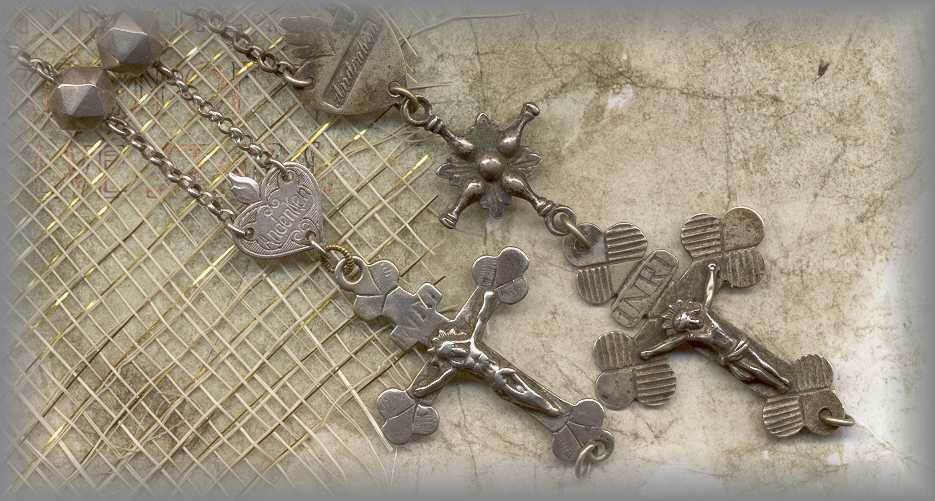
early rosaries often carried medallions instead of crucifixes |
|
souvenir rosaries from holy sites were very popular in the 1800's |
|
filigree rosaries were either strung or chained, both traditional |
|
What is a 'tenner?' These silver chaplets were especially for men |
|
VISITS HER CHILDREN In 1846 (La Salette France), two children, Melanie (15) and Maximin (11) are asked by the Blessed Lady if they say their prayers well. ‘Hardly at all’, they replied, at which she firmly and lovingly suggests they say at least an ‘Our Father’ or a ‘Hail Mary’ at night and in the morning. + By 1858, When a young girl by the name of Bernadette (Lourdes. France) sees the Lady - she reaches for her Rosary beads in fear, but is made motionless. Mary makes the sign of the cross with the Rosary she has in her hand and immediately, Bernadette is able to do the same. ‘Once I made the sign of the cross,... fear left’ she said, and prayed the Rosary in the Lady’s presence. When Bernadette tells Abbe (Father) Peyramale that Mary says, ‘I am the Immaculate Conception’, this simple peasant girl could hardly pronounce it. It was a term known only to the hierarchy but identified the visitation as true. |
|
MISSION STATEMENT Our vision is to provide the finest handmade rosaries, chaplets and other fine religious art forms for personal worship we can make using the finest supplies available. The Guild believes the work of our hands should give visual Glory to God, therefore for us, the best for you is very, very important. PRAYER - STUDY - SERVICE - COMMUNITY PRAY THE ONLINE ROSARY NOW or to return to the page you were on, please use your back button TOP OF PAGE
OFFICE
HOURS
|